S&D E20: Global Standards, Local Challenges: Navigating FATF Compliance
In this episode, host Aidan Larkin delves into the intricate world of FATF compliance with Liz Lees, the former national coordinator for the Cayman Islands. They explore the unique challenges smaller jurisdictions face in aligning with global standards, emphasizing the pivotal role of asset recovery.
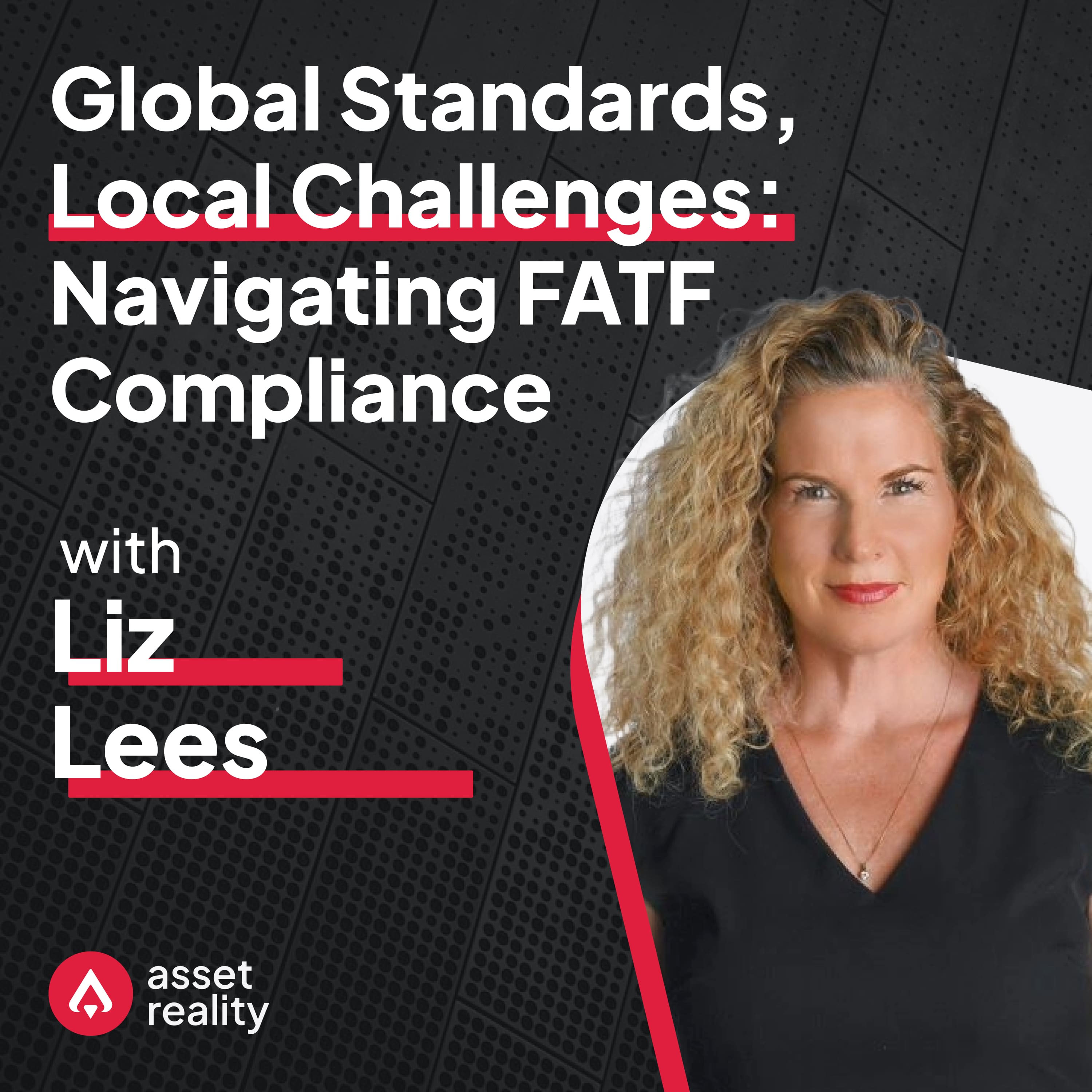

In this episode, host Aidan Larkin delves into the intricate world of FATF compliance with Liz Lees, the former national coordinator for the Cayman Islands. They explore the unique challenges smaller jurisdictions face in aligning with global standards, emphasizing the pivotal role of asset recovery.
Join us as Liz shares her insights on building effective compliance frameworks and overcoming resource constraints. As Aidan and Liz unpack the complexities of compliance in these unique environments, discover how these financial hubs balance the demands of international regulations with the need to preserve their local integrity.
Timestamps
00:00 - Introduction
05:12 - Understanding FATF Compliance
12:45 - Challenges in Smaller Jurisdictions
20:30 - The Role of Asset Recovery
28:15 - Building Effective Frameworks
35:50 - Overcoming Resource Constraints
42:00 - Balancing Global Standards and Local Integrity
50:10 - Conclusion and Key Takeaways
About our Guest
Liz Lees is a seasoned legal counsel and former National Coordinator to the Anti-Money Laundering Steering Group in the Cayman Islands. With extensive experience in financial compliance, Liz has been instrumental in shaping effective frameworks for smaller jurisdictions.
As the co-founder of Claritas Legal, Liz specialises in regulatory law and financial crime, advising governments, law enforcement agencies, and supervisory bodies on compliance with FATF standards.
Key Takeaways
Understanding FATF Standards: Liz Lees explains the importance of FATF standards in shaping global financial compliance and the role they play in asset recovery.
Challenges in Smaller Jurisdictions: The discussion highlights the unique challenges smaller jurisdictions face in implementing effective financial compliance frameworks.
The Evolving Landscape of Financial Crime: Insights into how financial crime is evolving, particularly with the rise of digital assets and the need for updated compliance measures.
Importance of Coordination: Emphasizes the need for coordinated efforts among governments, law enforcement, and financial institutions to effectively combat financial crime.
Resources Mentioned
FATF Official Website
FATF’s Recommendations
Recent FATF Mutal Evaluation Reports
Stay Connected
Dive deeper into the world of asset recovery with Seize & Desist. Subscribe for exclusive insights into the stories that are redefining asset recovery.
Disclaimer
Our podcasts are for informational purposes only. They are not intended to provide legal, tax, financial, and/or investment advice. Listeners must consult their own advisors before making decisions on the topics discussed.
Asset Reality has no responsibility or liability for any decision made or any other acts or omissions in connection with your use of this material.
The views expressed by guests are their own and their appearance on the program does not imply an endorsement of them or any entity they represent. Views and opinions expressed by Asset Reality employees are those of the employees and do not necessarily reflect the views of the company.
Asset Reality does not guarantee or warrant the accuracy, completeness, timeliness, suitability or validity of the information in any particular podcast and will not be responsible for any claim attributable to errors, omissions, or other inaccuracies of any part of such material.
Unless stated otherwise, reference to any specific product or entity does not constitute an endorsement or recommendation by Asset Reality.
Transcriptions
Aidan Larkin
Hello and welcome to Seize & Desist podcast. I'm the host, Aidan Larkin, and I am delighted today to say I have Liz Lees joining me. Liz, how are you?
Liz Lees
I'm really well, Aidan, and thank you for having me.
Aidan Larkin
I always feel bad. Am I calling you Liz? Should it be Elizabeth? Should I give you your full title and gentry, or is Liz okay? Just double checking
Liz Lees
No, Liz if fine.
Aidan Larkin
So Liz, Liz, there's a bit of a bit of background to this. Liz and I, our our paths crossed, previously when, when we were working together in in Cayman, when asset reality was doing some training with the guys. And I would then caught a presentation that Liz gave, as part of the ARIN CARIB network, input, and it was all around sort of the impact that the global standards, the FATF standards would have, and particularly, you know, our passion topic of asset recovery. EMEEDIA now come eight, recommendation four thirty eight. There's so much focus on recommendation fifteen that often the good old fashioned four and thirty eight sort of get left behind. And that's really what we wanna sort of dig into today and hear a bit because, Liz, I'll let you introduce yourself, but I think I can say with absolute confidence you're ridiculously qualified to talk about the challenges of money laundering, working in offshore jurisdictions that have limited resources, and understanding what FATF are looking for?
Liz Lees
Thanks, Aidan. Thanks for the introduction. So I'm work... Working now as legal counsel in Claritas, But prior to that, I was the national coordinator for the Cayman Islands when the Cayman Islands remediated its fourth round mutual evaluation report, including immediate outcome a, as you've just mentioned. And prior to that, I was a prosecutor in the Cayman Islands and I worked in international cooperation and also conducted the mutual evaluation report for Bermuda. And prior to that, many years ago, I was at the bar in the UK doing both defense and prosecution work. So that's the background in a nutshell.
Aidan Larkin
And It's a pretty big it's a pretty big nut.
Liz Lees
And at the moment at Claritas, what we do is we help both entities and countries with their anti money laundering efforts in terms of complying with the standards, complying with local regulations, and also if there's a dispute with the regulator, representing them and helping them to reach a successful outcome.
Aidan Larkin
Well, as you say, you, you've tried to sort of slightly downplay this sort of incredible range of, of roles that you've been in. And that's particularly what sort of... What interested me in sort of having you as a guest, on the podcast because we're always... I think we've all seen it before, there's nothing worse when, you know, a jurisdiction, you know, meets with a consultant who maybe doesn't have the practical experience or some... No. Some consultants can be brilliant and can academically present stuff and be really practical but I certainly have sort of seen firsthand examples of when someone turns up and says you should do and can't then follow-up with because here's what we did or here's what happened when I was in that seat before. So very, very grateful if you joined us today because, like I say your your range of experiences, is is incredible. And I think it'll be useful maybe to kick off with... I I mean, we we talk about the mission statement with... Of the Seize and Desist podcast is to really help people understand asset recovery as a sector because it is the biggest sector that most people don't know about. No. It literally affects the tax we pay, our response to crime, the global security, of our our shared world. There's just so many parts to it. But could you maybe tell us a little bit about sort of the role of FATF and this new increased focus on asset recovery? Is this a... I mean, is this a brand new thing, or, why is it you think there's zoning in on asset recovery now?
Liz Lees
Yeah. So as you know, FATF is the global standard setter for anti money laundering, terrorist financing, proliferation financing, targeted, financial sanctions and their evasion, and the frameworks that countries should have in place. So that's been around for some time as has asset recovery and media outcome aid. So I think the new aspect that we see now with the fifth round that's just started and is coming up for the Caribbean countries very soon
Aidan Larkin
Yeah.
Liz Lees
And has already started for for other countries. This new focus in immediate outcome eight expanding on those requirements and recommendation four as well, which you mentioned. So recommendation four in terms of the framework that you have to have in place and what those requirements are. And then immediate outcome eight in terms of how effective are you in applying your framework and in actually recovering the assets. It's all been around for a long time because, of course, all these crimes that we're looking at revolve around proceeds of crime, money.
Aidan Larkin
There there... There's always a motive. There's always there's always... Unless it's a crime of passion, like, virtually every crime has, like, an economic nexus to it.
Liz Lees
And so I think what we've seen is the evolution from the standards that we had before and that we were all assessed on in the fourth round, expanding upon that. So we see things like civil recovery is now a must have, whereas before it was a nice to have. And I think that's really important for jurisdictions such as Cayman who has that and has had it, where for very good reasons, you may not be able to prosecute money laundering, but you can go after the funds that are criminal property derived from crime. So that's now mandatory. And the other aspect is in terms of the power of the financial intelligence units. So they must now have this ability to freeze the funds potentially by denying consent to SAR filers. And that is a big change in the Cayman Islands. So that came in here very recently in January. And so for the financial services industry here, that's already had a huge impact in terms of the considerations that need to be applied. So you need to think about your SAR filing much more carefully. You need to think about whether you now need a defense to money laundering, which you didn't need before. You need to think about whether you need to request this consent from the FIU. So it puts more onus on the financial service providers, makes us all think much more about what is money laundering because at the end of the day, we're reporting suspected proceeds of crime. So why are we moving them? If we are moving them, have we got this defense? And then, of course, ultimately, it's to help the FIUs to work more quickly to seize the proceeds or freeze them and then allow law enforcement to continue. So that's another big one. Then we have much more focus on asset management. Are we preserving those funds? And, of course, the the crypto area that you're such an expert in. Do you have the ability to realize them? Do you have the ability to realize them before you've reached that final conviction stage? And what are you doing to preserve the value of them? And then the other sort of overarching addition is the requirement to prioritize asset recovery in your framework, in your policies, in your procedures, but then to monitor it. So to ask yourself, what's going well? What's not going well? Are we looking at the recovery figures? And we saw Aiden from the fourth round. And you remember in 2022, FATF did that review of the fourth round, and they had a look at IO eight. And it wasn't good, in terms of the amount that countries were able to recover. And so now having those kind of policies and procedures in place and having the monitoring sort of puts the onus on the country to say well what's going wrong? Why is this not going as well as we would like? What can we do? And tied hand in hand with that is this specific core issue about resources. So do you have adequate resources to be able to recover those proceeds of crime? And I think that's a question that a lot of jurisdictions are going to have to be thinking about and thinking about how they can assess that and how they can demonstrate when assessed that they do have sufficient resources and that they've done this exercise of thinking is my process going well? Is it not going well? And where it's not going well, what have I done about it?
Aidan Larkin
It... It's... Would you say it's a fair assessment that we're effectively now moving to, you know, demonstrating effectiveness used to be a couple of case studies. And I always remember being involved in one evaluation where it was, no. You're the contractor. Give me an example of that big boat that we seized and that we did a great job with that boat. And there was no doubt that was a good case study individually, but it didn't really tell the story. And I think we see in in crypto as well a number of big, like, billion dollar seizures that no doubt are going to look incredible on a, you know, a collection of statistics that says, no, country x has recovered a billion in crypto and in the past it only recovered a couple of hundred million in regular assets. But that could be one big lucky case. It's not a case of demonstrating how you are constantly doing this day by day in step with the actual risks that is presented in the country. And we we we talk about this a lot where if you're a small, busy jurisdiction that was a big shipping jurisdiction, for example, and you had a busy port, there would be an expectation that you would have more customs seizures or cash seizures or some sort of border breach seizures than some sort of, you know, mainland, like, European jurisdiction. And I think that we've seen sort of criticisms over the years where all countries... And keep me right here, but the sort of... The focus has allowed people to refresh that statistic, the famous 1% of assets only being recovered. And this is... Is that why then you think that the FATF has dragged asset recovery as this new focus point? And perhaps you could just help for those that don't understand how it all works. IO eight, what... What's, what's the interaction between, like, the IO's and the recommendations? Like, how does that scorecard... If we answer that point first, actually, we'll come back to the other one. I think that's an interesting bit to to sort of dive into. How does... Because people hear these and throw these things out. Well, we're we're doing this for IO eight. What's the difference between IO eight and a recommendation?
Liz Lees
Yes. I think we're all guilty, aren't we, and we talk about it all the time. And then we didn't realize that this is not sort of everyday language for everyone and there's so many acronyms. So when FATF comes in and does an assessment of the country or in the case of the game, C-FATF could be a regional, body.
Aidan Larkin
So so there's regional bodies that help implement the FATF standards before FATF sort of then check your homework effectively.
Liz Lees
Well, if you're assessed by the regional body, so C-FATF has twenty four members in the Caribbean, then there's a sort of quality and consistency review at the end. But it is C-FATF who appoints the assessors
Aidan Larkin
Who actually carry it out. Okay.
Liz Lees
And then they will assess you. And in the case of FATF, you'll have your your FATF assessors. And that'll normally be five or six assessors across someone who's an expert in in the law, a legal assessor... Assessor, someone who's a law enforcement expert, maybe someone from an FIU, maybe police officer, maybe prosecutor, and also someone in financial services.
Aidan Larkin
So people literally turn up on Ireland and sit there for a couple of weeks in a conference room?
Liz Lees
Yes. So it starts before that. Mhmm. That's the on-site part of it. But before that, they'll look at what we were just talking about, the technical compliance. So the technical compliance, do you have the laws and the regulations in place? And that's a paper exercise, and that can normally be largely completed before. And in this round, that's going to become even swifter because they're no longer going to go through all forty. They're now only going to go through the ones that have either changed by FATA from what they require or changed by the country in terms of their previous framework. So it'll be much more specific and narrow and hopefully as soon as you go.
Aidan Larkin
Instead of instead of redoing everything, it's like if you were met in one of the particular parts of the scorecard last time, now they're just focusing on either the new thing, which is obviously crypto and asset recovery is such a big new thing.
Liz Lees
Yeah. So don't reinvent the wheel. If you did it before and nothing's changed and you can confirm that, off we go and let's focus on what we need to focus on. And I think, Aidan, that's also in line with the fact that countries are doing much better in their technical compliance in terms of lots of countries have now got their framework in place, and and we're all happy with that to some degree. Whereas the real issue comes in in the second part, which is the effectiveness. How well are we using that framework to actually produce results like recovering assets? So technical compliance. Do we have the ability to restrain the assets? Do we have the ability to confiscate now? Do we have the ability to recover them by way of civil recovery or non conviction recovery? And then when we get to the effectiveness part, how many times have you done that?
Aidan Larkin
I was gonna say that because... Let let... Yeah. Recovery by That must happen so often where it's like, yeah. Of course, we've got the right legislation. We've got... We can do civil recovery. It doesn't matter if there's no person in the country or their person's unknown. We can go after... And I think you had sort of said it before when we spoke. It's like, well, how can you be effective if you're not recovering assets? If if you're doing all the things you're saying you're doing and the country clearly has the footprint of all of these, whether it's financial transactions or exposure to sanctions or whatever it might be within that risk profile. I mean, when we think about the amount that is laundered every year globally, pro rata, there should be. Like, tens of thousands or if not hundreds of thousands of individual seizures happening all around the world and that simply isn't happening. Like, what what do you think in your own... And I appreciate you can't... I'm not saying breaching confidentiality but generically speaking in sort of smaller jurisdictions, I think they get a bad rap. I think it's very easy for the US and the UK and others to be like, oh, it's an offshore problem. No. Forgetting that, you know, Great Britain in the end of the day is also a small island comparatively, but funny when it's over there, it's it's offshore and it's an island problem. I I do think there is this pushing out of the problem and blaming smaller jurisdictions when the fact is the vast majority of tax evading companies are set up in and around, you know, UK. We're seeing great reforms at company size. We're seeing good progress in changing things, but there has been decades of companies setting up with zero checks and balances. I can set up in the United States with very little checks and balances. What do you think is the main... One would assume that is. No. It's resources, small jurisdiction, not many people. Is it as simple as that? Is it just resources, or what do you think some of the challenges facing particularly smaller jurisdictions that have large financial centers, and we're now seeing crypto companies piling in on top of that.
Liz Lees
So on the one hand, you have got the perception issue, Aidan, that you've referred to. And, you know, when everyone goes to the cinema in the Cayman Islands, there's always a collective sigh when the money ends up in the Cayman Islands.
Aidan Larkin
It’s always a Cayman. It's always Bond.
Liz Lees
So there is that perception issue. Well, the only way to overcome that is to have the evidence and to prove what you have done. So, in terms of meeting those objectives and the methodology that we just talked about, are you recovering assets? Well, you need to demonstrate what you're doing and how you're doing it and what your results are. So, certainly resources are crucial because if you don't have the resources, of course, you can't do it. And are these resources skilled? Are they skilled in terms of tracing assets, in terms of managing assets if you do hold them either provisionally or ultimately confiscate them? Are they skilled in, if you're an IFC, cross border money laundering investigations, which of course is a a difficult skill set. It's in demand globally. It's in demand in the Caribbean. People with that skill set are highly sought after. Have you got enough of them in your investigating body to be able to do the work that you need to do? So that was an issue before. It's going to come even more into focus now with this new methodology and the way it's laid out so much more specifically in terms of those resources. So I think getting the resources in is certainly an issue and, of course, maintaining those resources. So you want to have the stability and the sustainability as well that if you are having to bring people in to build up your resources, how are you going to make sure that you're keeping them in the long term? Or you have a program to train people on the island so that they can stay and continue that work. So I think that's an issue. And the other issue, Aidan, which comes into all of those immediate outcomes. So we've been talking about immediate outcome eight, asset recovery. Immediate outcome one is the national risk. So you have to understand your risk, and you have to be able to mitigate that risk and you have to be able to take measures in line with that risk. So in terms of asset recovery, as you said, what's your risk? And are you demonstrating that you're going after those assets which may not be the easy ones, they may be the cross border ones, they may be the crypto ones. But if that's your risk profile, do you have the resources, human resources, technical resources to be able to go after assets and produce results in line with your risk profile.
Aidan Larkin
And and is it a case, no... Can you expect to to give your insights, like, what it's like going through these types of assessments? We know that, you know, more resources obviously is always desired. You know, things now that you're getting more advanced SAR and suspicious activity reporting that now involve blockchain information. I mean it's expensive to train staff to get someone that understands, you know, blockchain analytics. No. There are tools and these things aren't free. But in the same way, when we first discovered digital devices that held images and information, governments had to invest in digital forensic suites. Whereas I still am a bit sort of often, like, perplexed when I when I hear that, oh, jurisdiction a, you know, receives a thousand SARs a year filled with crypto information, but they don't have anybody in the jurisdiction, or they don't have access to the tools and training. Does it literally need to be that the regional body or FATF has to go to that country and say, look, you've got a lot of... Like, pick... Let's pick crypto as an example. You've got a lot of crypto traffic in your risk assessment. Is that one of the positive things of these assessments? Because the... And maybe explain to us, like, when the timeline that normally happens. Is it when people are getting ready for their assessment? You'll probably find that, you know, the begrudging sort of politicians who didn't want to spend money on that thing then are like, we're gonna have to give them a budget. They need to train some people. Or is it usually after the assessment when they've got a, you know, a a a sort of slap on their wrist? Do you see then that there's a lot of hiring taking place?
Liz Lees
Well, I think the aim of the game, Aidan, is to stay ahead of the curve and be prepared and do it in advance and, you know, do your mock assessments and have all your practice submissions. But the reality is every government has so many different
Aidan Larkin
Yeah. Competing priorities. Yeah.
Liz Lees
Priorities. As you say, it's when it comes to the crunch that minds become focused and that the real intense efforts start often. In other countries, you do see this ongoing commitment where there are frequent internal reviews and there is that sort of staying ahead of the curve, watching out for what's coming and being prepared for it. Because it's important, I think, to note, Aidan, that when those assessors come in for that on-site, they're not just looking at what's happening at that time. They're reviewing four to five years of statistics prior to that date. So if you were only to start preparing a year before, you've already lost three years of data that you're going to have to produce. So if you pick up any of these mutual evaluation reports and they're all public, they're all published. If you pick up any one and you go to, for example, immediate outcome eight asset recovery, you will see figures not just for that year, but for the previous years as well. And that's why it's so important to keep on top of it and keep moving. And, you know, there's an emphasis on countries keeping these statistics and having that review, that ongoing review of the asset recovery. Let's look at the statistics. Why haven't we got more? What could we improve here? What's our risk? Have we got assets in line with that? And then keeping on top of it in that way sort of shifts the focus again to say, well, you need to do that on an ongoing basis and not just when you're coming up for an assessment. And the other item that, of course, focuses government minds is the issue of the gray listing and the consequences that come with that. So again, at that stage, it becomes a priority. And, again, you need to show that that's sustainable and will remain in place after you're under that spotlight. So I think it's a sort of carrot and stick
Aidan Larkin
Mhmm.
Liz Lees
Approach, and the gray list is a big stick. But you
Aidan Larkin
So so, again, for those that don't... Yeah. For the... For those that don't know, Liz, just sorry to interrupt you. I mean, what what does that mean in practical terms being on the gray list for a country?
Liz Lees
So if you reach certain grades in your mutual evaluation and you're of some global significance in terms of the way that the figure is calculated for how much income it's called broad money, how that is arranged. Then you could be under active review and then if you don't remediate then a decision can be taken by FATA via one of their joint groups that you haven't made sufficient progress, and therefore, they're going to put you on their list of countries under increased monitoring. That's a public list. It's on the FATF website, and it's not a call to action. So it doesn't mean that FATF says all other countries must now take action. But it does mean they will consider it in their own risk assessments, in their own risk rating, both of individuals and companies. So it does have significant consequences in terms of reputation, investment, and matters of that nature. So it is a stick that the
Aidan Larkin
Someone said someone said that to me. I just actually overheard it recently. One of our compliance guys having a conversation, and I never I never really considered that. I always thought about the gray list as... Obviously, there's the reputational side. I get it if someone needs, like IMF loans and international trade deals and I got it. But I didn't realize it would actually affect things like just, you know, business owners and trading businesses and high network and just individuals in those jurisdictions. I mean, if you're on... If your country's on the gray list and you try to open a bank account somewhere or you try and become an angel investor in a business somewhere through no fault of your own, it's a it is a huge, huge impact. And what what do you think you'll see then or or what is... You had mentioned and alluded to... And I think some people will be really interested in just the actual process because we all hear about FATF so much. We hear about mutual evaluations. The UK has one coming up. I mean, we get to see, we can sort of preempt where people are in their cycles because people usually come to us for... And now that asset recovery is like the the topic du jour, we get requests for training. We get requests for tools and software. One of the requests is, one of the common, recommendations is around you must have a centralized register of all, you know, seized and confiscated assets. And of course we've built a centralized register. The EU now have actually went a step further and mandated it that you must have a central register of all seized assets for EU countries. It's best practice for others. But what do you think, and especially with your insights and with the new focus on asset recovery, if a country was sort of starting tomorrow to get ready for its, you know, four years out, it's, you know, best practices you think. What what... How do you advise new jurisdictions to be best prepared for the eventual valuation?
Liz Lees
So the methodology is on the FATF website, so it's all very transparent. And, the best practice is to make sure that you have a team, normally a national coordination team, which most jurisdictions now have. Many of the time...
Aidan Larkin
When people when people describe themselves as I'm the national coordinator, that basically means coordinating the response to, you know, tackling AML and basically being ready for FATF?
Liz Lees
Exactly. And things like risk assessments, making sure your risk assessments are done, and being prepared for these evaluations and leads in them. So in the Caribbean, certainly, over the last few years, we've seen an increased number of countries appointing a national coordinator in the recognition that this is such a crucial role to have, and you need someone to keep it all together because I think a lot of agencies are really good at doing the work they do. And the missing part is how do you bring it all together? Because, of course, when you get evaluated, you're evaluated as a country. So if you're the FIA when you're analyzing your suburbs
Aidan Larkin
There's no point having one goods unit.
Liz Lees
Yeah. What are the police doing with them? Do we see any prosecutions? So it's having that that overview. So you have that central body, and then you have the methodology. And then you go through and do a sort of mock. What would we say? What are our submissions? What statistics do we need? What statistics are we missing? A gap analysis. How are we going to remedy that? And that's the best way to prepare for what's about to come because when it actually happens, it's a huge amount of work. Everyone's under pressure. Vast amounts of documents going back and forth often with a very short timeline. So the earlier you start preparing, the better.
Aidan Larkin
Yeah. We've, we've we've had this sort of pleasure being involved with, you know, with the likes of Seychelles. Part of the, the work that I get to do with with RUSI, for example, is around taking part in the roundtables of the discussions for the UK's mutual evaluation and sort of preparedness for that. And it is fascinating to see with this new focus on asset recovery, I think it's easy for people to think it's just about crypto. And although crypto plays a big part, there's often a a forgetting that it's not a singular sector. It's like saying how we deal with Internet. Now it does different things at different times and we see so many countries talking about no we need some crypto stats. Are you talking about crypto in the sense of how you regulate crypto companies? Are you talking about how you tackle money laundering? Are you talking about how you tackle you know asset recovery and specific using digital assets? What do you think are some of the... And again I appreciate that this you're guessing and it's your own personal opinions but what do you think the role of sort of asset recovery specifically will be in these new enhanced... Because, obviously, it wasn't... It was it was their... Immediate outcome has always been there, but now we're seeing just a focus. If you were back doing an assessment, what do you think... Like, what what is gold standard effectiveness in asset recovery for you?
Liz Lees
So there are some basic things you have to have in place, which is basically your technical compliance. You need to have all your legislation and framework in place. So assuming that's all in place, then how... Are you collecting the statistics to demonstrate that you are, in fact, recovering these assets? If you're not, why not? And so you need these overarching policies that make asset recovery a priority at the highest level. So if you have, for example, an anti money laundering steering group, have they signed off to say asset recovery is a priority? And do we then see that in the agency policies? So we we need to go through all of those and make sure it's clearly a policy and that we all know what we need to do to achieve the aim of the policy. So very well having a policy that is not gonna help you with your effectiveness. And then you need to have things like KPIs to make sure that people are responsible for doing what their unit is required to do. So if you were to go so far as to have an asset recovery unit specifically in some of these smaller jurisdictions. How are you making sure that the people in those units know what they're required to do and are doing it, and that they're then reporting back to the anti money laundering steering group or whoever that body is to monitor it. And then you need to be reviewing that whole framework on a regular basis to assess the weaknesses and strengths. And then demonstrating there's nothing wrong, Aidan, as we know in having a weakness. It's what you do about it. So, you've done your exercise, you've found some weaknesses, and then you've put in place whatever you need to do to remedy it. So, starting with that framework and then looking at your statistics and trying to work out why aren't we achieving more and thinking outside the box. As I said, not just that agency. Are all the agencies working together? Are we getting enough SARs? Are the SARs of good enough quality to enable us to process them and analyze them and lead to investigations? If not, do we need to do more outreach there? Do we have enough FIU people analyzing these with that skill set? Do we have police, as we said, with a sufficient skill set? So it's taking that whole jurisdiction approach, which again is really encouraged by this new methodology because there's now a specific section on domestic cooperation and coordination.
Aidan Larkin
Oh, okay.
Liz Lees
Recognizing that you need to have all these different pieces in place to be effective in the recovery of the assets. So it's a huge effort that affects all the different pieces. But I think it's only by doing that that you can actually make the improvements that are needed and ultimately recover the assets.
Aidan Larkin
It it almost makes sense now why we're seeing this push towards centralized asset management offices because it almost inherently forces domestic coordination and it's also that those agencies solve a big problem. I mean, customs don't want to get stuck with the boat. Police doesn't... Don't want to get stuck with the car or the crypto. FIU doesn't wanna be the one setting up a wallet and sending a wallet address to an exchange, for example, when they've got crypto that they wanna freeze and stop. And as you mentioned at the beginning of the of the call, having that power at the FIU to receive an international request and maybe put the brakes on a big transaction. Or when a bank or a crypto company or a VASP comes along and says, hey. We're about to do this thing. I think I I liked your sound by saying, well, if you're reporting it as suspected proceeds of crime, why are you moving it? Why are you not stopping? And I can almost hear the exchanges and the banks ringing out going, we wouldn't be able to do any business. Well, that's kinda like saying airport security wouldn't be able to do any business if they let every, like, you still gotta check these things. I would... I'm sure global citizens would appreciate the things being a tiny bit slower in transactions if it kind of meant we could we could move the needle. And that was sort of the the point I wanted to wrap up on was it was asking you that sort of controversial sort of question. With all the things you've described, with all of the really clear work that is being done and the sort of whole jurisdiction assessments, and these things have been running now for, what, twenty years or more, these types of assessments as someone that's actually literally being at every part of the life cycle what is it that you think is that major contributor to this one percent statistic? And I'll caveat that by saying that I appreciate it's not probably one percent. It's really difficult to manage it and it's really difficult to actually measure this number but it's anecdotally accepted. It's been around since twenty eleven that of this three to six trillion dollars that are laundered every year. We don't even know what that figure is because it's just an estimate of GDP. Every time it's been studied in different pockets, it traditionally comes out at one or two percent of the total available potential seizures. What do you think is is the reason? What is it gonna take to, like, really move the needle? If you had your magic wand for a day, what do you think is the problem? What do you think is the the the solution?
Liz Lees
So I think the problem is two things. One, we already spoke about which is, do you have the skill and the resources in terms of human resources, technical resources to be able to recover these assets, to identify them, to trace them, to provisionally restrain them, to recover them. So I think that's one part. The second part is that much bigger piece that we spoke about about the whole system. So the asset recovery is just one piece of the whole system that needs to be working in order to identify the assets and ultimately recover them. So unless you have that whole piece working, which goes from your risk, you understanding your risk, to your policies, to your high level commitment, which again ties back to the first point. Because if you don't have the high level commitment to provide the funds to get the resources, you're not gonna have the resources, and the high level commitment to make this a priority to create this culture of asset recovery is our priority, and we are going to do that. And what do we need to do in order to do that? Well, now we're mandated to review how we do it, having all those different pieces from the SAR filers to the SAR analysis to the investigators having all those pieces in place so that when it gets to the skilled investigator, they have everything they need to be able to go and restrain and confiscate the assets.
Aidan Larkin
I I think you've probably... You've summed it up perfectly in the sense of most people, and I've probably been guilty of it as well, we we look at that final stage of asset recovery and it's easy to, you know, blame the asset recovery functionality. But if the cases aren't being picked in the first place and the investigations aren't being funded and worked and again we know we have a global shortage in money laundering investigations and I think it's blatantly obvious that if you don't have a lot of big money laundering investigations you're not going to get big asset recovery cases. And there's so many steps along the way that it's almost the the famous as a Pete Drucker quote, you can't manage what you can't measure. There isn't anything to measure. Like, if we if we're not seeing or if we're seeing that there there's only a small pot of assets being recovered, that's like the ultimate prove... Proving factor that we're not really tackling the big money laundering cases at the beginning. Otherwise, we'd be surrounded in, you know, dozens of percentages of, of assets being recovered. The easier point might just be then to basically call Liz and the team at Claritas to come and just help you get ready for it because from what you've described, it's a pretty bruising, you know, evergreen treadmill for countries to go through. And I think it'll be useful to maybe revisit this in a year's time and see how we see some other countries are starting to get on, and how they're tackling that. I just worry... My my... The little cynical bit in the back of my head is I worry that some of the big results, the big billion dollar cases, are gonna do a lot of heavy lifting. And that again we're gonna see some of the big jurisdictions not have the same scrutiny as the small. And they do have the resources and probably are, you know, missing the political will. I mean, the UK and we've seen some really good... Obviously, I'm commenting on UK because I live here. But the UK we've seen some phenomenal... No. Like the the tooling up of the insolvency service with better legislation and better powers. Their new mandate's phenomenal. Their new mandate is they can touch any case that has a company nexus. Like, what economic crime case doesn't have a company somewhere involved to change? So I'm really, really excited and they've dedicated lots of investigators. I'm really excited to see that that could be a huge change in a year's time. And we're seeing now clawing back of bounce back loans. And what we really wanna see is going after the, you know, corrupt politicians that were dishing out billions of their mates, during the COVID express lane. So time will tell, and hopefully that's, you know, making its way onto a FATF, evaluation assessment as evidence. Liz, thank you so much for your time. It's been really, really enlightening. And, yeah, I think we'll we'll pencil this in for a follow-up to see how see how the world is getting on next year.
Liz Lees
Thanks so much, Aidan. Thank you for having me, and thank you for the interesting chat and difficult questions.
Aidan Larkin
No. Thank you. Yeah. Thank you for joining us from the very exotic location of Cayman Islands where I'm sitting here in a gray South Wales. Thank you so much.
Liz Lees
You’ll be on your travels again in no time.
Aidan Larkin
I will. I will indeed. Thank you for joining us.
Lo Furneaux
Our podcasts are for informational purposes only. They are not intended to provide legal, tax, financial, and or investment advice. Listeners must consult their own advisers before making any decisions on the topics being discussed.