Summary of FATF 40 November 2025 Updates
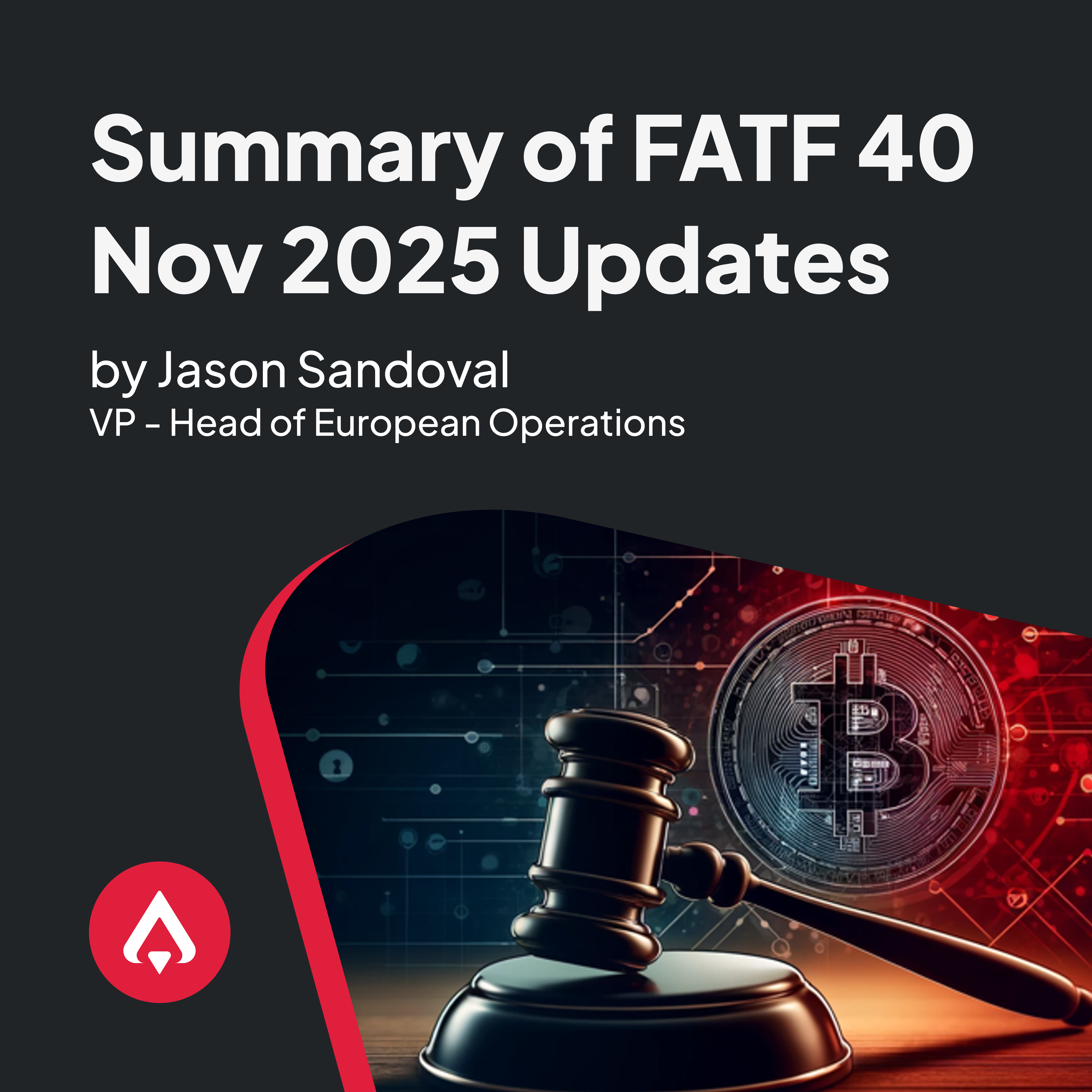
Jason Sandoval, VP - Head of European Operations, explains that the Financial Action Task Force (FATF)’s November 2025 updates strengthen global asset recovery and virtual asset enforcement. The updates include a dedicated section on virtual assets, highlighting the need for specialised capabilities, updated legal frameworks, and trained personnel.
-min.jpg)
Data from Interpol and UNODC shows that less than one percent of global illicit financial flows are seized, confiscated, or liquidated. The Financial Action Task Force (FATF)’s assessments also reveal that more than eighty percent of jurisdictions continue to operate at low or moderate levels of effectiveness in asset recovery. In response, the FATF November 2025 updates place asset recovery at the center of global financial crime enforcement. The updates include a sweeping call to action for governments and law enforcement agencies to strengthen their frameworks, capacity, and coordination.
FATF recently released new guidance titled “Asset Recovery Guidance and Best Practices” which provides a comprehensive roadmap to improve the identification, tracing, freezing, and confiscation of criminal assets. The guidance includes detailed recommendations for virtual asset recovery and highlights how jurisdictions can close gaps that have allowed digital assets to become attractive channels for illicit activity. The goal is clear. Improve global asset recovery rates and support meaningful victim restitution.
Key Highlights of the FATF Guidance
The new guidance includes more than eighty-five real world case studies demonstrating how countries can strengthen asset recovery outcomes. FATF urges jurisdictions to invest in dedicated resources, training, and infrastructure while prioritizing early-stage financial investigations. Countries are encouraged to increase cooperation between domestic agencies and international networks like the Asset Recovery Inter Agency Networks (ARINs).
Authorities are advised to use rapid freezing or seizure mechanisms to prevent asset dissipation. The guidance also supports tools such as non-conviction-based confiscation and unexplained wealth orders. FATF emphasizes a victim-centered approach and encourages governments to repurpose confiscated funds for public benefit or return them directly to victims.
Virtual Asset Recovery Recommendations
The FATF report includes a dedicated section on virtual assets and notes that these assets require specialized capabilities, updated legal frameworks, and trained personnel.
Recommended actions include:
Legislative Updates
Countries should update legislation to explicitly empower authorities to seize, manage, and dispose of virtual assets. Clear legal authority is required to act quickly at the point of investigation.
Operational Capacity Building
Law enforcement must be trained to identify virtual asset evidence at first contact. This includes recognizing hardware wallets, seed phrases, exchange accounts, and digital records. The speed of virtual asset transfers makes early intervention essential.
Integrating Blockchain Analytics
Jurisdictions are encouraged to adopt blockchain analytics as a standard investigative tool. Public blockchains provide traceable and immutable data that supports asset recovery and is increasingly accepted as evidence in court.
Rapid Seizure Mechanisms
Authorities are advised to use structured pathways for seizing or freezing virtual assets. This includes obtaining private keys, collaborating with Virtual Asset Service Providers to freeze custodial accounts, and using issuer-based controls that may apply to certain stablecoins.
Specialised Asset Management and Custody
Seized virtual assets must be secured using strong cybersecurity practices; as such, the FATF recommends engaging with vetted third-party custodians since self-custody can introduce operational and security risks for law enforcement agencies. Any third-party custodian must demonstrate robust AML/CFT and tax compliance to safeguard the integrity of the seizure and management process (i.e., governments should not work with custodians with fines/breaches for money laundering or similar).
Strategic Liquidation
Liquidation of seized assets should be handled with market awareness to avoid unnecessary value loss. Phased liquidation strategies may be appropriate based on liquidity and market conditions.
International Cooperation
Since virtual assets move across borders at high speed, FATF calls for rapid and informal international cooperation with foreign counterparts and private sector partners to identify, freeze, and recover assets.
FATF notes that, when supported by the right tools, training, and frameworks, virtual assets may be easier to trace and recover than many traditional assets. The guidance seeks to ensure these assets cannot serve as safe havens for illicit proceeds.
Turning FATF Guidance into Real-World Impact
Asset Reality was founded to close the operational gap in managing seized assets, a challenge FATF has now placed at the centre of global enforcement. Governments around the world often struggle to track, secure, and liquidate assets effectively, especially virtual assets.
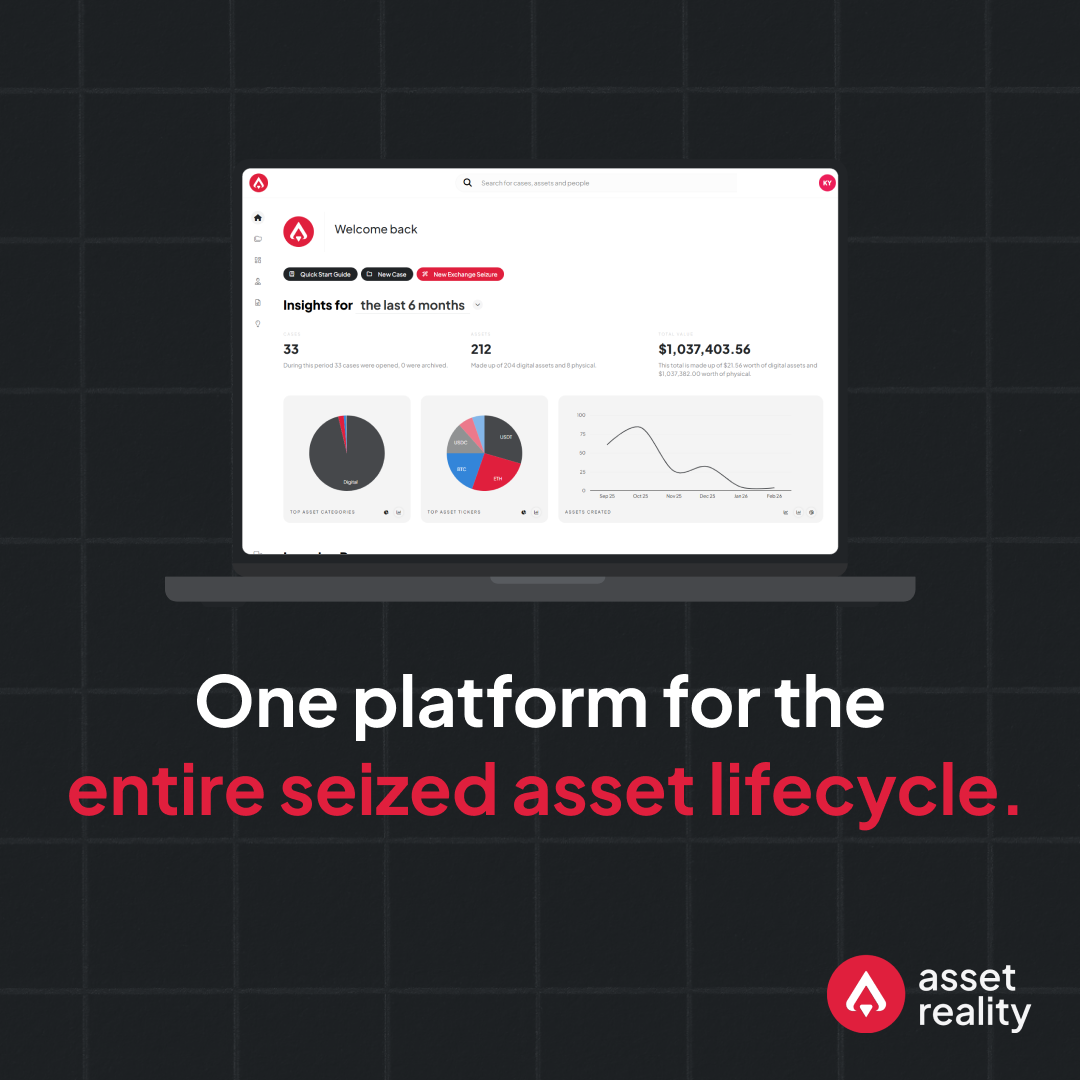
Our Platform maintains a centralised record of seized assets, providing agencies with real-time visibility and enhanced coordination. This data-driven approach doesn't just improve compliance; it unlocks analytics that help identify patterns, accelerate seizures, and ultimately return more funds to victims.
To see how this works in practice, watch the short video below:



.jpg)



.png)



.jpg)
.jpg)




.jpg)















.png)




.avif)