S&D E24: Asset Recovery in a Digital-First World
In this conversation, Aidan Larkin sits down with Dr. Max Bernt (TaxBit) to explore the future of asset recovery in a digital-first world. They dive into how data aggregation, crypto, and stablecoins are transforming investigations - and why practitioners have reason for optimism.
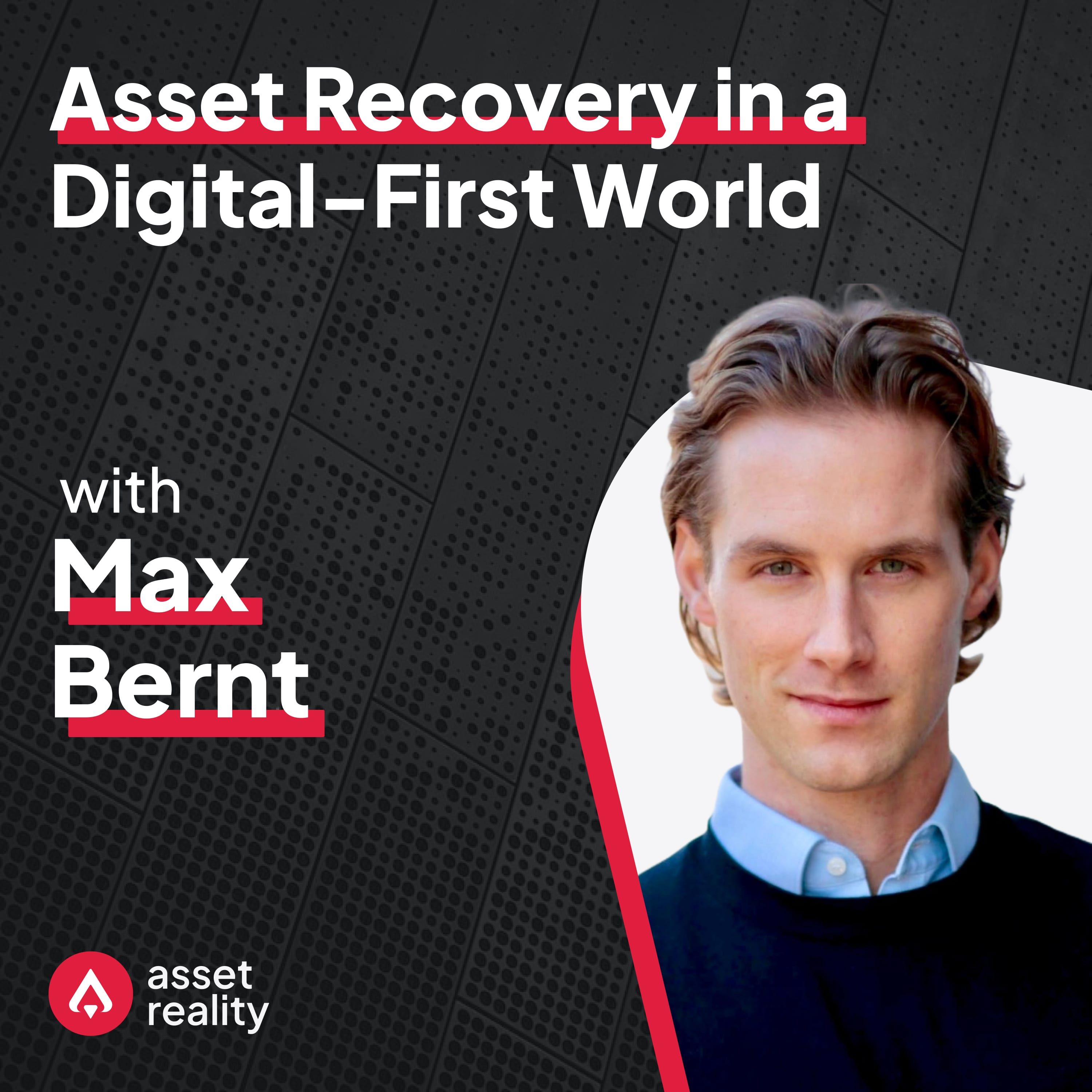

In this conversation, Aidan Larkin sits down with Dr. Max Bernt (TaxBit) to explore the future of asset recovery in a digital-first world. They dive into how data aggregation, crypto, and stablecoins are transforming investigations - and why practitioners have reason for optimism.
Timestamps
00:00 – Introduction and Background
04:00 – Inside the Digital Asset Recovery Ecosystem
09:48 – How TaxBit Bridges On-Chain and Off-Chain Data
16:00 – Real-World Cases & Lessons Learned
27:50 – Tackling Data Challenges & Regulatory Hurdles
32:09 – Stablecoins: Risks and Opportunities
40:49 – The Future of Financial Crime Investigations
51:03 – Why There’s Reason for Optimism in Recovery
About our Guest
Dr. Max Bernt is TaxBit’s Global Head of Regulatory Affairs and Managing Director for Europe. With a robust background in transnational criminal law and extensive experience in regulatory affairs, he advises on cases and policy involving cryptocurrency, financial crime, and digital asset recovery. Max has helped shape discussions around the intersection of law enforcement and crypto, exploring how data aggregation, stablecoins, and regulatory frameworks impact investigations and compliance.
Key Takeaways
Evolving Asset Recovery Ecosystem
Technology is driving the evolution of the asset recovery ecosystem, creating new tools and approaches for practitioners.
Importance of Data Aggregation
Effective investigations rely on robust data aggregation, helping practitioners identify patterns and trace assets efficiently.
Bridging On-Chain and Off-Chain Data
TaxBit serves as a critical bridge between on- and off-chain data, enabling more accurate and comprehensive investigations.
Impact of Regulatory Changes
Shifting regulations will have a significant effect on financial crime investigations, requiring practitioners to adapt strategies accordingly.
Opportunities and Challenges of Stablecoins
Stablecoins present both opportunities and challenges for investigators, influencing how digital assets are tracked and recovered.
Optimism for the Future of Asset Recovery
Despite the challenges, practitioners can be optimistic about future advancements, including improved efficiency, technology, and collaboration in the field.
Resources Mentioned
Stay Connected
Dive deeper into the world of asset recovery bu subscribing to Seize & Desist:
https://link.cohostpodcasting.com/b36b929c-6ca3-4e49-8258-44c310d012c9?d=sG5Qi2MdL
Disclaimer
Our podcasts are for informational purposes only. They are not intended to provide legal, tax, financial, and/or investment advice. Listeners must consult their own advisors before making decisions on the topics discussed.
Asset Reality has no responsibility or liability for any decision made or any other acts or omissions in connection with your use of this material.
The views expressed by guests are their own and their appearance on the program does not imply an endorsement of them or any entity they represent. Views and opinions expressed by Asset Reality employees are those of the employees and do not necessarily reflect the views of the company.
Asset Reality does not guarantee or warrant the accuracy, completeness, timeliness, suitability or validity of the information in any particular podcast and will not be responsible for any claim attributable to errors, omissions, or other inaccuracies of any part of such material.
Unless stated otherwise, reference to any specific product or entity does not constitute an endorsement or recommendation by Asset Reality.
Transcription
Aidan Larkin
Welcome, Max, to the Seize and Desist podcast. Thank you very much for joining us, sir. How are you?
Max Bernt
I'm good. Thank you for having me, Aidan. It's a pleasure to be on here.
Aidan Larkin
Pleasure to always speak to you. We have been on a number of panels, around the world. We've been on, different, I would say, the intersection of regular law enforcement versus the proper crypto technology sort of, discussions. And it would be good to sort of really dive in today with the... Sort of the theme of the Seize & Desist podcast is to unpack a lot of the complicated topics, put them in plain English and also contextualize them to the asset recovery audience. Now why does this matter to a civil tax inspector? Why does this matter to a criminal investigator? Why does this matter to a prosecutor? So, I think to set the stage, even though I'm pretty convinced everybody knows you from LinkedIn, would you give us would you give... You're more famous than me. Would you give us would you give us a bio, please, and let us know what got you to the pinnacle of your career, which is appearing on this podcast?
Max Bernt
That's a great pinnacle, by the way, so I can I can retire tomorrow? So
Aidan Larkin
You’ve achieved it all.
Max Bernt
Yeah. Exactly. Thanks for for having me. Yeah. I'm I'm Max Bernt. I'm born and raised from Austria. So actually from Vienna. I studied law here, did a PhD, focusing on transactional collaboration, a fight against organized crime, corruption, money laundering, and joint degree between Australia and Austria. So I saw both the Austria with kangaroos and the ones without. So, really focusing on transactional collaboration, the work that UNODC, Interpol, FATF, and other standard setting bodies are doing in this regard. So really ensuring how can law enforcement bodies best collaborate across borders and ultimately effectively prosecute criminal behavior. Right? So I worked as a criminal defense attorney. So, really down to to to this role again for six years in Vienna, having a law firm here mostly focusing on on organized crime and drug trafficking, etcetera. And then Bitcoin popped up, 2015-2016 for the first time in in my own practical experience and also from a fury side because, we were writing on a report about trafficking human beings in Southeast Asia, and, Bitcoin popped up as a means of payment. So looking into it also from a criminal, law perspective, so to say. Yeah. Published a lot of stuff on that and then, got more into crypto, made this my main my main, field of work, so to say. Joined a startup that I scaled as chief legal officer for two and a half years. And then end of 2023, start of 2024, I joined TaxBit as their international managing director and, global head of regulatory affairs. So really working very, very closely with our government, sector line, so to say. I'm currently cochairing the business advisory group at the OECD negotiations on the reporting framework that I will elaborate a bit more in in this in this podcast. And, yeah, like you said, Aidan, lots of traveling, lots of discussions, lots of lots of work that has to be done. And, although the name tax bit may not suggest it, we are very deeply involved into financial crime investigations coming from a very strong background of tax investigation work we've done with the Internal Revenue Service of the United States for the past four and a half, five years now. So, really, really looking forward to the discussion today. Thanks for having me.
Aidan Larkin
No listen. Thank you. Like I say, I think the two of us sort of rack up, air miles sort of galore, so it's nice to... I think we're both sitting at home, respectively. So that's...
Max Bernt
For once!
Aidan Larkin
First thing. You... Yeah. So I want... I wanted to start at the end then. For those that don't know, I mean, it's... The the asset recovery ecosystem is confusing let alone digital asset recovery ecosystem. So when someone can think about digital forensics as the Cellebrights, the magnets, the CAT labs, Most people on the show will know the, you know, the analytic companies, the the Chainalysis, Elliptics, TRMs of the world, for example. Merkle's and I think there's over twenty companies now and Crystal includes so many. And, again, I always selfishly, when I think about asset reality, think of them as if they're the metal detector or the investigator, or the, the track and trace tool, to dumb it down. We're the shovel, we're the tow truck, we're that piece that leads the seizure and then whether it needs managed or custody reported we we sort of we we talk a lot obviously about our role. As you said tax bit probably slightly misleads people into what it is the the breadth of what you guys do but again part of our mission, I also should say we're very proud of the fact that we don't do pay to play, this isn't a sponsored tax bed thing. Every single person who's ever done it through is a person who just has worked in the industry and talks about what they do with the mission being as a practitioner you can then say oh I understand what they do, I heard that guy Max talking about it, I understand now. That... I mean, this is all educational. There is no, sponsorships or anything like that. So for that reason, I mean, what if... If I'm an asset recovery practitioner and I've used an analytic tool, maybe I'm serving a freezing order on an exchange, or I'm seizing assets or I'm managing assets, and we'll get into the EU policies and and those really big forcing factors that are changing things. Just in terms of a tool software services basis, what does TaxBit do through the eyes of an asset recovery practitioner? When might they, you mentioned, like, IRS and others, when would people normally be utilizing your services just to know where you fit in on the ecosystem?
Max Bernt
Oh, that's a good question. Thank you. And maybe when you when you pointed it out already, it... When when you described as reality as the shovel in the whole investigation process, I would say I would call tax bit the bridge, being more the bridge between on and off chain data. So maybe to give some background on this. For the last years, ever since twenty fifteen, twenty sixteen, mostly, a lot of law enforcement bodies around the world have been using blockchain analytics tools. Like you said, Aidan, there's been quite a lot of players around providing these very, very highly sophisticated services. Right? Because it's it needs to be state of the art because criminals are always advancing. So also these blockchain analytics tool need to need to develop. Let me give you a very simple example. You are a police officer using one of these great analytic tools, and you figure out the flow of illicit funds along, on chain. Right? From wallet to wallet to wallet to wallet. In most cases, what you would see is that at one point, the flow of funds hits an exchange. It's a broker. Right? A crypto asset service provider as we call them or virtual asset service provider. And then everything that happened next is still a gray box. It's a black box. Right? Because it happens what we call off chain. So when we talk about off chain, what we really mean is internal transaction ledgers of exchanges or crypt asset service providers. So everything that I do on either an omnibus wallet of an exchange, what I do internally within the exchange cannot be followed if you use a blockchain analytics tool.
Aidan Larkin
It should be just like a bank. Once it hits a traditional bank, you don't get to trace it through you as a practitioner.
Max Bernt
Bingo. And that's exactly where come we into play... Where we come into play. So, basically, what we are seeing is police officer will then subpoena information from from a large crypto service provider or even from two or three sources. Right? Because often these funds hit multiple exchanges and then receive CSVs or Excel sheets with often hundreds of thousands of rows with often very different formats. Even if you set subpoena information from one service provider, it can look one way the one week and completely different the other week. So we have this ever changing format issue of, like, how to then ingest this data and merge it with the on chain activity. So once I've subpoenaed information from the crypto asset service provider, the question really becomes, how can I, as an investigation body, continue my investigations? And this is really down to merging transactions across on and off chain. So everything that I, identified on chain, that I match these transactions with the off chain transactions, so the, transactions on the exchange, to be able to follow the money. Because, ultimately, you want to know the flow of the illicit funds. And what we mostly see is that most criminals are actually using exchanges in a way that you would transact the same way as, for example, with mixing services on chain. So what we are seeing really is that ultimately the transaction behavior on exchanges is often hundreds of thousands of transactions. Right? And so you receive a CSV or an Excel sheet from an exchange and have more than a hundred thousand rows or like even a million rows. And what we're seeing is Excel, for example, caps out at one million rows. Right? So how as an investigation body, can you actually, prosecute that and look at it and actually ingest all the data and budget? And then after all, the goal here is to see, okay, do I need to do anything further in this investigation, or do I have all the data that I need? Or are there any data gaps that would require further investigations? For example, outgoing transactions to other exchanges where I need to subpoena information from. You have outgoing transactions to self hosted wallets, so to my own wallet as a criminal, like to other other sources, where then there's further on chain activity that needs to be, further investigated with a blockchain analytics tool. And so basically, this is where we as TaxBit come in and bridge the gap. We take all the data that was collected through blockchain analytic tools, all the on chain activity, and connect it with the internal transaction edges of the exchanges, merge all the data streams, and identify these data gaps, help you to basically reconcile data, bring it into a readable format, like, across all these transactions, identify new... Either new on chain leads or say, okay, because these new on chain leads or, like, even leads to another exchange don't go beyond this... A certain significant threshold, help me as an investigation body to decide, do I need to take further steps? And where this brings us is really TaxGrid working as a data aggregation tool. So we are data aggregator for on and off chain data. And what we can also ingest, and this is where it becomes really interesting, is also the typical... The classical fiat side. Because, basically, what we are seeing is that also if you subpoena information from a bank, they would deliver the information in a similar format, like, for example, crypto service provider, right, in a CSV or Excel sheet. So we merge all of these transactions even in an outgoing payments with with with... Via to crypto or even all of the via transactions. And, for example, if on the bank statement, it becomes obvious that an individual used other crypto exchanges because he paid... Like, he had an on rank, for example, on on on another exchange where he transferred ten thousand dollars to, then this is probably also a source where I should subpoena information regarding this individual. So we are bridging the gap between these on and off chain datasets, bringing all the transaction together in one aggregated format, helping identify gaps, adding pricing and valuation for assets, like, across on chain activities. This is a very, very important point. Right? And here, this is a question of being very, very precise because often these thresholds are either very, very important for for the amount of, like, the the significance of a criminal case. Right? Has this person ever profited from any of the of the stuff they were doing, for example? So we help to really put everything into one single case management tool, I would say, if that helps you to track across on and off chain sources.
Aidan Larkin
It... It's... Look. It's it's fascinating. And every time every time we talk about this, I end up getting a little bit more confused in a good way in the sense of my brain spins because I sort of think, would it would it be right as as someone that's been an investigator and as someone that's been a civil tax investigator but in a criminal investigation, you know, directorate, which meant you were getting those large pieces of data and, like, the pre blockchain. Then one of the big challenges was, you know, you've got your money laundering, your... There's so many potential tasks you have to do. And it sounds to me, to put it in layman's terms for for those listening, I mean, it's the... It's thinking about, well, a civil tax inspector might be interested in... I mean, we... I'll take it back a step. We're we're also familiar with bank statements and how banking transactions work. If we apply that logic to digital assets, it just it's too big and too complicated to just make those same assumptions. What you're saying is as all this stuff is moving around, there's times that it is moving around and changing hands. And if it's changing hands, in which case then there's potentially a money laundering offense there. But what was the value? How do you work out the value on these millions of lines of data? For example, it's not like watching one dollar move from here to here it's not point not not of a ETH for example. So when you start to just compound all of that but then if I'm a civil tax investigator I'm wanting to potentially explore was there a gain? Was there a, you know, a chargeable event where actually someone has, you know, bought it for x, sold it for y for example, but then likewise I might be investigating an international money laundering racket and all of a sudden I go in and use the analytic tool, I get some information from the exchange, pair that together and the output for me is you need to go and speak to those other three exchanges because they might have information as well. But I've now built my case a bit more from... Do you remember I thought it was one guy and four accounts? There's now thirty five guys and no two million accounts but I have to still go and build more. So yeah, so I like that data aggregation and and that, that sort of bridge analogy. What, like, what for you to put it into a practical case study, I mean what do you see users, like what is what does good look like? What is when you think that's a great like customer success story? Because I know that from an I know that from a like a crude analytics perspective following the money, finding it on an exchange and grabbing it. I mean the tool companies can sort of high five and be like 'amazing, we made that easier', like the welcome to video case, tracing the bitcoin around the internet, successfully dismantling this horrific organization that was selling child pornography and child exploitation material. But because they were using Bitcoin, they were able to trace them, find them everywhere, and then that results in and that... For me on and off chain, when I think about it in an analogs perspective, it's no on chain data leading to off chain kicking in a door, grabbing someone, and finding the identity behind the blockchain. Like, what does it look like now with the advent of tools, like, you know, your data aggregation layer? But what what does a modern investigation using your tool look like?
Max Bernt
Okay. Very, very good question. So many, many, many points here I want to to quickly elaborate on.
Aidan Larkin
I'm a terrible I'm a terrible interviewer, by the way.
Max Bernt
No it's amazing. Yeah. No. It's it's it's... Make it very simple. I think one of the biggest, pluses that we help, law... Like, law enforcement, police, financial crime units, or tax, departments. Right? Because it can be... That can be used. The whole data aggregation aspect is is significant on both sides. Financial crime and taxation. Taxation in particular because always here, it's very, very important to have, like, a complete dataset, right, to see, okay, how they indicate analysis because one single transaction can make the difference. Right? So so basically, this how... Like, for the... When it comes down to ICE, the ideal customer profile, I think for us, we are servicing all kinds of investigation authorities. That's the first piece. That from a from a user journey perspective, the most difficult thing for most enforcement bodies right now is harmonizing off chain data sources. So really, if they subpoena information from three different exchanges, how to bring all of these transaction together without manually working for weeks and weeks to trying to bring this data together. So this is where I think at the moment, this is a really... It's it's it's a very sophisticated step, of course, but it sounds very simple. It's really just bringing together this disparate data sources. That's the first thing. If I can give you, for example, a case that we were working on, a case study, so to say, it was interesting enough more, for from... For a law investigation case, but more from the private sector side. But something, that we received, like, our client came to us with a potential fraud case, and they knew it was incomplete data, but it was highly complex. They basically gave us twenty CSV documents from from accounts that they had received from a very, very large exchange, the largest in the world. And basically, all of these CSV accounts account, like, amounted to four hundred thousand transactions. And the case was about an individual that collected money from investors saying that he traded on this platform making money. Right? Making money over time. So he collected millions and millions. So basically, in this case, it was ten million plus that he collected from several investors saying, hi, I'm Max. I'm the superstar trader and I'm making money for you. So invest into me and I'm doing that for and, on your behalf. Right? And now the question came when when ultimately the the case dropped was, did this individual, while they were raising money, really... Were they really profitable? Or was it a case where you say, okay, This person was profitable all the time, but at at some point, the volatility hit that they just lost all the money. So it's not really a criminal liability here. Right? Probably from a civil perspective, but on the criminal side, maybe they didn't have the intention to fraud the people. So it was really to get... And and these transactions were happening over a span of two years. Right? So it was highly complex across multiple accounts. And so basically, what we saw is we ingested these four hundred... So what they... What the client said to us is if they would work on the on the case themselves, they would spend, like, six weeks even trying to reconcile and match the data from these ten different accounts from from these large from this large exchange and these four hundred thousand transactions. We ingested this. And within half an hour, we were able to say, hey. X y z data points are missing. You need to subpoena further information from the crypto asset service provider. They go back to this to this service provider, received another dataset. And again, in this new dataset, futures were were missing. Right? So another another set of data was missing, and we were helping them to identify these data points and think about the manual efforts that are necessary to go through all of these Excel sheets and even, like, figure out what is missing in the data. Right? So we have, like, this is where we, where we really solve a big, big pain point is identifying these data gaps. And ultimately, they came back to us with, CSVs and datasets of, like, one point four million transactions across this this service provider. And we were basically helping to solve this case for this investigation authority that otherwise would have never been able to be solved. So this is on the individual casework. Do you have any questions there? Otherwise, I would also quickly touch on, like, the other part... Other piece. The other piece that we are seeing right now is that a lot of the investigation authorities are sending what's called in the United States a John Doe summons to exchanges or, like, a bulk data information request to an exchange in order to receive data about their users. Also, that can be either in one single CSV or Excel with millions of data rows, or it's split per customer and you receive, like, fifty thousand Excels or and you receive, like, fifty thousand excels of CSVs about these individuals. Right?
Aidan Larkin
And it's it's worth interjecting there, Max, that, I mean, this is something that's been around for decades. Now John Doe summons isn't specific to crypto. It's me going to a large institution saying, I have a lawful reason to inquire about x customers that you have that do y. So I could be a manufacturing company, and I wanna know who you've been, you know, sending chemicals that could be used in narcotics production. Or similarly, I could say, I think you're a financial institution, and I wanna know about these customers with these holdings. So, again, I think some people keep hearing John Do summons in relation to, you know, exchanges thinking it's a crypto thing. But, again, it brings up the what do you do with all the data when you get it back.
Max Bernt
Exactly. It's really about bulk data assessments. So basically what we have built, especially when it comes down to crypto, this gets highly complex because of the transaction volumes for each and every user across these platforms. Right? And what we have built is really a tool that helps you to ingest all of these datasets that you receive from an exchange and filter out, for example, the top two hundred trading accounts. Because this is this is ultimately where it comes down to efficiency. No government body in the world will be able to go through all of these fifteen thousand cases, twenty thousand cases, fifty thousand cases. Right? But it's really about narrowing down which are the cases we should look at based on which parameters. Right? It can be, for example, that we say, okay, we we flag something as risky because of the amount of transactions. We flag something as risky because of the assets that were being used on that platform. Right? Maybe they had privacy coins that were used on that platform. Or maybe it's because this is in most cases the case, they had a lot of money coming in and a lot of money going up. So they're... And they end date, for example, and this is what brings us back to the whole tax thing, never declared on taxes. Right? So they they never had made any gains from an from an official point of view. And if we then... And this bridges the gap. So to say again, also to the to the whole seizure question, because if we look at TradFi, the number one reason for seizures, it still remains tax evasion or tax fraud. Right?
Aidan Larkin
You are pretty easily converted as someone that worked in a team. Our whole thing was the Al Capone effect. I mean
Max Bernt
Yes.
Aidan Larkin
I think this is this is why... What I'm so enthusiastic about asset recovery and with the potentials of digital assets. Because if you look at... And the impact digital assets has on asset recovery, that's why we we do this show. We don't want people to say, I I don't do crypto or we haven't go... We haven't done the digital assets yet. It's like you have a seemingly perfect landscape where you have now, you know, all of these offenses taking place. So even if you can't get your Lazarus group, you know, North Korean sort of DPRK missile development sort of style, offenses, you will still have, you know, wholesale tax evasion. And if you look at the data, you have irrefutable data that it might be used to go after the mister big that you can't pin the offense on, but because he has crypto, you can get him on the tax offense to similarly you can get those people that are blatantly making millions if not billions and not declaring it. So it's almost like there... There's two directions of travel from the asset recovery piece but as you've sort of perfectly sort of summarized the issue with probably digital assets is just the scale of information. Again, the... I liken it to... I mean, there's a reason we use digital forensics tools. There's a reason we use blockchain analytic tools. There's a reason why people use our platform to manage lots and lots of assets. If you do anything manually it will take longer and I think especially in asset recovery and especially criminal cases, even civil recovery cases involving insolvency practitioners, I mean, there's so much that can go wrong that can blow up your own case that if you make an assumption and as you say haven't identified a gap, you end up wrecking your own freezing order, you end up wrecking your own case, Or worst case scenario is all investigators have been involved in. Build a case, work on it for years, and someone says we're not taking it forward because you haven't connect. There's too many assumptions. So I I think I'm I'm so confident and happy that, you know, hopefully people listening will see that this isn't a new thing. I remember, one of the first times I'd used... There's a British company called Altia. The first time using their tool that took PDF printed out bank statements, feed them through their scanner, and it spits out a lovely spreadsheet. And, like, we used to have an... we used to have a typing pool, an admin team that would just sit and type in PDFs all day to create Excel spreadsheets. And this this sounds to me like, you know, just the compounding iterations of the technology, like I2Charts for, like, exploding lots of data across a screen. That... Would it be a fair to say that that it takes all of that data and allows you then, in the simplest terms, like what I2Charts did for analysis, like what Blockchain Analytics is doing for investigation, you're basically solving that problem of there's just a lot of data and you can either get this wrong, miss leads, miss asset recovery opportunities, also wreck your own case. And I think the bit we're gonna touch on next is how much are we leaving on the table that could be hundreds of thousands, if not millions, of tax evasion cases. Yeah. Because that's what's gonna get everybody in the end of digital assets. Whether you're a president, politician, civil servant, someone somewhere has not paid the tax on the digital assets their friends told them to invest in a couple of years ago.
Max Bernt
Yeah, Aidan. And, the numbers here are quite mind blowing, I must say. So, absolutely right. So, basically, after all, it's nothing new. What we have built is really a tool that helps to increase efficiency with workflows. Right? It helps you to narrow down the cases that require these very, very specific investigation works. Because I think right now, it's often like investigations would only be conducted to a very extensive... In a very extensive way if something is linked to a very shady wallet. Let's say it's not even like every single illicit behavior, but it's like the truly illicit behavior. Right? And so right now, it's really about, okay, how can we increase efficiency in cases? There's all these stellar tools of blockchain analytics that help you to to find these criminal cases. But the question now becomes key. How can we improve efficiency? So what we are seeing...
Aidan Larkin
You worked the case.
Max Bernt
Exactly. And I mean, what people often overlook is, people rely way too much on artificial intelligence. Right? Because all the blockchain analytic tool providers are now venturing into artificial intelligence to basically sum up all the data that is is gathered on chain and put it in a more readable format so that, like, you can have it structured and actually look at it then and say, okay, this is something that requires for the work. This is where the case is closed, and this is where I can take it to court. Right? Three decisions. Very simple. The problem is this applies to on chain because on chain is an open book. It's a transparent... It's it's very, very transparent what happens on chain. Everyone can look into it. It's not really linked to GDPR. However, when we talk about off chain data and everything that comes with subpoena, the information from an exchange, we are in a completely different area. Yes. Where you cannot use artificial intelligence to work through this highly sensitive data. That's a very, very big problem. Right? And this is also where I feel, yes, what we are doing is not new, but we are the first mover in a space that has really established a government solution that has been successfully tested with a very large body and helps you to comply with all the requirements that you as an authority have to comply with. Because otherwise, I can just throw a lot of data into any online tool and say, okay, hey, this is where I get results from. But the problem is, after all, these are highly, highly... This is highly protected data, especially if it's subpoenaed information.
Aidan Larkin
Yeah. And I think that people listening to this who have no digital asset experience will... Like, people will unanimously agree. There's there's plenty of cases out there. Like, we do... I'm not saying we shouldn't build more cases and we shouldn't always look for ways to develop more intelligence on the front end. We think of that as, like, the top of the funnel. But anyone who's ever been in law enforcement or financial intelligence will be like, we have enough SARs and STRs to work on. The problem is we can't profile them or weed them. Or the problem is you're in a small island jurisdiction where you've got two people receiving twenty thousand SARs a month. Or you've got a large jurisdiction like the UK or the US where there's so much going in, the actual profiling and getting those down to the right teams at the right time to act on them. I I mean, we have countless coalitions of TradFi and law enforcement and, you know, Blockchain and law enforcement. So the the the the top of the funnel is pretty well well stacked, I think it is right now that we're starting to get into... I mean, the UK is a good example. The UK seizes, I think, the last stats were about, you know, eight hundred million, frozen, and that results in about two hundred and fifty, three hundred million, actually seized or confiscated. So, of course, it would be a really useful thing to look at and say, well, how can we make that two fifty more effective and drive up that two fifty closer to the eight? But we can also, in tandem, say, well, what if the eight was a billion and not eight hundred million? Then if your hit rate moves even a tiny percentage, you can compound and just see bigger returns in asset recovery. But the the bit that I'm really keen to to to get your thoughts on because you've talked about the tooling, we've talked about the collection and the aggregation of data to understand things, to make it more efficient. Now the other sort of elephant in the room as you said is that we... I love calling crypto the wild west for all of the right reasons. You know, innovation, get things wrong. It's... You know, it can all go horribly wrong, but it's a bit frontiering. Where it's absolutely not the wild west is the EU when it comes to very clear restrictions, policies, guidance, regulatory frameworks. We've just seen the new announcement and talk about stablecoins, some of these big exchanges, not even trying to register in Europe because it's too difficult, lack of regulatory clarity. There's an entire podcast episode in itself about that. But what I would love you to just touch on is people keep hearing, you know, about stablecoins. We were we were involved, in a bit of a discussion around stablecoins this this week. You made a really good point before we started this show about no all stablecoins are not equal. Could you give us your, you know, the personal opinions of Max, not not those of your employer, but you know on just like important things that investigators and practitioners should understand about stablecoins. And then maybe if we have time, also the... I mean, what the next big regulatory, you know, pushes are going to be. So, again, I'm a civil tax, criminal tax investigator. What's, like, what's CARF? And what are these new reporting frameworks? What is that gonna mean for me as a as a practitioner? If I can ask you on your view on those two things, that'd be super, super useful.
Max Bernt
Yes. Maybe I tackle this from the back because it it kind of ties in what I was talking with before. So right now, what we see is that bulk data assessments are really often one off things because you subpoena information from an exchange via chandelier summons or bulk data information request. You receive that, and then you need to work through it. So like these off chain datasets, up until now, have just played a minor role in any financial crime investigation or in any law enforcement investigation, such as even tax investigation. However, what we are seeing is that the OECD in end of twenty twenty three agreed on an international standard that aligns financial reporting requirements of crypto asset service providers with those seen on the banks. So in the banking space, a lot of people know about the CRS, which is the Common Reporting Standards and the equivalent for for the US, which is FATCA, which basically simply put means service provider need to KYC their customers and collect their tax identification numbers and then report their transactions, like their behavior to local tax administrations. Right? So that they know what's going on in the space. Why is this now so relevant for crypto is because, like, from first of twenty twenty six, every single service provider has to connect PII of their customers for tax identification purposes. Otherwise, for example, the European Union didn't to freeze accounts from performing transactions. That's that's very, very big threat also for revenue generating business for the exchanges. So a lot of them are willing to comply with that. Right? So they need to collect PII. They need to start, tracking all the transactions across the exchanges. And by the end of the year, report this per account together with the PII, all the transaction activity in an aggregated format to the tax administration where they incorporated it. And why is this now so relevant? This is so relevant because it's not just applying to the European Union. Even as you reflect, we like to regulate in the European Union. But, no, it's a global standard. It's a global standard that applies across UK, Switzerland, European Union, but also Brazil, Uganda in in Africa, for example. We have South Africa. We have Japan. We have Indonesia. We have Thailand. And, and now it gets interesting, we have the UAE. We have the Bahamas. We have the BVI. We have the Seychelles. We have Hong Kong. We have Singapore. We have everyone that is relevant that has been joining this Republic.
Aidan Larkin
So the shady exchanges are getting driven more and more into the margins because even if they don't have to register as a VASP or a virtual asset provider, they still have to provide information to the local tax authority?
Max Bernt
Exactly. Because these regimes, these OECD standards have an extraterritorial angle to them. So if if you service people in a country, you need to still report on their transaction data. So I cannot just, place myself outside of one of these sixty nine member states and then service people in these sixty nine member states. And this is why this has become so relevant. Now think about it. You won't catch the criminals with this because most of them are not using the regulated exchanges. Or, like, some of them are, so you will still get a lot of cases through that, but you won't catch the sophisticated criminals through this. Let's say like that. There will always be a way to avoid it. However, what's gonna happen is that right now, tax transparency levels globally are anywhere between zero and ten percent. Right? So we will see all of this information from all of these users being reported to local tax administrations that get flooded with all of these off chain datasets that before always had to be subpoenaed or where the the law enforcement body would actually need to take action against an exchange and and tell them provide us data and also justify why this data should be provided.
Aidan Larkin
Which is... Which isn't a small quick email, by the way. That's an enormous process for the agency. Yeah.
Max Bernt
Exactly. And now there's a statutory requirement from the service provider to provide this information to the authorities. So this will completely change the way how we think about how financial crime investigations are triggered. Because today, ninety five percent of investigations are triggered usually by a Go AML report or some other AML report that initiates an an investigation. Right? Or, like, illicit on chain activity. But because we have such high levels of, tax noncompliance, this will trigger a lot of investigations based on the information that is received. Because by the rule of law, if you have PII that is collected to a clear case of noncompliance, you are required to do something with it. Right? Start some investigation.
Aidan Larkin
It it it it sounds to me again as the... I mean, I I can just... I can put myself back in my old shoes, and then I can remember, you know, all investigators want a good case to investigate and when you used to open a case, particularly, you know, I'm aggressively and happy to admit why I want them to go after the worst of society and taxes using the angle you can get them on. Again, I've been involved in child exploitation investigations, and you can't get them on the offense because of extraterritoriality, just sheer complexity, and just breaching that criminal standard. But it's like you're an architect with a employment contract, but there's a hundred thousand pounds in your bank account now or from an exchange you cashed out with no explanation as to where that came from. I've got you for a nondisclosure of tax. In some countries, that's ten or twenty years in prison potentially. And so it sounds to me now, and I remember back in the days of, like, the offshore banking when you'd get, like, the UBS data breach when you got or the famous disc or you've got the Isle of Man. Do you think that tax authorities are potentially, Max, gonna go down some sort of route of amnesties? If I was back in HMRC, I'd be running a front page, headline saying we're getting all this information. If you live in the UK, you've got three months to come forward. We're not gonna charge you a mega penalty. If you... If when we play the bingo of what's on the form versus what's on your tax return, no, we'll go easy. Like, I can imagine this could potentially represent and just... And obviously my mission in life is to move that sort of less than one percent asset recovery. This could be a huge shot in the arm for asset recovery in terms of like civil tax evasion.
Max Bernt
I mean, insane. Right? And so this will bring a lot of... Like, that's why I said, like, why a solution like ours where you bring a lot of ROI because it helps you to assess the state to structure it and start an investigation, actually send a notched letter to an individual to declare something. Right? So, yes, we see the jurisdictions moving into that, but I still feel that the overall weight, like, at the actual knowledge of the industry is very, very low because no one cared about taxes so far. So it's really simple as that. But we... What we shouldn't talk... Like, forget is that this reporting regime is not about taxation. It's about closing the gap between on and off chain data and giving law enforcement bodies, enable them to see what's going on. We we like to think about it as a risk assessment tool. Right?
Aidan Larkin
Yeah. The the the tax the the tax evasion data is almost a second or secondary impact based on all this available information.
Max Bernt
Exactly. Exactly. And maybe now to the to the stablecoin question. I think this is a this is a question that has been discussed quite a lot. Right? When we talk about stablecoins, the biggest problem that we are facing today from not just from the industry side, but also from, from a regulatory perspective is the lack of, common definitions. So I feel like when when we talk about stablecoins, people throw different assets into the same bucket. And so there is a clear tendency of differentiating between true stablecoins that qualify as basically electronic money. And then those stablecoins that are crypto assets, After all, also because of the way they are backed and how their backing mechanism works. So basically, if we look at the European Union, they already have differentiated between electronic money tokens and asset reference tokens. And both applies to what is commonly known as a stablecoin. So it's an asset that would say, hey, we are one zero one dollar. Right? So both would... Because they're a stablecoin, but We need to look into it, what it actually is, and what's the what's the backing here. So in order to qualify as an electronic money, you would need to have, like, represent a claim on the issue. Then you have an issue on the receipt or of of it is issued on receipt of your funds, right, the electronic money. It is accepted by third parties for payments. It is... And this is a very, very important point. It is redeemable at par value at any time. Right? And it is issued under regulatory oversight. So in the European Union, you... As an issue, you would need to hold an electronic money institute license, an EMI license, in order to issue a true stablecoin. And why is this now so important? This is so important because there are certain stablecoins that are not this kind of electronic money and others that are because these... Those those that are are willing to spend a lot a lot of money into transparency compliance. Right? They're willing to give the the financial market authorities the same information as banks would give to these financial market authorities. But the promise then there is also issues of stablecoins that would not like to share this data for financial market authorities. And I'm not saying that all of the arguments that are being made not to share this information are wrong. Right? Because often it's also a question of data protection. Authorities, you're like an open book. So there... It has its pros and its cons. But what we are seeing is that because certain, certain stablecoin issues are not as much regulated as others, this could be to a certain extent then be taken advantage of for criminal purposes. Right? And this is what we have seen also very recently in the, in the, in the latest update that guidance from the Financial Action Task Force that came out just, like, a couple of weeks ago, I think, two weeks ago, where where it really showed enormous amounts of stablecoins being used for illicit activity.
Aidan Larkin
Yeah. Right. I... And I... Like, it's it's something we have discussed and and debated and everyone's discussed it. I I think that it is it is important that we're fair to the industry. Obviously, I lean towards, you know, I lean towards the asset recovery practitioner and the investigator in the room but also as a a startup ourselves. I mean, we've had to try and navigate the regulatory uncertainty about what we're allowed to do and what we're not allowed to do. It's why we made a choice to not service the public or retail or consumers to make it a bit more clear. So I completely can feel and respect the frustration that those good companies that just want to offer this technology and they can't get the regulatory clarity, so they can't build businesses because they want to make sure they're not going to get sued by a regulator in the future, but then I can also flip it that it must be so difficult for the regulators because then they're stuck going are they breaking the law or are they not? Or is... I mean, it's so detailed but I I guess it's easy to get caught up in that discussion and lose sight of the fact that, like, when people say this is an important debate then I often get, you know, rotten tomatoes thrown at me by the the crypto bros. Like, when they talk about no privacy and and government overreach, like, if it... If the system was all fine we wouldn't be having these debates. We are not talking about, I mean, the the honest guy that wants to move some stable coins because he wants to send money to his family in a foreign jurisdiction because of hyperinflation. We are talking about the people that are using this for money laundering, sanctions evasion, terrorist financing, drug networks. Like, I I think I'd said recently that in in a quote that, I mean, all of the reasons that make stablecoins in their various definitions amazingly interested and attractive is the same reason it's attractive to criminals. Like, gold is a very useful asset. Criminals have it, so do non criminals. I mean, cash. At one point, Pablo Escobar was one of the world's richest men. We had to come in and say, right, we need to fundamentally overhaul, you know, transactional data in regular fiat transactions. And I'm I'm quoting Amanda Wick from her her book launch the other week where she even... She said, no, sometimes it takes something the scale of nine eleven to make everybody go okay we we really gotta put the... The privacy bit has to be a consideration but the global goods and, like, national security has to be the the leading sort of reason. I mean, if you were if you were sort of guessing from what you're seeing, like, what do you think? How do you think this is all gonna land in terms of the stable coin piece? Is it gonna be a mass exodus from the EU? Everyone now is gonna go to the US because, you know, the US is blue sky for the next four years, it it looks like? Or how do you think this is going to sort of all unpack?
Max Bernt
That is such a difficult question because there's so many nuances to that. I feel like one of the things that one should also keep in mind that it's not always related also to the stablecoin issue themselves, but also for the exchanges that then would swap it against Fiat or, like, that would accept it for a means of payment. Right?
Aidan Larkin
Yeah. There's there's a ton of actors involved in this account.
Max Bernt
There's so... Perfect.... The stablecoin. Exactly. Because, I mean, like, ultimately, the question also, for example, Monero, right, did privacy coins that were being used for, illicit purposes quite a bit. But at the same time, they also served another privacy concerning aspect, right, that was positive. So, I feel like at at this point
Aidan Larkin
And aren't aren't isn't... I was I was listening to... I have to give credit here. I think it was Emma Henshaw, at TRM Yeah. Giving a talk. Was it... Was, was Monero's going to go through... Is it gonna through a big upgrade at the end of the year or next year where it's actually going to get even harder to to trace, you know, from a law enforcement perspective. It's almost... It almost feels to me like the battle lines are being drawn a little bit. It's like, you know, based on the jurisdiction you set up in the the tokens you list are the way you want to go. But then again, taking it back to the theme of this podcast, this is not new. This has always happened. People have always smuggled gold and diamonds and artwork and laundered through real estate. I mean, are we just seeing history will just repeat itself with the latest technology?
Max Bernt
I think so. And the biggest issue that we have we are facing right now is after all, crypto is borderless is borderless by design. Right? We have a regulatory race to the bottom with certain with certain jurisdictions that want to attract a lot of players for obvious reasons because it boosts their economy right. It boosts their their standard of living. So why wouldn't they not, like, want these players to settle in their in their in their countries? So there is a race to the bottom. At the same time, we have all the less technology that allows you to serve users across the globe instantly. Right? So this is becoming more and more of a challenge. Where this whole thing goes, I don't even think, like, that these players that really want to avoid law and want to avoid regulation would go to the United States because after all, I mean, even the US is is now agreed on its genius act. Right? So we get... We are seeing also in the area of stablecoins regulation kicking in. But what what I'm seeing is, yes, stablecoins are a means of, transferring value. They are seen as a very low risk, value transfer methods, not just for the industry, but, of course, also for criminals because they are stable. Right? At least that's what some of them claim. And after all, this is what criminals are interested in as well, because no one wants to sit on the volatility of Bitcoin going up and down and not knowing if if when you pay the next one in the food chain, so to say, that you give them the right amount of money in order in order to...
Aidan Larkin
You couldn't possibly be suggesting that people like cartels or... would be upset with people like losing their money. What could possibly go wrong?
Max Bernt
Exactly. Exactly.
Aidan Larkin
I I think I think we... We've sort of... We've naturally come full circle, and and I hope I don't speak for you, but I I do think we agree that... I mean, this is not new. I mean, from your background, from from my background, there's always gonna be the new thing. I think we have hit... One could argue that, yes, we're in a true... It's it's the speed has changed because smuggling gold is borderless if you go through the country that has the worst customs control. Like, there's always weak links in all global ecosystems. I think it's the scale and potential, and you've highlighted the scale and potential of data, But now the challenge is how do you be efficient with that data? How do you build these cases, and how do you also, you know, comply? And I I think what's super exciting is, you know, what does the next sort of three, six, nine, twelve months look like, and what's going to change with the the sort of the global reporting. Max, I would like to... I ask everyone the same sort of question with our asset recovery practitioner audience in mind. Like, what's the advice? What's the having a coffee at a conference, having a beer, having a glass of wine with somebody? You're saying to somebody like, if you can give them that rallying cry going forward bar just know hang in there and keep your head because no law enforcement and practitioners have such a difficult job. Yeah. Is it is it a message of optimism? Because, actually, things are about to get really, really interesting. Or what, what what wise words would you give to them for us to conclude on?
Max Bernt
I think it's optimism, honestly, because I feel like that, the... Like, especially the field that we have been operating in is still quite niche. Right? So also there was not a lot of budget that was dedicated to the area that we're operating in. Now governments are starting to realize that trillions of dollars are being transferred. They're starting to acknowledge, hey. We actually need to also enable our authorities to be able to cope with this. Right? What we are seeing is that also the off chain data problem, will help a lot in the investigation work because you actually get more data than you had before. Because right now, it's always been a black box, as I said. So there is a certain degree of optimism as well. I mean Yeah.
Aidan Larkin
There there is a hack. There's a hack.
Max Bernt
Actually. On the on the on the other on the other hand, I mean, you have AI agents that are now also being used by by, criminals. Right? So AI is gonna scale also criminal behavior in a certain way if no one has seen it before. So I think this is boring and definitely something to be prepared for. From, like I said, from from my own perspective, I always like to think in steps because you cannot think in, oh, what's gonna happen in ten years and five... Even five years in our space. I feel like you were just like... You mentally drained and be like, oh my god. How are we ever gonna cope with this? So I like your approach. I think it's like six months, twelve months. I think that the information reporting thing will change quite a lot. I think that the capability of actually dealing with bulk data sets and framing it down for increased efficiency in case management will lead to more more case... Cases solved. Right? Ultimately, also to more seizures and more asset recovery. So I feel that there is definitely some good movement, and, we are keeping up with it. It's difficult. Right? But, also, industry is keeping up with it, and I feel like, as long as we continue having these discussions always between private and public sector because, ultimately, it is a joint effort, we are... We will keep up to speed.
Aidan Larkin
Max, that... That's a brilliant point to end on. I I like to remind people that digital assets presents new threats, new opportunities, but let's also be realistic. We have been attempting to tackle traditional money laundering now for decades. Billions has been spent globally yet still trillions are laundered every single year. So a dose of reality but ending on a point of optimism that actually now we have a chance to have data. That it's not just going after one case. I like your point about the potential ROI that, you know, combining data and looking at this a bit more holistically. It's not just I got one bad guy, shut down one case, shut down one network. You're then feeding the machine that creates momentum that... And hopefully then that leads to better political outcomes, which we know is what drives more and, you know, more budgets going back into law enforcement. Someone somewhere has to stand and sort of celebrate and be on the front of the press. Exactly. We're welcome. I think we think we'll we'll pencil this in for twelve months' time, and hopefully, we're talking about all these global success stories and amazing tax evasion.
Max Bernt
We will.
Aidan Larkin
Max, thank you so much for your time today. I thought this would be twenty minutes, and I knew it would never be twenty minutes with you and me talking. So I... I'm I'm grateful that we've been able to talk.
Max Bernt
Thank you very much, Aidan. It was a pleasure to talk to you like always. Thank you very much.
Lo Furneaux
Our podcasts are for informational purposes only. They are not intended to provide legal, tax, financial, and or investment advice. Listeners must consult their own advisers before making any decisions on the topics being discussed.