Seizing crypto from an exchange? The blockchain you choose matters more than you'd think
When you seize digital assets from an exchange, one of the most important choices is which blockchain you receive it on. It’s easy to treat that as a formality, but it’s one of the simplest ways to lose value without realising it.


When you seize digital assets from an exchange, one of the most important choices is which blockchain you receive it on. It’s easy to treat that as a formality, but it’s one of the simplest ways to lose value without realising it.
The same coin can exist on more than one blockchain, and those versions aren't always interchangeable. Get the wrong one and you could end up holding something that's hard to sell, or worth a fraction of what the real asset would fetch.
A real example: receiving SOL from Binance
Say you're seizing SOL, the native coin on the Solana blockchain.
SOL exists in its true, native form on Solana. But it also exists as a “wrapped” token on other blockchains, like BNB Smart Chain. These token versions are stand-ins for the real thing. They carry the same name, but they're not the same asset, and they don't behave the same way.
We've noticed a pattern, particularly with Binance, where exchanges:
- Don't say which network they're holding an asset on when they disclose it to law enforcement, and
- When given the choice, steer you toward depositing the asset on whichever blockchain is cheapest and easiest for them to use (often BNB Smart Chain), rather than the asset's native chain.
That sounds harmless. It isn't. The token version of a native asset is usually traded far less than the real thing. There's a deep, liquid market for SOL on Solana; the market for “SOL” on BNB Smart Chain is a fraction of the size. Receive the wrong one and you can hit a wall when it's time to realise the asset's value.
It gets trickier still. There can be several copies of the same token on a single blockchain, multiple “SOL”s on BNB Smart Chain, each a separate contract, each with wildly different trading activity. Asking for the native asset on its native chain sidesteps all of this, because the native asset is unique. There's only one real SOL and that’s SOL on Solana.
The two rules that keep you out of trouble
The good news: you don't need to memorise the quirks of every blockchain. Two simple rules cover almost every seizure.
1. If it's a native asset, take it on its home blockchain
Native assets are the coins that belong to a particular blockchain, BTC, ETH, XRP, BNB, SOL, TRX and the like. Always receive these in their native form, on their native chain. A few common examples:
- BTC on Bitcoin
- ETH on Ethereum
- XRP on the XRP Ledger
- BNB on BNB Smart Chain
- SOL on Solana
- TRX on Tron
2. If it only exists as a token, default to the most decentralized blockchain that has the most liquidity
Some assets aren't native to any chain, they're tokens that were issued on top of one. USDC is a common example. These tokens often exist on several blockchains at once, and the version on Ethereum usually has the deepest liquidity and will most likely lead to the highest value realisation.
So unless you have a specific reason not to, ask for the token on Ethereum, and always include the contract address so the exchange knows exactly which token you mean. (If the asset doesn't exist on Ethereum, Asset Reality shows you which networks it does live on.)
👉 What to give the exchange: the asset, the contract address, the network, and your deposit address.
One thing not to do
Don't ask the exchange, “you've only given us a ticker, what network will you send it on?”
Left to choose, exchanges tend to pick the network that's cheapest and easiest for them, which is almost never the true version of the asset. That's exactly how you end up with SOL on BNB Smart Chain instead of SOL on Solana. Decide the network yourself, then tell them.
How Asset Reality helps
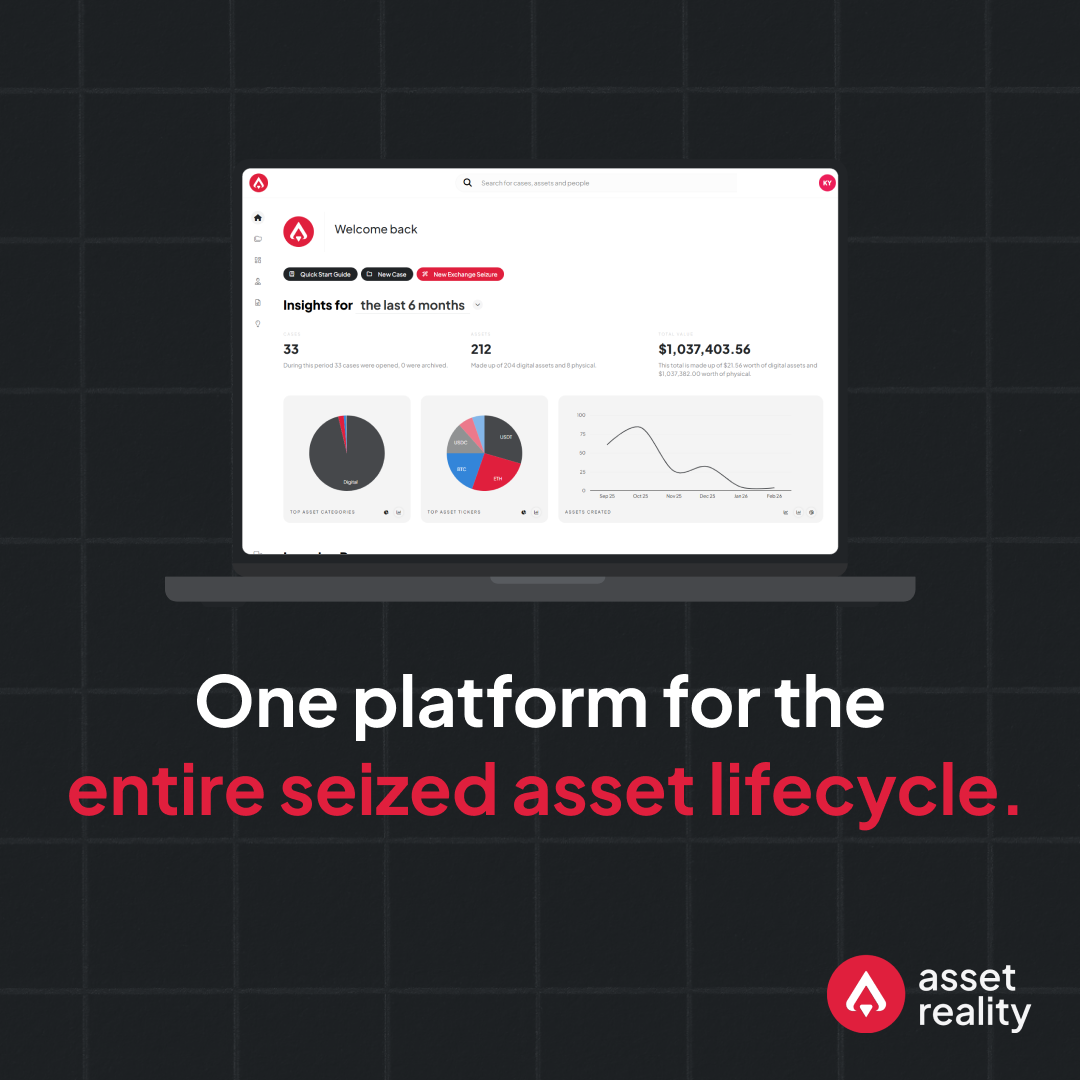
This is where Asset Reality’s purpose-built “Seize from Exchange” wizard comes into action. One of the key elements of this process is that you make the decisions rather than leaving it up to the exchange. The Asset Reality Platform makes it easy for seizing agents to easily and quickly generate seizure instructions for an exchange that includes:
- Virtual asset addresses
- The blockchain that you choose to receive those assets on
- The exact contract address for the token you are ready to receive, where relevant
- The total amount expected to be received
Log in to the Asset Reality Platform to access the video in our Learning Resources section on how to generate destination addresses for exchange-based virtual asset seizures.
For teams that want more hands-on practice, Asset Reality’s Virtual Asset Transfer Fundamentals (VATF) and Virtual Asset Seizure Certification (VASC) programmes walk through real transfer and seizure scenarios, so professionals can build confidence before they’re handling live assets.
To try the Asset Reality Platform for yourself in our secure demo environment, fill in our demo request form.

.jpg)


.png)


.jpg)
.jpg)


.jpg)


.png)


.avif)