S&D E16 - The Future of Tax Compliance in Cryptocurrency
In this episode of Seize & Desist, our host, Aidan Larkin, explores tax compliance and enforcement in cryptocurrency with Miles Fuller, the director of government solutions at Taxbit, former senior counsel with the IRS Office of Chief Counsel and former Special Assistant United States Attorney. Miles shares his background in tax litigation with the IRS and provides insights into how Taxbit helps to trace criminal assets by combining on-chain and off-chain data to gain a comprehensive view of an individual's tax obligations. They also discuss the suitability of existing digital asset seizure legislation, the IRS’ use of John Doe summons to obtain information from exchanges and the delicate balance between ensuring privacy in cryptocurrency transactions and preventing tax evasion before examining and speculating on the future of tax-related asset seizures.


“If the decision-makers keep deciding that digital assets are just this fringe thing, there’s going to be a missed opportunity”
In this episode of Seize & Desist, our host, Aidan Larkin, explores tax compliance and enforcement in cryptocurrency with Miles Fuller, the director of government solutions at Taxbit, former senior counsel with the IRS Office of Chief Counsel and former Special Assistant United States Attorney. Miles shares his background in tax litigation with the IRS and provides insights into how Taxbit helps to trace criminal assets by combining on-chain and off-chain data to gain a comprehensive view of an individual's tax obligations. They also discuss the suitability of existing digital asset seizure legislation, the IRS’ use of John Doe summons to obtain information from exchanges and the delicate balance between ensuring privacy in cryptocurrency transactions and preventing tax evasion before examining and speculating on the future of tax-related asset seizures.
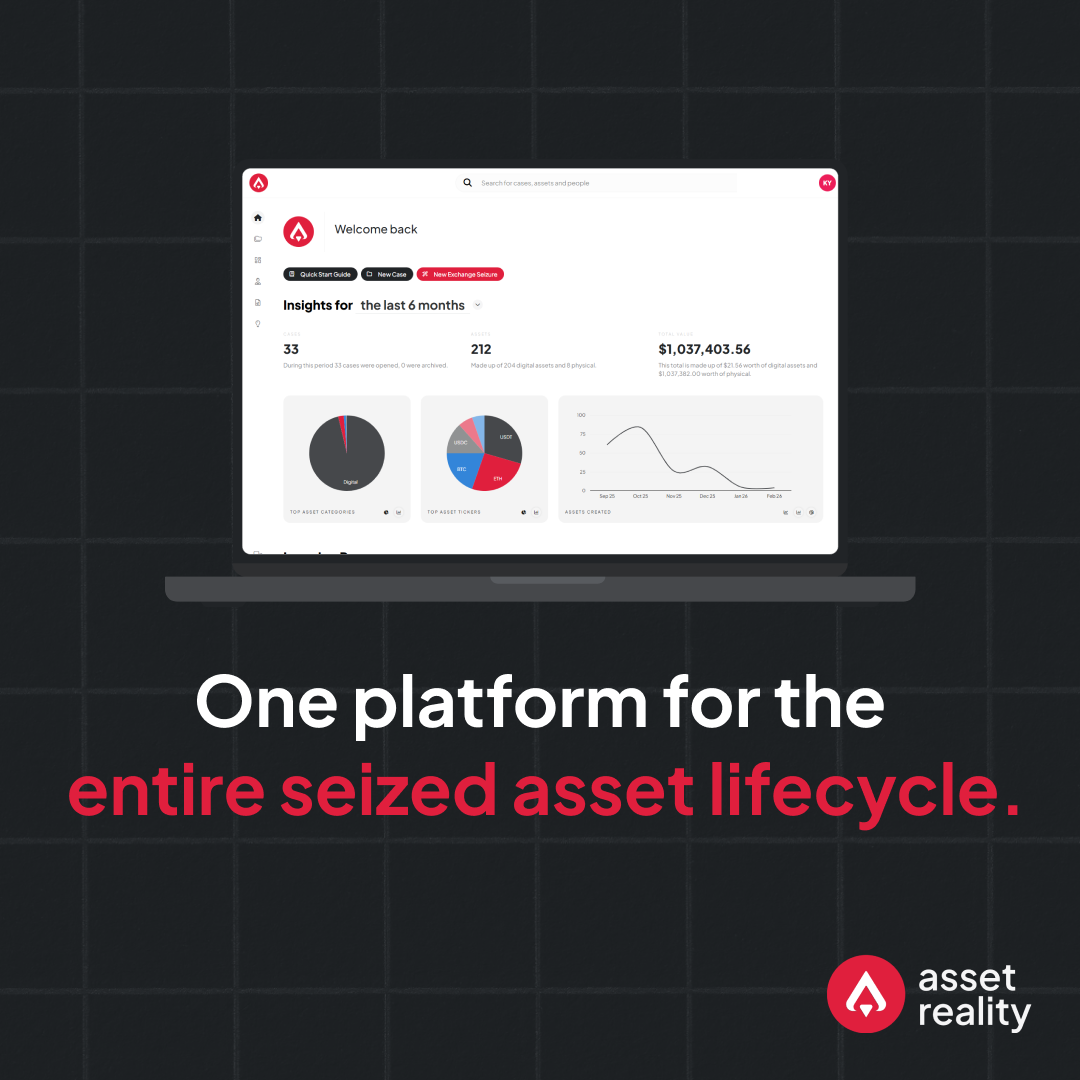
Asset Reality has recently partnered with Taxbit to offer a comprehensive end-to-end solution for tracking, auditing, and reporting on seized asset portfolios throughout the forfeiture lifecycle. By combining our specialist capabilities and purpose-built tools with Taxbit’s powerful compliance platform, we can provide government and law enforcement agencies with more accurate and easily accessible reports and case documentation, ensuring they have the full suite of resources needed to effectively manage the virtual assets they have seized.
If you want to learn more about this partnership, you can visit our website: https://www.assetreality.com/
Timestamps
00:00 - Special Announcement - Asset Reality’s partnership with Taxbit
03:00 - Miles’ background with the IRS
07:00 - Investigative tools and data aggregation in asset seizures
10:30 - Tracing tools and address attribution in tax investigations
11:30 - Integrating complex financial data for tax calculations
13:00 - Streamlining financial investigations with crypto data tools
16:00 - Challenges of detecting fraud in the virtual asset space
21:00 - John Doe Summons for tax evasion investigations
26:00 - Balancing privacy and compliance in blockchain transactions
32:30 - Challenges of virtual asset seizures by governments
41:00 - The future of tax compliance in the digital asset era
Resources Mentioned
- Asset Reality and Taxbit Partner to Enhance Digital Asset Seizure and Management
- Digital Asset Brokers: A Complete Guide to US Tax Compliance - Taxbit
About our Guest
Miles Fuller is the Director of Government Solutions at Taxbit.
As a former senior counsel with the IRS Office of Chief Counsel and former Special Assistant United States Attorney, Miles has a wealth of experience in tax-related asset seizures, having represented the IRS before the United States Tax Court, and has deep expertise in virtual asset tax and compliance issues, including regulatory guidance and policy development. Miles is also skilled in advanced investigation techniques for digital assets and has played a pivotal role in developing strategies to navigate the complexities of digital currency regulations.
Disclaimer
Our podcasts are for informational purposes only. They are not intended to provide legal, tax, financial, and/or investment advice. Listeners must consult their own advisors before making decisions on the topics discussed.
Asset Reality has no responsibility or liability for any decision made or any other acts or omissions in connection with your use of this material.
The views expressed by guests are their own and their appearance on the program does not imply an endorsement of them or any entity they represent. Views and opinions expressed by Asset Reality employees are those of the employees and do not necessarily reflect the views of the company.
Asset Reality does not guarantee or warrant the accuracy, completeness, timeliness, suitability or validity of the information in any particular podcast and will not be responsible for any claim attributable to errors, omissions, or other inaccuracies of any part of such material.
Unless stated otherwise, reference to any specific product or entity does not constitute an endorsement or recommendation by Asset Reality.
Transcript
Paul Iezzi
Welcome to Seize & Desist. I'm Paul Iezzi, Head of sales and partnerships at Asset Reality. Before we jump into the conversation, we wanna share some exciting news with you. Asset Reality has recently partnered with Taxbit to offer a comprehensive end to end solution for tracking, auditing, and reporting on seized asset portfolios throughout the forfeiture life cycle. By combining our specialist capabilities and purpose built tools with Taxbit’s powerful compliance platform, we can provide government and law enforcement agencies with more accurate and easily accessible reports and case documentation, ensuring they have the full suite of resources needed to effectively manage the virtual assets they have seized. If you want to learn more about this partnership, you can head over to our website at assetreality.com. Now onto today's topic. In this episode of Seize & Desist, we explore the challenges of enforcing tax compliance in cryptocurrency transactions with Miles Fuller, the director of government solutions at TaxBit. As the former senior counsel with the IRS office of chief counsel and a former special assistant United States attorney for the states of Colorado and New Mexico, Miles brings a wealth of knowledge on tax related asset seizures. Aidan and Miles discuss his background in tax litigation with the IRS and provide insights into how TaxBit uses both on and off chain data to trace criminal assets. They also discuss the suitability of existing legislation for digital asset seizures, the IRS's use of John Doe summons to gather information from exchanges, as well as the delicate balance between ensuring privacy and cryptocurrency transactions while preventing tax evasion, and finally, taking a look ahead at the future of tax related asset seizures. We've got a great episode ahead. Let's get into it.
Aidan Larkin
Miles Fuller, how are you, sir? Thank you so much for joining us on Seize & Desist.
Miles Fuller
Hey. I'm good. Thanks for having me on. I'm excited to do this.
Aidan Larkin
The main mission behind this podcast is really to, you know, understand the asset recovery and seized asset sector. Everything from civil enforcement right up until, you know, national security and asset seizures and the entire ecosystem. And one thing that keeps coming and is very close to my own heart as a former criminal tax inspector is the interplay. Some of the biggest cases in the world start off as tax cases. Some of the biggest seizures posted in the world have come from tax authorities. So it's wonderful to be able to have you and hear a bit about TaxBit and the role you guys play in the ecosystem. And I specifically wanna dive in as well to understand in how this works because I think a lot of people will not know how this ecosystem is being leveraged, the data opportunities around that. Because without these and without building cases, we're not going to have the enforcement activity that leads to the big asset seizures as well. So that's just to set a bit of the the scene around why we're having this conversation in the first place. So hugely grateful to you for for giving up your time to join us. Do you wanna give us a bit about your background and how you got into this world and how you're now sitting talking to an Irishman about blockchain and about, digital seizures? If you didn't think this would all happen sort of twenty, thirty years ago.
Miles Fuller
Yeah. I totally did not think this would be happening about twenty, thirty years ago. I did not think this would be happening ten years ago. But, yeah, a little bit about myself. So I came to TaxBit, almost three years ago now. And I'll I'll mention in a moment a little more TaxBit, what we kinda do. But then my background before coming to TaxBit is I spent almost sixteen years as a lawyer for the US, United States Internal Revenue Service. I was on the civil side of the fence, and I did tax litigation. So that also meant advising examiners or auditors, investigators, whatever you might term them wherever you are in the world, in the field on their investigations, and then I would later be the person that would go into court and litigate those. But then also post litigation as you mentioned, Aidan, like after the litigation was done and there was a tax assessment on the books, money had to be collected. And that would come in either funds, fiat currency out of bank accounts that could be real property, personal property. And then in the world of crypto, that could include personal property stuff. So I did a lot in the area of abusive stuff, civil fraud, but also run of the mill things. And then I was a person that handled on the collection side some trickier stuff. Here in the United States, there are some mechanisms even on the civil side to do what they call, like, jeopardy levies. That's their term of art on the civil side to be a levy and basically a seizure. So So we had some stuff I worked on that's pretty interesting. You'd have law enforcement personnel showing up at someone's property to secure it. You'd have to get a writ to go on the property. And you'd find things like bouillon, guns, weapons, stuff of value they take in and process that. Pretty interesting area. And then I stumbled through that kind of work is where I stumbled into the crypto space. Kind of through the anti money laundering side where the IRS has investigators that do anti money laundering compliance reviews. Through that, there was a group manager there that reached out to me and said, hey. You know anything about this Bitcoin thing? We got this guy.
Aidan Larkin
When was that?
Miles Fuller
That was probably, like, late 2016, early 2017.
Aidan Larkin
Which in crypto dog years, that's like a lifetime ago. That's like
Miles Fuller
Yeah. Exactly. So they reached out and I was like, I actually don't really know, but I was always happy to, like, do new things. So I said, let's figure it out together. And so we went through the process of having to figure this out. And then about in another year later, the IRS more formally on the tax side, not the anti money laundering side, wanted to stand up a civil compliance program. And I became, like, the lawyer that when they set up the program, I was like, hey, that lawyer knows something about this stuff. Go have him help. And that was the path I took. So I learned about it there. And then eventually, as you mentioned earlier, Aidan, like the data in this space and the way stuff works and the technology works, I learned more about that. The IRS ended up having to leverage a vendor to help with managing that data, being able to process tax calculations to come up with tax assessments. My role, like, I sort of pivoted from just being the lawyer, like, legal advisor to also being sort of the data guy, helping them figure stuff out. And the IRS retained a vendor to do that, which is TaxBit. We liked what TaxBit was doing. I I jumped ship to come over here and help grow the space from outside the government and help educate other government agencies about what's going on. And that's what I've been doing for the past few years. So I'll pivot briefly to like TaxBit. Really got started in the consumer or retail investor space, helping individuals file their taxes accurately, but slowly has moved out of that to more of high level information return reporting. So you go to enterprise businesses that services customers and providing those customers with forms that'll help them properly report their taxes. Here in the United States, we have very robust tax information reporting regime. In Europe, you have, like, DAC eight coming into effect. If OECD level has CARF, that kind of stuff. So we're looking to enable that. But in line with that, that's actually a particular relevance today as well is we do accounting, like financial accounting. So inventory reconciliation, pricing, valuation, tracking, digital asset units, where they're going. We offer that service in the private sector. And then in the government sector, we help governments with investigative tools that'll help bring together all the data. Most people in the space in the government are familiar with tracing tools, which help identify sources of information, like who controls what address. But after that, the next step an investigator has to do is get all the transactions that are occurring there and bring them all together to be able to do a calculation or some sort of financial calculation or or analysis. So that's the work we do. And then as you go downstream, we'd be able to enable, like, accounting for assets that are seized so you can track them for internal controls or oversight like inspector general reports and that kind of stuff. That's a long winded answer to your short question.
Aidan Larkin
Yeah. There's a lot to unpack there. And I think this is the reason this this show exists is that there are so many topics that it is overwhelming when you think about the asset recovery space. Our mission we regularly talk about is to keep it simple and ask the questions that people would be afraid to raise their hand in a group, or they wouldn't ask at a conference, or they wouldn't ask in front of their boss or their or their peers. And I think, particularly knowing that our audience members will predominantly be from either a law enforcement or financial investigation background and the people that are involved in the nuts and bolts of the seizures. Certainly, what I always find interesting was the constant changing narrative in this ever evolving space. As you summed up quite well, everyone knows the tracing tools. And what we're seeing now is there's lots of different players in this ecosystem in terms of sectors. And I think half of the battle is just like law enforcement understanding what datasets are available that can help you do your job, whether it's building a case, whether it's on the intelligence building side, whether it's on the this person ran a Ponzi scheme, they've disappeared. What other assets do they have? It's like the the Walter White breaking bag. No. There's only so many car washes you can run a day Yeah. To make the profits that you're making. And certainly as an ex tax inspector, I was always looking at that business economic side to be saying, you're claiming you're not a cocaine dealer or an arms trafficker or involved in human slavery or some other heinous act, and you're claiming it's from legitimate income. And I imagine people thought that they could use crypto assets and abuse crypto assets to hide and say, oh, it's like someone saying, I'm a stockbroker. Well, there's ways of tracking through just how many trades did you do. Could you help us understand the ecosystem a little bit just to sort of zoom out? Thinking about sort of your former hat in the IRS and what you're now doing in the private sector, all of these roads leading to asset seizures. Just to take us through a bit of a journey on what sort of data is out there, is this a case of I think of the analytic tools as dots on the map, and they're being able to say this transaction moved from here to here. But I'm really interested in what you said about aggregating all those transactions because as an investigator, I wanna know what have they actually done, what wealth have they accumulated, what is the tax assessment's gonna be based on. How does that work in real terms? Like, what is the fundamental difference between something that the likes of yourselves do on, say, a Chainalysis, a TRM, an Elliptic, for example?
Miles Fuller
Yeah. You've described it perfectly. And I think what we're seeing more and more and something I always talk about because we spend a lot of time with agencies that they just think like, oh, whatever it is on Blockchain, I could go see that. It's all public, which that's not really a true statement. Not all Blockchains are totally public, but they also miss the point. Big picture point is really that the on chain activity is only a component part of all of the activity that an individual might be doing. If an individual is engaging in activity in a centralized exchange, then that activity is gonna kinda be off chain activity. It's gonna be in a private ledger somewhere. So you're gonna have to go to your exchanges out there. That could be like your Binance or your Kraken's or whatever. You have to go to that exchange and get that in the same way. And say and it's funny because that part of the conversation then starts to really resonate with investigators because that's the way they're used to thinking. Like, they go to banks and issue subpoenas and summons is to get the banking records. It's like, oh, it's the same process. You just go get this stuff. But to your bigger question of the way to think about the ecosystem is a little bit when you get into tracing, tracing tools are very robust and they're really good at going in and saying, hey. We have a starting point address a. With address a, I can see that things move to address b, to address c. And then I can start to get a sense using various heuristics around whether our individual who's the subject of our investigation, do they actually control address a, address b, and address c, or do they just control address a? So you start they can start to be really robust at building out. I think of them as like plot point. Like you're thinking of a map. Like network map. Feel like an ITU charted. Yeah. It's like, hey, now I can say, like, okay, I know my subject controls these fifteen addresses, and I've made the connections. I have the evidence to support the connections to make the, what they call, sort of the term of our like an attribution that my individual is the attributed owner of these addresses. But where that stuff kind of stops is each of those addresses may have ten, a hundred, or a thousand transactions occurring at them. So you have to be able to take all of those transactions at all of these addresses and then layer into that possibly the off chain activity at various centralized sources, which has its own grouping of addresses. And at some point you get we've seen some of these I think the most I've seen in one case is twenty million transactions over, like, multi year yeah. Transactions occurring over a multi year period across multiple sources. And you really as an investigator, that's an overwhelming.
Aidan Larkin
Yeah. That's a pretty big spreadsheet.
Miles Fuller
Yeah. Yeah. That said, it blows out Excel. So all of a sudden you're you're stuck. You know, the story of the US with this, the deer in the headlights. I don't know if that's a phrase across like, yo, you're just like, where do I go now? I can't I can't do this.
Aidan Larkin
That's true. Yeah. That's true.
Miles Fuller
Complexity becomes, like, exponentially more difficult.
Aidan Larkin
It's kind of like saying when people say it's Aidan has a business. Yeah. But if that business is a international real estate agency, there's a lot of stuff underneath. Or Aidan has a business, but he's a stock broker. Yeah. Like, that's not the whole picture Exactly. Of a moment in time.
Miles Fuller
And so we've started working on so our goal, what we do at Taxco where we can really help leverage here is our software tool allows you to take those twenty million transactions from all these sources and put them together. And even before as an investigator, you start thinking about the actual tax charge, like, what's the tax calculation? Like, here in the US, we call it, like, the tax loss that gets calculated. First step is just gotta get all the data together. Gotta start looking at where things are moving from source a to source b. Those are not usually non taxable, you know, I'm just moving around. And then, that's all on the blockchain. But then you start thinking about this goes back to where you started, Adin. Like, you go, like, well, if I'm a stock broker or something, maybe I'm just running some car washes. All of that's connected to real fiat money. So then you start saying, I need to now I need to be able to layer in these bank accounts. So in our, you know, in our tool, you can go and get the bank account data layered in, and then you start seeing the movements of fiat out of a bank account to some exchange where it on ramps, then converts to some crypto, then off the ecosystem. The goal is to get that whole financial ecosystem picture for a person. So as an investigator, you can start really making use of what's going on with the data, and get a holistic picture in one place, and then be able to apply some filters so you can pull out the pieces you wanna look at and start to work with them. Because any good investigator I shouldn't say good. Most investigators are afraid. They're gonna work kind of in Excel spreadsheets. Right? You're gonna pull out and do some analysis there. Follow the money. And Yeah.
Aidan Larkin
The problem I've always had with follow the money in crypto is that you can just become click hubby. Mhmm. And it's kind of like, what is the purpose of the investigation? Is it evidential collection? Is it asset seizure? Is it deterrent? Like, what is it? And with crypto, as you said, you can be doing a great job staying busy, and you're on transaction nineteen million nine hundred ninety nine thousand, but you haven't got a criminal yet. You haven't got a charge yet. Admittedly, I didn't know the depths of this. And when I think about then with my old investigator hat on, surely outside of tax, and for the avoidance of doubt, we're not promoting you guys. You don't promote us in the sense of this will sound like I'm no I'm I'm blowing smoke. But surely then that goes above, and I have no financial interest in tax, but I'll make the declaration. Surely that goes above then just building a tax case. Because as a financial investigator, I wanna build up a picture of just the wealth that my suspect has or the wealth that my suspect has accumulated from a money laundering charge point of view. Are you seeing uses of your tool in just building that financial picture to just be before let's say they've never put in a tax return. So you automatically know there's a tax charge. But just in a good old fashioned criminal investigation, I wanna know if he's a car wash owner or he's a cartel boss. I'm getting the impression from you that actually by aggregating all of that data, you get a pretty good guess as to how bona fide their version of events are versus what the on and off chain data is showing you. Is that a fair assessment?
Miles Fuller
Yeah. It totally is. That's what yeah. That's really what we've been moving to to expand past. And in that regard, it's more of the tool function as this, like, economic picture tool, data assembly tool of putting all this stuff together, organizing the data in a meaningful way for the investigator. And then you still think the tax calculation, sort of tax reports there, they're there, but they're like a feature of the tool. So if you're doing something that's a tax charge, hey, you can spin up the tax piece as a report to pull out and see what the tax angle is if if you need to fill out, figure out that part of the charge. But you can also more generally do the follow the money much easier. You can get all the data together, all the stuff, and then that allows you and I think probably what your experience, Adin, is, like you said, you probably spend countless hours. You're on transaction nineteen million whatever. The goal of VAR tool is to help you get to transaction nineteen million or whatever in a third of the time that you would have already had to do it. So you can now spend more time on the investigative analytical thinking and less time on the data management piece that you do when you're just in Excel trying to manipulate data and and assemble it. That's really an administrative task. That takes up a lot of time.
Aidan Larkin
It's like finding their weapon. Yeah. And it's like, okay. We know it's them. We found the address. We pinned the tail on the donkey. We know it's the person. Now we kinda need to know what have they been up to because every financial investigator knows that the defense is going to be, it either wasn't me, it was somebody else using my stuff, or these are all perfectly legitimate transactions. Mhmm. And I guess that that's where and I'm keen to hear your experiences. What is the difference in scale? When I think about if I'm trying to hide what I've been doing and I was an art dealer previously, there's only so many times I can sell a painting. Yeah. But exponentially, I can sell a digital asset. And as a fraudster, I would think that I can abuse real estate and art and bullion and luxury watches to an extent. But tell me a bit about what you've seen and what you think some of the challenges are around that. When it goes bad, how people can abuse the blockchain. I saw, like, examples of wash trading, those statistics where people are just showing incredible amounts of abuses. It's not that the blockchain is bad. It's not that digital assets are bad, but it's a case of if governments and law enforcement don't have the right tools. If you let this thing run riot, I'm imagining that the criminals came up with pretty novel ways to launder at scale and abuse something like digital asset transactions.
Miles Fuller
It's exactly what you're saying. We've seen and I think something that law enforcement or government agency personnel don't appreciate is I'm gonna call it, like, this is the economist to me kinda coming out, like the low transaction cost of being able to do more things. So in historical financial fraud cases, you still had to go down and create another bank account. You had to go set up another business front. These things all had costs. It took time to do this and there was some cost to that in terms of like transaction costs. In the crypto space, what it's really reduces transaction cost. It's no difficulty for me to go and spin up another address. And this is where you're going. So now I can keep going and just spinning up more and more wallet addresses to increase that complexity by just moving things. And I did have recently a a conversation with a criminal investigator. We were talking about our tool and he was talking about what he has observed. And he's like, there's some blockchains where because the fees are so low and it's so easy to spin up addresses, you just think that the mindset of the criminal is very much like, how many addresses do I need to pass this transaction through before I have made it so difficult for the law enforcement person to stop looking? Is that ten? Is that fifteen? Like how many movements do I need to do? And then how can you squish those down? And that's where I think in the approach from our tool of sight, it's it's trying to say, what can we do to alleviate that? It doesn't matter if it's five, ten, fifteen, or a hundred. If you could just suck in all the data from those addresses, and the system can basically say, hey, these are all like kind of wash movements, like non taxable. Just where's the actual starting point and where's the actual ending point you're interested in as investigator? And surface those to the investigator, then the investigator can focus on that. It's helping you pull out the needles from the haystack and say, hey, go look at these. And everything else is just it all matches out and you don't need to worry about it. And that's kind of the the angle we're after.
Aidan Larkin
And I think that's a good analogy and a good example of that is what we've seen with, like, no Internet. We saw fraudsters go from having to knock on a lot of doorsteps and make a lot of cold calls to now you've got entire factories with AI bots and Twitter bots that if you write, I lost my crypto, they jump on. No. It's like fraudsters using multiple email addresses in the past where it was the same guy walking around. Like, we think of that sixty, seventies fraudsters. And that's where I was so sort of keen to talk to you because I think that people haven't really grasped. They think that analytic tools to an extent can be this panacea. And as long as you have an analytic tool, you're good. And, again, that's not to be negative about the the phenomenal things that analytic tools do. Just like any response to any crime, you need a suite of different things. What sort of triggered the idea for this podcast, I'd heard people talk about, oh, no. We don't need those tools because we already have this one over here. And I was like, you wouldn't have one thing in your armory. Obviously, if the shoe fits, but getting specific with some of the tax authorities, what are you seeing currently globally in terms of the overall maturity of understanding of, like, where countries are? Like, we've seen lots of public headlines about John Doe summons being used by organizations like IRS CI. Are you seeing examples of that across Europe? Is this very much a US dominated thing? Are you seeing with partners to the extent that you can talk about? Are you seeing lots more grasping of the knowledge? Is this being pushed down by the OECD and others? What's your personal take, if I can ask you that, on where the different tax authorities are globally in terms of the tax enforcement involving digital assets?
Miles Fuller
No. I think they're all, like I I talk about them as, like, they're all on their own journey. So as the vendor in the space, you try to kinda meet them where they are and talk about them. I do think, as you point out, there is clearly a general level of, like, in their armory, so to speak, of every agency we talk about. Their starting point is always, you know, their entry point for all is always very, you know, law enforcement side before the civil side.
Aidan Larkin
It's like go after the worst stuff first.
Miles Fuller
Yeah. Going after the worst stuff. And then then and for that, then they become they're very familiar, every conversation, very familiar with tracing tools. I think some of them is exactly it's opening up their aperture, educating them a little bit about like, well, once you kind of move past the tracing tools, you wanna move tracing tools, you wanna move this out of law enforcement, just like the criminal stuff, and you move into the civil. There's this data that you can use and the data's there. Because that's the blockers that various agencies have. Like, here in the United States, they've come a long way in understanding that, no, it's feasible to get a lot of this data from both on chain and centralized sources and bring it together and make and do, like, meaningful tax enforcement, either civilly or criminally, to do it. But in other countries, I think there's still a little bit. Now I think part of the reason for the US having a little bit ahead is US is it tax information reporting regime or what they've been able to use their John Doe summons type tools. That's a tool they have here that they have the authority to do that kind of stuff.
Aidan Larkin
For some of the non US folks, they won't understand what that is. Can you tell us that? And also, can you confirm, is that a new crypto thing or has that been used in the past?
Miles Fuller
It's been used in the past for years. Actually, one of the classic I'll tell the audience what the John Doe summons, what that means. One of the classic stories is probably like two thousand eight. Here, the US IRS probably almost created international incident with Switzerland where it issued a John Doe summons on it was UBS Bank at the time, at least the correspondent account here and obviously Swiss banking laws. So that was in a traditional banking sense, you know, a lot of privacy laws. And that was a big shift in international banking or what we call offshore banking. So they've used that tool as John, what we anecdotally refer to as John Doe summons here in the United States. What it is, it's a tool, it's a statutory tool that's given the IRS, where if they see a particular third party record keeper, so that's often could be like a bank, but it could be any place that economic activity is happening. And they identify that record keeper to say, hey, okay. People that are transacting with whoever that third party is don't seem to be paying their taxes. So they gotta go build kind of a case around it to show that there are customers of this place that are not paying their taxes. And the IRS, the idea where the John Doe comes from is the IRS doesn't know who those individuals are. So they will go to a court and they have to get pre approval from a court before being able to do this. They have to go build a case, go in front of a judge here in the US and say, hey, we've identified that there's some tax non compliance occurring at this particular third party record keepers, whatever the business might be. And what if they present that to a judge, and then what they'll do is they say, for the group of customers, that's the John Doe. They call the John Doe class. Like a category of customers.
Aidan Larkin
They don't have to name the specific person. It's like a group to name
Miles Fuller
Yeah. Because they don't know who they are. The whole idea is, like, we don't know who these people are, but we know there's a class of customers here. That's where the John Doe part comes from. And the court will review that. And if they review it, then the court gives approval for the IRS to go issue a summons here civilly and administratively, we call it a summons. It would be otherwise could be like a subpoena, would be the similar term of art. They'll issue it to that third party record keeper and say, hey, we want the records of all your customers who meet this class qualification, all of their records of the activity they're doing. And then the IRS will get those and try to tie them back to actual taxpayer records and figure out what's going on. So the IRS had used that for years. They used it in early two thousands for, like, offshore credit card schemes. They used it for international offshore banking all around the world, kind of like the EBS thing I mentioned. And then more recently, they've used it in the crypto space to go to centralized crypto exchanges and say, hey, we know there's people that aren't paying taxes here. We have a few examples. We can show the evidence that's happening, and they'll get it. So think of that as a huge multi user, multi customer data set of multi year activity on an exchange. And usually, there's a point in time, a start and stop point in time. It's a single you know, they say, here's the data. And the IRS says, you know, gets the data and starts trying to go back and see who in the data set is compliant or not compliant.
Aidan Larkin
And it's that matching exercise at scale because you basically have John Adams, one high street, has this account. But again, I think where a lot of people don't see the scale of blockchain transactions is that that one person could have ten thousand transactions. And then I'm imagining that's where your software comes in to sort of plug the gap and say, that person should have declared half a million dollars in profit, but actually on their tax return, it's zero or it's ten thousand dollars. And then all of a sudden, it's like, ping. You have a candidate for a tax investigation.
Miles Fuller
Yeah. And that's exactly what they're doing. They're taking this data. You know, they have the data sets only for that one centralized exchange, so it's a limited picture. And then they'll kinda run one, they'll just look at people file the tax return that had crypto on it. That's a low hanging fruit. Right? To be like, oh.
Aidan Larkin
Yes. That's what I'm talking.
Miles Fuller
This guy's got this and he didn't even report anything. But they'll use that to triage as, like, lead generation. And some of those leads probably go to the criminal side. Some of them go the civil side, and then they'll open up investigations. And then as they open investigations, then they will start back filling the other sources of data. They'll use those tools we're talking about, whether it's tracing to start getting identifying other sources of data where this person's doing activity, and then you just keep layering in the transactions to build out that full economic picture. And And when the dust settles, you can be like, boop, hit the button and it says, oh, here's what their tax calculation is. Or you might get used for a criminal investigation for something else.
Aidan Larkin
So then again, the seized asset practitioner in me with rose headed glasses seized that, you know, as a phenomenal technology solution that allows me as an investigator to identify cases of noncompliance, cases that are gonna be enforcement related. And also, I imagine, will help me identify potential asset holdings as part of my overall investigation that I wasn't aware of previously. Mhmm. So how do you then balance that? And again, not the views of tax, but the view of miles. How do you think about because I can imagine as a similar background to myself, having worked for a tax authority, it's not the most loved job in the world. It's a bit of a dinner party killer. I always find in the back of a cab it's a real, what do you do? Tax investigator. The conversation just shuts down. Yeah. And I remember one of the earliest articles I read from one of the usual crypto bros, who I'll not name, was moaning about companies like Chainalysis or just, you know, monitoring the blockchain for the man where they were sort of complaining. Like, how do you I mean, you must get into conferences. You must get into sort of dinner parties and social situations. The balancing the need for privacy and also probably the misunderstanding that a lot of people have. Just because something's on a blockchain. It's pseudo anonymous, but it doesn't mean you don't pay tax if you're a US citizen. Or is it something you get a lot, balancing privacy and digital transactions? And what's your stock answer for that?
Miles Fuller
Yeah. It's a tough one because that's a very touchy I mean, here in the United States, the privacy things, like, a very touchy subject. You know, people speak out. And it's a hard question because I think I break it out. And this is the lawyer in me coming out. So I kinda come out and say, like, when you have that conversation with people, I try to approach it in a way that, one, I mean, I keep my, like, personal right or wrong views of what I think to the side for the moment. But you gotta talk to people and say, like, look, there's two ways to think about this. There is, what is the law as it is today? So, like, here in the United States, you know, we're a common law jurisdiction. We have a constitution. Like, what is the the jurisprudence or the precedent that exists around privacy rights and what the government is able to do? That's, like, the first step of the analysis. Like, what's the lay of the land? And how does that analysis apply to blockchain and that stuff? But then there's a second question which is, well, if we don't like how that analysis applies to Blockchain, there's like a policy side, which is like, well, if you don't like how that analysis might apply to Blockchain, then that becomes a policy question, not an application of the law to the facts question. And you gotta take the policy question up to congress or whoever or, you know, you're in the UK, up to parliament. You gotta make changes to get what you want out of this. But when people say, like, oh, well, you shouldn't be accessing it. And it's like, well but for years, if the IRS were to conduct a financial investigation, they would go and access your bank records. Of course, to do that, they have to issue a summons unless you turn you know, someone could turn them over voluntarily. But if you don't, the IRS then would issue a summons to your bank and then they get the records. And there's precedent here talking about whether or not that's a violation of privacy and what all the rules are the IRS has to follow. So it's like you just apply that same approach to Blockchain. Now there is no bank when you're doing on chain Blockchain. There's no bank that you go to to do it. I do think that I highlight to people where I I sympathize with people that are a little more on the privacy warranty that I agree with them on is is the ability of like, I could go to a bank and they could go get my bank records for a certain set window of time, and then that's done. Like, the visibility is gone. And then I could even move banks, and then they wouldn't know there's no, like, continuing capability of a of a governmental agency to, like, look what I'm doing, like, pink under the hood. Whereas, when you're dealing with on chain, there is. Like, once they know my address, it's forever they know my address. And that's a true point and is pause for concern in the privacy community. But the flip side of that is, that's a feature of this technology was sort of the pseudo anonymous. You know, people think it is pseudo anonymous. Technologists call it pseudo cryptographer. It's pseudo anonymous, not anonymous. And I laugh because I kinda get like, well, Aidan, if I sent you like five Bitcoin, you from now until the end of time would always be able to go back to my address that I sent it from and see what Miles is up to. You know, and you're a savvy investigator. You could figure out what I'm doing with stuff. Now, of course, that's at a personal level, not a government oversight level. But that's the way it works. And so there are conversations, but I do think those they end up falling on the policy side. Like, what's the right answer? Should there be limitations? But it's an intentionally public block chain. That's the transparency we're relying on. I don't know where I come out on it. I do try to be cognizant even, like, you go back to the Bitcoin white paper. This exact issue is raised in the white paper where the authors of the white paper point out, like, hey. If you're gonna do this, whoever you interact with is always gonna know who you are, know your attribution based on where you sent or received Bitcoin units at. So maybe a good, attribution based on where you sent or received Bitcoin units at. So maybe a good protocol is to always spin up a new address for the next received transaction so they can't people can't track you. Of course, Chainalysis will help solve that problem by putting things together if you co spend. But these are it's gotta be figured out. There's it's a little bit unclear of where it's gonna go. But I would never hamper because I think it's back to a point you said. I would never fault the government for trying to suss out tax noncompliance. Why would they not be able to use all the tools available to them within the binds of the law in the same way that you as an individual would be always to go look up your friend? Like, why couldn't they just look up somebody? Like, why do we wanna tie the hand behind the back of the government? And so unless the law changes, which is more that policy level where you get congress that'll come in and say, like, hey, you can't do this. But why fault them for using the tools they have? And at the end of the day, even if you're a very privacy oriented person, tax compliance, like, that's not an excuse to not be tax compliant.
Aidan Larkin
It's a conversation that we could have for hours. Yeah. And it's useful for people to draw the comparisons. I mean, it's it's kind of the cost of doing business. It's like saying, I want to use the Internet to share photographs with my family in Australia for them to see how me and the family is progressing, but I don't wanna use a third party. Well, then don't. Print off some photographs and post them in the postal service in a sealed envelope. And there's always another way, and I think that sometimes there's a double standard that people want all of the advantages of the technology. Because truthfully, you could go onto the land registry and it goes back to are we thinking of crypto as a financial bank transaction or are we comparing it to property and in rem? Because if it's property, well, the person that buys my house, I can look up on the land and most governments around the world have a public registry of owned property. Now you might have something like a limited company or an LLC that buys the property to kind of obfuscate the ownership from a privacy point of view. A lot of celebrities buy their property in London through an offshore LLC for privacy rights, But any decent investigator will be able to at least start to join a couple of dots. And I think with crypto, it'll be the same double edged sword. Yes. You can look at all of the previous transactions. But also, if you're savvy enough, you can probably find a way of onboard at a KYC and regulated exchange, off board again, and create a sort of new you can break the chain. In the same way, you could keep the same cell and mobile number for twenty years and have it on every social media account, and everyone's gonna find out who you are. Or you could habitually change your phone and use VoIP. So, again, I often love the fact that a lot of these debates take place on social media platforms as well. You know, people bitch about privacy on Twitter. Yeah. There's an irony to that. But, look, I agree with you. I think that the cost of doing business and having a balanced civil society is that unless you are a canned peaches, bunker in the back garden off the grid type, you can't really complain about governments tackling noncompliance, but then complain about taxes being too high. And I often see that there's those slightly conflicting arguments of people that they want it every which way. But similar to your background and my background, I've been involved in, you know, investigations of change of exploitation. I've been involved in counterterrorism investigations, WMD related financing. When you see what's possible with this technology, if you'd let it run unchecked and those small percentages that will abuse it, it will have a potentially catastrophic effect. So I think that we talk about it regularly on the show. I hate to quote Gary Gensler, but all this technology has to have seatbelts in our bags. And I think you'll probably be at the forefront of a lot of those arguments because tax is such an emotive subject. Let's switch gears a bit to asset seizures then from what you've seen with the different governments being on their own journeys as you said. Do you think we're in a position right now that actually the legislation is pretty fine, governments are in a position to do digital asset seizures, or are you predicting that there's gonna have to be big changes in policy and legislation and regulation? If you were just the future gaze for a bit, what do you think the digital asset enforcement? Do you think people are gonna pay their outstanding tax bills with crypto in years to come? What do you think twenty thirty is gonna look like for a asset with seizures involving tax cases?
Miles Fuller
Yeah. So if we pick apart a little bit of what you have, I think there could be a time and a future state where before we get into actual seizures and if I put seizures in, like, forcible taking of property to fulfill a debt to the government, and even just voluntary compliance payments, so like paying your tax bill with Bitcoin or something. There could be a time I live in Colorado in the United States. In Colorado, the the state government here, the revenue authority actually accepts payments in Bitcoin for people. It's funny, I have conversations with some of the government officials here. They're like, not a lot of people do it. But the unfortunate thing is somewhere in being able to enable that capability, they lost what is really the most attractive point of Bitcoin, which is the third party and the the very small amount of fees. Yeah. You know, they charge so many fees because in order to actually pay, the government charges a fee. Here in the United States, you guys probably like it's like going to Ticketmaster or something. It's like the fees on everything is obscene. So I think a lot of people don't do it because they're like, well, I could just liquidate on some exchange and then just get the money in my bank account and send it over. But there is a time as the fees as that becomes more accepted, I think the fees will drop and you maybe would start to see the ability. Yeah. At the federal government level, they have a harder time because they can't it's a federal tax payment. They have to take it in the federal fiat, you know, legal tender. So they end up having to have a middleman that would liquidate and pay the government stuff. And a lot of states have the same problem.
Aidan Larkin
Is that actually in the forgive me my ignorance. Is that in the constitution? Is that enshrined in law that it has to be paid in fiat? Or
Miles Fuller
Yeah. The tax debts will be paid in the legal tender. That's I can't like, I don't know. You're making me think as a lawyer of a is it constitutional based thing or just a federal statute based thing?
Aidan Larkin
Either which way, it's gotta be done that way.
Miles Fuller
I mean yeah. So and, definitely, I'm sure it is, like, in the UK, like, pound sterling is, you know, the legal tender there. So here, like, the reserve notes and stuff, the federal government Yeah.
Aidan Larkin
I I I couldn't turn up with US dollars. They would say, go get a bank. Get a change in the pines.
Miles Fuller
Yeah. Exactly. They go exchange it and you do it. So it's the same concept for crypto. So that's like voluntary payments. But I do see there is a path to at some point where that enables people who are operating particularly, even if you think of the whole array of digital assets. So beyond Bitcoin, like stable coins and stuff where it's like, oh, you just pay in a stable coin because I'm holding all this, you know, USDC or something in my wallet and I just pay my tax bill out of it. So that's an option. Now when you think to enforced tax collection, like involuntary tax collection, so this is the side. I mean, we already are seeing that certainly on the criminal side here in the United States and governments. I think that's their first step. Like you said, they're always going after the the baddest people first, but then they have run into over time, as you guys are aware, like logistical hurdles. There's just logistical hurdles and new policies to put in place. A lot of the agencies would have, even in the IRS, they have policies in place very good for handling real property seizures, personal property seizures. Sometimes pretty complex and pretty exotic pieces of personal property, for seizure purposes. But the policies are there and so they can follow them. Digital assets at least, it's a new type of technology, so it requires a new set of policies. Also, the low transaction costs become or the the ease of how things can move creates an internal controls problem that goes up. They get worried about someone's gonna sneak off with a little bit of Bitcoin as it comes in the door. Someone internally, like an internal threat. But then they need the infrastructure. So that's like the wallet infrastructure. Like how, you know, the government's gotta be like, well, I need a Bitcoin wallet to get this Bitcoin in from this person. And so that's I think on the criminal side, we're starting to see that solved. On the civil side, my experience, even civilly with the IRS, was they just wouldn't take it. They would do is they would identify units held on, like, a centralized exchange. And this is where the investigative part is helpful. Because as you mentioned, like, as you're building out this whole economic picture, once the investigation's done, you get something on the books and there's some money owed. You kinda know where the sources are that you can go, like, hey, this guy's got stuff on this exchange or that exchange. So the civil side of the IRS, they use administrative levies. They would just kind of, like, almost very similar conceptually to wage garnishment. They they would just issue a thing to the exchange and say, hey, this person's whatever they got in their account, liquidate it to fiat currency, pay me the fiat currency. And and they don't because they don't have the infrastructure in the government on the civil side to take the units. Now the exchanges are pushing back and being like, well, that causes my internal people to have to take steps to liquidate this and cut a check and and a wire transfer of funds to the US government. So they're pushing back saying, no government, we wanna just transfer you. Like, again, low transaction costs. If I know that Miles has five Bitcoin in his account here and like ten ETH, I can just, you know, withdraw those or send those out of his account to the government's address somewhere for Miles in response to this levy order that's been given and be done with it. And I only have to do that. I don't have to liquidate and send fiat and all this stuff. And so getting the the civil side is being the second entrance from the government into the space up and running with what the tools
Aidan Larkin
Same. But that's also then it's the big scale. Yeah. Because like all governments around the world Yeah. Criminal teams usually have the budget. They're a bit more cutting edge. They have more technology. They can move a bit quicker. They have a bit more bandwidth. Yep. But then you have to take that and go, how do we roll that out to twenty thousand collectors Yep. For example. And this is why Asset Reality exists is trying to solve that exact problem you've mentioned to be in a position where someone can just deploy infrastructure really quickly. So that in the perfect world, if no someone says, hey. We've got five Bitcoin belonging to this person or no someone has a deceased estate and the government needs its own wallet, the idea is they shouldn't have to build their own mini infrastructure with a hardware wallet.
Aidan Larkin
And I think that's where those two things sort of pair together. And I think everyone's watching the US going, let's see how the US does this because you very rarely will get in trouble if you implement something that's been successfully done in the US. So I think the world is kind of waiting to see a lot of what you guys are doing first.
Miles Fuller
Yeah. And I think that's and what's good and you mentioned, like, the hardware wallet versus even a software wallet. These are points where pose new, like, learning opportunities. Because so the government here even you know, when I've worked on it, I mentioned earlier about, like, what the IRS would call, like, a jeopardy levy. So there's a sense of urgency to get the property before the person absconds with it outside the United States or something. And elements of personal property, they're often more, you know, they're movable. This is intangible property. Digital assets are intangible, so the ability. And so but even with personal property, you don't ever have to worry about like, oh, when I show up at whatever location and take this personal property, maybe it's weapons, it's gold bullion or whatever. I don't have to worry about by the time I get back to the office, that somehow my subject has taken that property out from under my nose. Because I have the property. It's physical. With crypto, the concern with the wallet stuff is getting it off of the taxpayer's address onto a government address. Because there are stories where it's like, oh, yeah. We seize this guy's hardware wallet. He's given us the passkey to access the wallet, so I can see the private keys to then be able to manipulate the digital asset. But by the time we made it from the location where we seized the wallet back to the office, he's regenerated from the seed phrase the key and he's moved the units. So then the units are gone. And then you gotta go back and do the whole thing again, and then he probably gets in more trouble. But that's a risk and not a risk that they, I think, at first government saw coming. And now they're realizing, like, we need to show up Johnny on the spot at the moment of seizure, and we need to move the assets before while this guy's, like, busy being talked to, get the assets so they can't have that risk of loss. And whether it's the subject themselves or there was a story here and he's, like, the brother of the subject who also had the c for, like, dinner.
Aidan Larkin
Yeah. The Harmon Keyes, I think it was? The Harmon Brothers?
Miles Fuller
Yeah. That's a key element. That's a new risk that they never had in normal, like, seizure.
Aidan Larkin
Yeah. That's not gonna sit in a policy guidance. Officers aren't being trained on that being a risk. It's the example we often give is that it's kind of like seizing the key to a safety deposit box.
Miles Fuller
Yeah.
Aidan Larkin
And celebrating because you've got the key. Yeah. But nobody's watching the safety deposit box.
Miles Fuller
Yeah.
Aidan Larkin
And there could be multiple copies. Yeah. And all the while you're high fiving the seizure and then it's like, hey, we'll go back and get it now. It's like, it's not there. Yeah. Now of course, on the other side, you have this inherent tracing functionality and you've all of this wonderful data collected by the blockchain. But the black hole that still exists is that, like any fraud case, if they're truly organized, they can really put assets beyond reach in the same way. If someone steals a painting, liquidates the painting, and puts the cash under the bed or travels in a duffle bag the rest of their lives, you're trying to hit and move a target. And I don't think that a lot of people have realized that with crypto, it's also entirely possible. If I was disciplined enough as a fraudster to just take that money that the police think they've seized but they didn't get it or the tax authority didn't get it. And I put it on a hardware wallet or I have a seed phrase somewhere, and I tattoo that as a QR code in my arm. Yeah. Unless you actually get me, you're never getting those assets. But then on the other side, it's back to your pecan peaches off the grid. Like, criminals still have to come up for air. Criminals still wanna spend money. Criminals still wanna on ramp. Yeah. Is it the Goodfellas movie? You know, someone always buys a fur coat and a pink Cadillac. So this is the sort of constant rat race we're always gonna be in with phenomenal data opportunities. But to maybe ask you a couple of final questions then, then, thinking about the magic wand question or the prediction with someone with your varied career, we have this pseudo anonymous, highly traceable asset category, but we also know that we have historically under resourced law enforcement and tax authorities when we have billions of pounds in UK alone not collected through noncompliance of tax. What's your outlook on tax compliance rates involving digital assets? Do you think the pure availability of data means that we're actually gonna see higher compliance rates eventually? Or is it going to be the cat and mouse is gonna be even more complicated than the current offshore structures and all of the traditional mechanisms you have to evade tax? Do you think this is a do you think this is a game changer or it's actually gonna get more difficult?
Miles Fuller
I think well, my answer is a good lawyer lawyer answer is it it depends. It's gonna depends on what the folks at the top of those agencies wanna do. I think it could be a game changer because you have the stuff there to be able to make an impact. And one point that really comes out and it it's something as I talk to agencies I try to talk to is, you know, you gotta get over you know, they still look as like sort of digital assets as this new little side thing. And it's trying to get them to the point of understanding that like, a, every crime that you ever saw committed in some other type of property, whether it's fiat currencies or through art or we on other things that can move around easily that move value, That can occur in crypto. So it's not crypto inherently. It's just the same type of stuff. And you gotta focus your top down training by design. If you really wanna make biggest bang for your buck, is to start to integrate understanding of how digital asset activity, crypto activity works as part of your overall training of how you think about things and build it out that way. And if you do approach it that way, it will be a game changer that you will be able to actually get the most out of tracing tools, data assembly, like tax calculation tools, like what we do, wallet infrastructure tools. When you get to collecting, you could have a whole, as you said, like, your panacea of tools that you could use and put them into place and really do an impact to curtail the negative activity to the extent you could always curtail it. There's always gonna be some bad things that happen. There's really an opportunity there. But if the decision makers just keep deciding like, oh, digital assets, it's kind of this fringe thing, they're gonna be a missed opportunity in my mind. Just gonna stay out there and they won't resource it the right way. I'm waiting to see here in the United States, and you guys have in Europe, you're gonna have CARF coming in. Here in the United States, we have information reporting. They just finalized some regulations. The question is, okay, great. They have these rules. They're gonna get all this data in. What are they gonna do with it? How are they gonna make the most use out of it to do stuff? And we'll see what happens, like, what they do. And that's a conversation that I have that was trying to push, like, there's really an opportunity here. It could be a game changer. It's all data. It's all out there. You can work with the data in a meaningful way and help connect up stuff, and we'll see what happens.
Aidan Larkin
I think that's a perfect summary for us to end on because we've often talked about the fact that things that were previous big data problems like policing the Internet, stopping business email compromise, stopping scams of any description, it was almost impossible because you had this living, breathing ecosystem that was impossible to police, bar the on and off ramps. I'm with you in the sense of I'm optimistic because fundamentally, the monetization opportunities for a government means that the business economics make sense to invest in enforcement. Because if you find it, you can probably retrieve it. And the cost of retrieval is not the same as going after a yacht or not the same as foreclosing on a property. And net net, you could get a hundred thousand dollars in non compliant tax related revenue than trying to foreclose on a property. Then you damage the value of the property and the rest of the neighborhood. There's so much collateral impact in traditional asset related enforcement that I don't think exists, and it's probably for an entirely separate podcast episode. This has been fascinating, Miles. We actually run way over the time we had allotted for this, as I expected we would in a good way because we do these things relatively unscripted. We have a bit of a loose outline of what we wanna cover, but I definitely think that helping others map out the ecosystem and understand that in this evolving space, there's gonna be constantly new tools, constantly new datasets. That explains why that a lot still needs done at the policy and law making level because everything already runs behind. There's gonna be big challenges ahead. But, of course, you're the country right now that your presidential candidates are all leaning into crypto in a big way. So I've never seen this fascinating play out. So let's revisit this episode in December. Let's see if the outlook's changed.
Miles Fuller
Yeah. I say it depends on which week. And maybe next week they'll all hate crypto again. And then the following week they'll be into crypto. It's which where are they going? And they're racing each other to beat out and do each other the crypto stuff. You're totally right. And it's I think there's there's tools there that can make a big impact if they want to. And then by using that to make a big impact would be apply the pressure to surface those deeper policy issues up to actual government to say, hey, we gotta secure this or change the law a little bit. But there's an opportunity there, and those are the conversations worth having with governments about this stuff.
Aidan Larkin
We'll book in for part two in the new year, but keep up the good work. Good to speak to you as always, buddy, and thanks very much for your time and joining us today.
Miles Fuller
Yeah. Of course. Super happy to be on. Always good to talk to you, Aidan. Glad to come back sometime after the election and chat a little more about it.
Aidan Larkin
Cheers. Thanks so much, man.
Paul Iezzi
Thank you to Miles for sharing his wisdom with us today. If you've enjoyed today's conversation, like and subscribe to the Seize & Desist podcast on your preferred platform. Leave a comment and any suggestions for future guests you'd like to hear from in future episodes. Next time, we'll be exploring the world of stablecoins with Joanna Summers, our SVP of client relations, and Erin Plante, our new head of special operations. Together, they'll break down what stablecoins actually are, their legitimate use cases, and why they've become the go to tool for international criminals. Seize & Desist is brought to you by Asset Reality Thank you for listening.
Lo Furneaux
Our podcasts are for informational purposes only. They are not intended to provide legal, tax, financial, and or investment advice. Listeners must consult their own advisers before making any decisions on the topics being discussed.