S&D E19 - Asset Laundering: It’s More Than Money
In this episode of Seize & Desist, host Aidan Larkin sits down with renowned financial crime journalist Oliver Bullough, author of Moneyland (2019) and Butler to the World (2022), to discuss why global money laundering continues to be an uphill battle despite decades of international effort.


In this episode of Seize & Desist, host Aidan Larkin sits down with renowned financial crime journalist Oliver Bullough, author of Moneyland (2019) and Butler to the World (2022), to discuss why global money laundering continues to be an uphill battle despite decades of international effort.
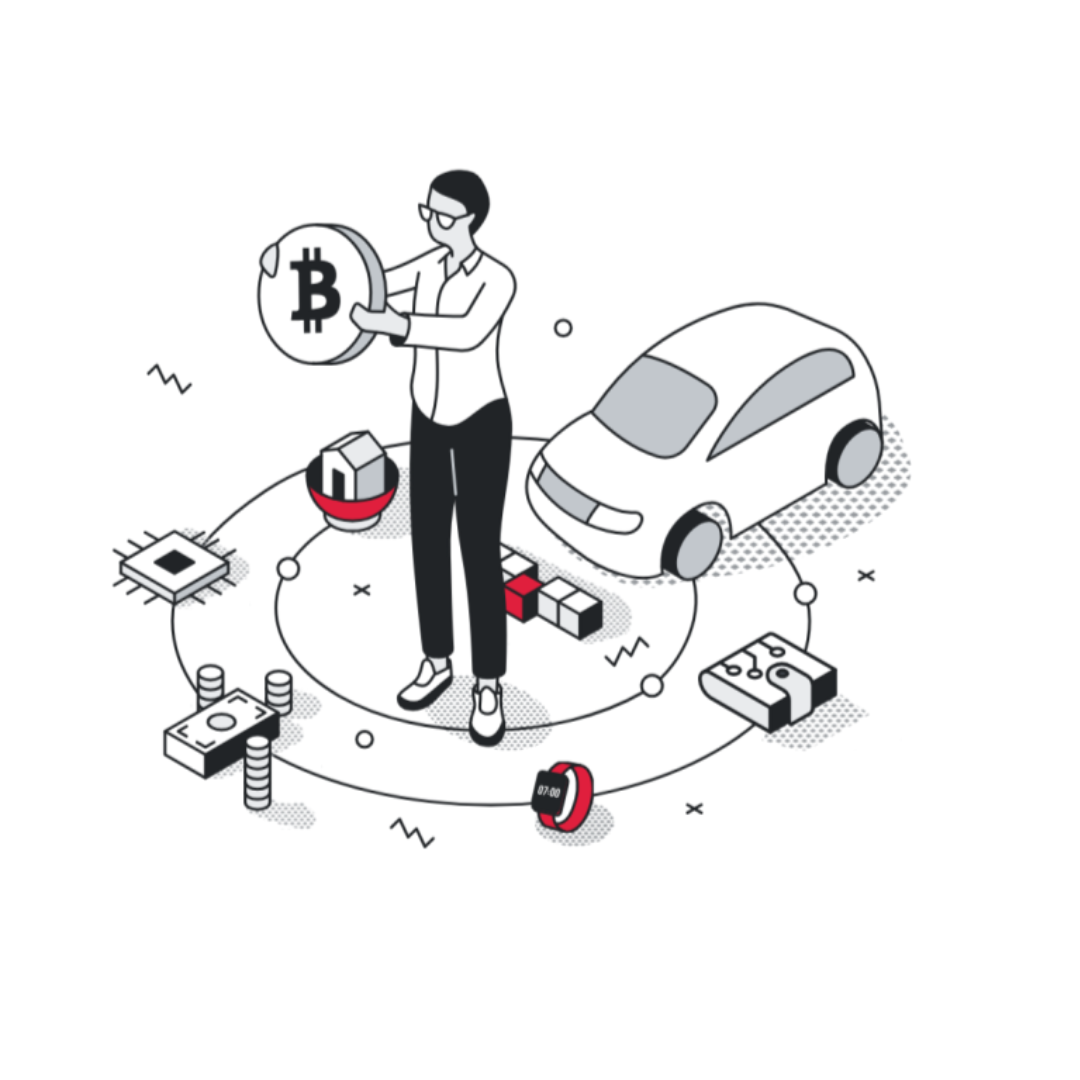
Aidan and Oliver explore the roots and evolution of money laundering, from the Medici’s of Renaissance Italy to the offshore shell companies of the Caribbean and the digital currencies of the future. They also touch upon the UK’s pivotal role in facilitating illegal financial flows, the advent of hawala banking networks and the systemic challenges that impede effective asset recovery.
Timestamps
00:00 - Exploring the UK's Role in Money Laundering and Corruption
03:54 - Complex Global Money Laundering Challenges
11:23 - The Evolution of Value Transfer Systems Through History
16:06 - Rethinking Financial Crime Compliance
22:32 - Money Laundering's Influence on Global Crime
26:41 - The Role of Cash and Crypto in Crime Networks
30:45 - The Global Fight Against Money Laundering
38:28 - Recovering Covid-Related Fraud Payments
42:04 - Combating Corruption and Money Laundering
Resources Mentioned
- Oliver Bullough on The Guardian https://www.theguardian.com/profile/oliverbullough
- Books by Oliver Bullough:
Moneyland - https://amzn.eu/d/ezB43Rv
Butler to the World - https://amzn.eu/d/gaqVRE9
About our Guest
Oliver Bullough is an award-winning journalist and author of Moneyland (2019) and Butler to the World (2022). He is known for his in-depth reporting on offshore finances and the role of the UK in facilitating corruption, with his work regularly being featured in the Guardian, the New York Times, GQ magazine, the Economist, and other places.
Disclaimer
Our podcasts are for informational purposes only. They are not intended to provide legal, tax, financial, and/or investment advice. Listeners must consult their own advisors before making decisions on the topics discussed.
Asset Reality has no responsibility or liability for any decision made or any other acts or omissions in connection with your use of this material.
The views expressed by guests are their own and their appearance on the program does not imply an endorsement of them or any entity they represent. Views and opinions expressed by Asset Reality employees are those of the employees and do not necessarily reflect the views of the company.
Asset Reality does not guarantee or warrant the accuracy, completeness, timeliness, suitability or validity of the information in any particular podcast and will not be responsible for any claim attributable to errors, omissions, or other inaccuracies of any part of such material.
Unless stated otherwise, reference to any specific product or entity does not constitute an endorsement or recommendation by Asset Reality.
Transcription
Aidan Larkin
Hello, and welcome to Seize and Desist podcast. Today, I'm absolutely thrilled to have Oliver Bullough join the show. I'll give a bit of a brief introduction and a bit of background before bringing Oliver in. This was a long time coming. One of my first financial investigation conferences I, visited is the famous SOCEX event in the UK, which brings together all of the financial investigators and all people involved in economic crime discussions. And Oliver was the keynote speaker. We got a copy of his book at the time, Moneyland, and I was just blown away with the insights into money laundering and the role the establishment plays in facilitating money laundering. And, really, for me, it was that first moment of connecting the dots. That if we want to fix asset recovery, we need to understand and explore the role of money laundering and ask the question, why are there not more convictions, investigations, prosecutions around money laundering? Is it the sheer complexity? Is it deliberate corruption, or is it a blend of both? And then the interplay with that and digital assets. So So I can't think of anybody better to be able to get in to sort of have a have a discussion. The ChatGPT description, Oliver, you'll be delighted to hear, is that you're a British journalist, author, and expert on financial crime and global corruption. Former Moscow correspondent Oliver has spent years investigating how illicit money flows around the world. And you're the author of several critically acclaimed books, including Moneyland, Butler to the World, one of my favorite audiobooks, no less. Anybody that has met me knows that I regularly... And I'm not on 4p commission. Regularly, I recommend people read, Butler to the World. Book of the Year no less, which exposed the dark underbelly of global finance and the role of countries like the UK in facilitating corruption. His work has been featured in major outlets such as The Guardian, New York Times, a sought after speaker, I can confirm, on issues of cryptocracy, offshore finance, and the fight for financial transparency. How does all that sound? Do you wanna dispute any of that?
Oliver Bullough
I don't know. I did I did get contacted by someone the other day who'd been using ChatGPT to research an article, and they were asking me about an article that I'd never written.
Aidan Larkin
Are you good?
Olliver Bullough
Which chat chat... GPT had hallucinated. But I'm pleased to say that I don't think it hallucinated any of that.
Aidan Larkin
Yeah. It is. Yes. So sometimes it can work well, but, I think at at our peril... Oliver, look, we we could... I think my big challenge is going to be keeping this within time because I'm sure we could sort of unpack this topic a lot because there is just so much to discuss. For me, I think that, as I mentioned in the end, Drew, as a former investigator and someone working in this space, I had never really connected the dots. For me, I always thought of money laundering as a separate thing. And then it started to become a... Well, for asset recovery, there is no asset recovery and there is no asset seizure without money laundering running through it, if you consider that money laundering is the movement of the asset. Could you just give us your views on the sort of money laundering one hundred and one? And I am particularly imploring you a bit of the potted history of money laundering because I do such a terrible job at butchering it in a bar after an event when I tell people, have you read Oliver's book? And I talk about the UK's big export, and I do this terrible example of the Suez Canal, and the whole sort of the British rule with that in the fifties. But I'll I'll hand over to you to give us a bit of a a bit of a history and hear your view on particularly the UK's role.
Oliver Bullough
Yeah. Thanks. I mean, pretty sure there's probably been money laundering for pretty much as long as there's been financial crime. Right? As long as any financial criminal has made more money from their crime than they can immediately spend, they're gonna need to find a way of hiding that money, of making it look legal so that it's not gonna be suspicious to other people. You know, there is this... I think it's probably a myth that the reason it's called money laundering is because the mob in the US in the thirties or forties or whenever, it depends on who's telling the story, used to use cash rich businesses such as laundries to move their illegal earnings through because, you know, who knows how many shirts you've washed? You can say you've washed a thousand when you've washed a hundred, and then you've legalized your money. I don't think that's true simply because if you look at the usage of the term money laundering, it doesn't really pick up until the nineteen seventies. So... But it's a nice story, and it does sort of illustrate perhaps what entry level money laundering was like. I mean, in the good old days when mobsters were more or less sort of based in one city or at one region, you know, you earned some money from your crimes, whether that's protection racket or prohibition in the US or drug smuggling or whatever, and then you wash it through, you know, a laundry, a bar, you know, any kind of business that takes a lot of cash, and you make it look good by claiming you've done more business than you have. But that all began to change in the fifties and particularly the sixties with the communications and transport revolution that just made it so much easier to communicate with people in other countries, to travel to other countries, and essentially to live if you were rich in essentially more than one jurisdiction. You kept your money in one place and your... And yourself in another. You could move your money through multiple different places. And, you know, this is a story I tell in Butler to the World and also in a slightly different way in Moneyland is this development of the city of London in its post imperial role as no longer being the money center of a great empire as a place to to move money from India to Jamaica or whatever, but instead moving money between anywhere that had it to anywhere that want it and doing it in an untraceable way with the use of multiple sort of satellite, you know, inverted commas offshore territories, such as the Cayman Islands, Jersey, Gibraltar, and sort of semi detached territories like Hong Kong or Singapore, places that have an ancestral connection to the UK. Money laundering became not just about washing cash through a a business, but through moving money through multiple bank accounts owned untraceably by anonymous shell companies in multiple jurisdictions in the Caribbean, in Central Europe, in in the Far East or wherever. And it and it became almost impossible for governments to do something about it. And partly because I think this happened without governments noticing it had happened, and it took them a long time to catch up. But, also, it's just hard, You know, when you are trying to get evidence from lots of different places, a lot of those places don't really want to give you evidence. And if they do wanna give you evidence, they'll probably be pretty slow about it because it's not a priority. So, yeah, money laundering just took off.
Aidan Larkin
It was easy because of data protection rules that you could hide behind that as the, you know, investigator asks for information. And it's, of course, we would love to give you that information, but you need to go and get a court order you need to get. So, I mean, most people again and working currently in the financial investigation ecosystem probably won't appreciate that just how difficult it was. Those foundational years, there wasn't the double taxation treaties. There wasn't easy information sharing gateways to try and get money out of... You probably had to get on a plane. You probably had... And you just weren't doing that for a, like, low level investigation.
Oliver Bullough
It's really interesting looking at the history of the world's first money laundering legislation, which is the slightly ironically named Bank Secrecy Act. It's That's not its official name, but that's what everyone always calls it in the US, which was passed in nineteen seventy. You know, that grew out of concern in the late sixties about people embezzling money from the US military, which was then fighting, obviously, the war in Vietnam and and stashing that money in Switzerland and the difficulty of getting any kind of information out of Switzerland. But it was also concerns about places like the Bahamas, places like the Cayman Islands. These multiple offshore jurisdictions that have grown up and were just so easy to get to in the age of jet air traffic, that they were so easy to communicate with now that you had intercontinental phone lines. I mean, there still weren't very many. I mean, it's hilarious to hear from people who worked in the city of London in those days of just how hard it was to communicate with New York. But there were phones for the first time. It was possible. That kind of revelations from legislators and officials in the US led to that piece of legislation, the Bank Secrecy Act. But it's just something you can't legislate about in one country because, you know, if you're dealing with crime in the US, but the money is in Switzerland or the money is in the Bahamas or the money has gone through the Cayman Islands and is now back in the US, but apparently belongs to someone completely different, that's not something you can do just as one country. Even if you're the most powerful country in the world, there's nothing you can do about that. So the money laundering becomes much more about international efforts, you know, with the creation of the financial action task force in the late nineteen eighties at the Paris g seven meeting. And, you know, and that kicks off a whole attempt to raise international standards to make it essentially impossible for there to be these hidey holes for illicit wealth. But the problem I write about in the book is the fact that there's almost very little understanding of what money laundering is at official levels. There is a failure to understand that certainly money laundering in a lot of the world looks very different to how it looks in, you know, Europe or the US. If you look at the Hoala network in the Middle East, you know, they're very well rooted trade based money laundering where you're not moving money at all. You're moving value by the movement of stuff. But that is something that Western countries always really struggled to recognize with. That's very much the model for wealthy Chinese people trying to get their money out of China. You can't move money out of China except fifty thousand dollars a year, but yet money pours out of the country. How is it getting out of the country? It's going out in the... Through the movement of stuff. And that's something which Western countries, Western officials just don't really understand. They don't really engage with. And, you know, there are so many of these loopholes, not so much in... I mean, there there are loopholes in in behavior. There are loopholes in legislation. There are loopholes in jurisdictions. There are so many loopholes. But for me, really importantly, there is this giant loophole in comprehension, which is that people just don't understand what criminals are capable of. There's this fixation on banks, the role of banks. You know, and they have banks have been real villains, you know, whether it's HSBC moving money for the Sinaloa Cartel or Danske Bank, you know, moving money for the world's kleptocrats, particularly Russia's kleptocrats, and so on and many, many more. But, you know, that's just a fraction of of the picture. The more and more you squeeze on banks, the the more the criminals just move money in other ways because they have multiple options. And so, essentially, despite now, what are we at? Nineteen seventy, fifty five years of effort to tackle money laundering. We're not even started doing it properly as a civilization. And that is a really troubling issue. And I mean, you mentioned the fact that asset recovery is obviously a sort of function of money laundering. Money has to be laundered before it could be recovered. Money laundering in turn is a function of a different crime. But you don't have money laundering without another crime being committed. So the problem with asset recovery is it's built on a foundation which is terrible, which in turn is built on a foundation which is terrible. So it's no wonder it's hard. Right? You know, it's a miracle happens at all.
Aidan Larkin
That actually, sir, is the perfect sort of segue because I was gonna ask. I've actually taken a note for myself when I often think about in... If investigations is following the money and you're following the money to try and unravel, you know, this money laundering network, then asset recovery is going after the asset. And for me, it was that, again, that that light bulb moment that, well, actually, look, what is money laundering? It is putting the proceeds of your crime beyond reach or the lifeblood of your criminality beyond reach. And and you had said... You used a good example there about, you know, hawala banking. Can Can I put you on the spot? I mean, for for those that maybe don't know about hawala banking in sort of simple terms, what does that mean for those? Because I know that I went to specific financial investigation courses around understanding these these networks. But could you give me just your version of what what hawala means in simple terms?
Oliver Bullough
Yes. I mean, I was talking to a guy from the Middle East about how Hawala works, and he described it... Well, he's actually Iranian, which is technically not Hawala because Hawala tends to be more of an... Sort of a Sunni Muslim thing, but it works in the same way. Iran is under these extraordinarily strict sanctions. Its banking system is largely... Almost completely isolated from the rest of the world. And I was asking him, you know, he runs a business that operates across borders. Like, how is this possible? And he was saying he takes some money to the bazaar in, in Tehran. He gives it to, you know, an exchange guy and says where he wants it. He wants it to be picked up in Paris or in London or in New York. And and the guy will say, alright. Gives him a code. Send the code to someone in Paris, London, New York, wherever you want it. It's available in two hours. In Islam, the, charging of interest is prohibited. So the the fee is charged on the exchange rate. You get the best exchange rate available is on the bazaar in Tehran, and then, essentially, that exchange rate, depending on how difficult it is to move money somewhere, that exchange rate rises or falls. So... But moving to Paris, London, New York is is incredibly simple. That's done very quickly, very straightforwardly. But it's not done by the movement of money. It's done by the fact that there are traders who are moving goods in you, and they have built up a surplus in one country, a surplus in another. And, essentially, they all know each other. They all trust each other. They're all connected, and they just pay out at one end, and then they settle up by moving goods between each other. What's really interesting about this is that this model repeats itself in multiple other places. We've we've seen it in the trade between North and South America in what's called the Black Market Peso Exchange, which grew up in the nineteen sixties and happens in exactly the same way. As you can imagine, because of the cocaine trade, it's huge, huge volume of of traffic between the two countries and then American goods, legal goods going in the other direction. Hidden in that volume of traffic is our banking services. You see it with what's called Chinese underground banking, which is moving money for wealthy Chinese people who want to be able to access funds outside China, which they can't get out because of capital controls, you know, whether they wanna gamble in Vancouver or buy luxury goods in London or, you know, just have a nice holiday in Paris. A similar system makes this happen whereby the value is moved by the movement of stuff out of China in huge quantities. I mean, you know, hundreds of millions of dollars every year. But what's really interesting to me about this system, whether you call it hawala or black market, peso exchange, or Chinese underground banking, or whatever, is this is how the Medicis banked in the middle ages. This is the model of Italian Renaissance banking. They didn't move bullion from London back to Florence or to Venice. You know, they just traded. They moved silk or spices north. They moved wool south and hidden in the transaction sufficiently well hidden. So no official would ever spot it were mismatches in the value to move money from one to the other, which just meant in exactly the same way that a trader from Iran is able to move value in and out of Iran. Someone from Florence or from London or from Bruges could just turn up in another city where the Medicis banked with a letter from the Medicis, hand it over, and would be given money.
Aidan Larkin
And that was good enough. Yeah.
Oliver Bullough
That was good enough. It's the... It was the equivalent of a WhatsApp message or a Telegram message now.
Aidan Larkin
When you think of modern currency as a promise to pay the bearer on demand Yeah. We just trust that the bank on the underneath will pay it. So it sounds to me that a trusted or trust based decentralized network, which a lot of people listening to this podcast will think was something that was invented by a person called, you know, Satoshi Nakamoto or some of the most recent iterations of e money, actually is just the new version of something that's been running for centuries, is that there will always be an alternative to the traditional financial system. And it sounds to me, from what you're saying with the words in your mouth, from the Medicis through to Walla, is it that actually this advent of digital assets is just yet another iteration of a model of moving value and recognizing value in different geographical locations without the actual physical or virtual transit of goods.
Oliver Bullough
Yeah. I mean, if you imagine it... I mean, the Medicis didn't invent this. Right? It's just that we know about them because we have their records. I'm sure people did it thousands of years before them, but the challenge for the Medicis is if they want to move value from London or Bruges to Italy, they have to move a cargo of wool. Or if they wanna move value from the other direction, they have to move silks and spices. The joy of digital assets, right, is that you don't have to fill a galley with wool and row it from Southampton to Florence or... Or not Florence, obviously, but the port nearest to Florence. But, you know, is you could just do it in an instant. It's it's done. And so, yeah, the amazing thing about digital assets is they take this system and just shorten it. It's instant. It's instant trade based money laundering. And what's really challenging about this is that so much of our focus in terms of the compliance on money laundering legislation is focused on the formal financial system. It's based on on banks or intermediaries, so lawyers, accountants, and so on. You know? And they have these, you know, frankly, really expensive requirements placed on them, which cost, you know, I don't know. I I sort of tried to work out how much the global compliance industry costs, and it's... If you add it together, it's about as much money as would provide clean water for everyone in Earth, food for everyone in Earth, and have about fifty billion dollars left over every year. It's a colossal amount of money is being spent on financial crime crime compliance.
Aidan Larkin
Tens... Tens of billions.
Oliver Bullough
Yeah. I mean, hundreds. But it always a little bit like that old joke about the drunk looking for his keys under the streetlight. He's on his hands and knees looking for his keys, and a policeman comes up and says, is this where you lost them, sir? And he goes, no. I I lost them in the park, but it's dark over there. You know, you're looking for financial crime in the easy place to look. You know? It's easy to look on a spreadsheet, but it's really hard to look in trade records or in the kind of value which has moved through the shipment of used cars. As we know, Hezbollah likes to move value through the shipment of used cars or the shipment of illicit animal parts. So, like, one of the biggest illicit trades in the world is the shipment of baby eels, pangolin scales, or leaving aside your precursor chemicals for drugs manufacturing or just mismatched ordinary stuff, a shipment of sinks, which have just got the price mismatched by ten dollars per sink, you can move a lot of value like that, and no one notices.
Aidan Larkin
Well, that's the... I mean, I'm I'm a former sort of tax inspector. I mean, Emtek fraud and the the the movement of just invoices. The... Commonly, the invoices were things like washing powder. It was just you know creative... Create x tons of something, change the volume between two and we just call it carousel fraud. Just a piece of paper moving around the world virtually, and everyone was claiming their their twenty percent of it. I... Look. I love the analogy about, the the reference. I remember seeing a similar satirical cartoon about someone was to use your... The drunk under the street light. It was someone looking off a pier, and they couldn't see the fish. Therefore, there was no fish in the ocean because they couldn't get out to sea. Yeah. So with with all of those years, well, what is your view then if we think about the compliance ecosystem that is tackling money laundering in this ecosystem, that is attempting to tackle it, how do you think that sort of fares then for the new challenges of digital assets? Or is it a case of it's it's already underperforming? It's already... Is it always just gonna be a perpetual game of catch up? I mean, should we just accept that that's the status quo? Or do you think it's... It is misdirected and we're simply not doing enough? Or what could we be doing differently? I
Oliver Bullough
think we need to recognize there will always be money laundering. The fact that it will be profitable to commit some acquisitive crime is just a fact. There's nothing we can do about that. But the the theory behind tackling money laundering is to make crime less attractive because it's more expensive. Essentially, you make it more difficult for people to keep their illegal illicit earnings. That's the point. That's what we're trying to do. So we need to stop thinking we can get perfect. Perfect isn't gonna happen. But at the moment, in a way, there's a sort of boiling the ocean problem right now. And that trying to do everything, you're failing to do anything. Now Jason Sharman, who I'm sure you know, a professor at Cambridge University, a great expert and researcher on the issues around particularly shell companies and so on. I've heard him say at a conference, we should just abolish compliance altogether. Right? It's not achieving anything, so why bother spending money on it? Just get out of the way, spend the money on something else. I think he's just being provocative. I don't think he actually means that. But, you know, I do think that we need to think much harder about what we're spending the money on because part of the problem with the financial crime world is that governments have outsourced so much of the work to the private sector that they can just say, do more is another regulation you need to follow. But in a way, they don't care how much money it costs to do all of this because it's not their money.
Aidan Larkin
And it's just passed on to the customer?
Oliver Bullough
Yes. There you go. And, yeah, exactly. But this is essentially a tax on all of our economies. We're all paying for this. It's not it's not free money. The banks aren't paying for it and then, you know, say, well, thank you very much. We will pay for that. We'll let you get away with not paying for it. It just goes on to everyone else in fees. So it's a hidden tax that everyone has to pay. And I think we need to ask far more about whether it's value for money, about whether it's working because it isn't working. But it's really interesting that you mentioned, carousel fraud, empty fraud back then because I think there is a real lesson to be learned in how to tackle financial crime from how particularly the UK tackled carousel fraud back in the early two thousands because it was a colossal problem. The the sums of money involved were absolutely enormous and just getting bigger. And because it grew out of the design of value added tax across the European Union, it was very hard to do anything about it. And yet via, you know, really patient, well resourced, well intelligenced policing and diplomatic work. The HMRC in the UK did manage to severely restrict Carousel for it. It is not solved. It will never be solved. But it is, you know, a fraction of what it used to be. And I am actually in in the new book I am working on at the moment, I do use that as an example of what you can do if you put your mind to it. And what that really was was a proper partnership between a really well resourced public sector, not just, like, five guys with a daily of of suspicious activity reports coming into them and no idea what to do with them, but, like, genuinely, like, hundreds of of really well informed investigators, and, you know, a private sector who really knew what was expected of them and with reasonable demands upon them. And that combination with a really intelligent diplomatic effort going around the world trying to crack down on the safe havens like in those days Dubai, it stood as safe haven but in a different way, was really successful. And that is what's not happening with money laundering. It's like the government seems to think... Or governments, all governments seem to think that, you know, you just pass a new regulation, you issue a new demand, the banks go off and do it, and that'll deal with it. Well, that... No. It isn't dealing with it. It hasn't dealt with it for decades, and it won't deal with it again. You know, what is... Requires is far more investment of time and effort by governments, and that's gonna be expensive. But the end product, the end goal is to really reduce this, you know, stealth tax on the economy, which is the compliance industry, which is certainly in the UK, tens of billions of pounds, and then fraud, which because of our failure, fraud is, you know, hundreds of billions of pounds. If you can reduce both of those, even just by ten percent, that's really freeing up people who are being defrauded and whose lives are being ruined. It's freeing them up, which is a real win and of itself. Economy wide, it's freeing up people being defrauded to spend their money on other stuff, which is a win in and of itself. So the challenge for me and I think for, you know, other journalists who are working on this is trying to tell this in a compelling way. You know, it's really hard to write about financial crime because as I'm sure you've noticed it all the time, people are just like, oh, god. You know? Oh, boring. And And then you're like, no. It's really interesting. You know? This is like the support mechanism for the worst people in the world. You know? If it wasn't for money laundering, you wouldn't have got Putin. If it wasn't for money laundering, four hundred and fifty thousand murders in Mexico since two thousand six. Unbelievable volumes of murders because of because of the war on drugs. It's relentless and appalling. And, you know, and then if you look at people trafficking, all of that, you know, stop the boats, that whole issue that's such a big political issue in the UK about people traffickers, that wouldn't exist without money laundering. I think our challenge is to try and always make clear that when we're talking about money laundering, we're just talking about a support industry for this colossal, colossal world of crime that is just preying on all of us with... Pretty much with impunity.
Aidan Larkin
You you made a fantastic point. It was the the... You triggered me when you when you said to sort of stop the boats, but I think it typifies what we've been discussing. And it was the the point you were alluding at, I'm assuming, around the... I mean, it's the the classic of it bangs or bleeds, sort of approach to sort of storytelling. You're right. It's been successfully pushed into the it sounds too complicated bucket. I mean, one of the most common descriptions of why aren't there stand alone money laundering prosecutions because they're difficult. They take years. One of the first people I ever interviewed, we talked about... This is... Well, it wasn't even for this podcast. It was for an earlier podcast that I was involved in, and it was someone from UNODC. And they had talked about the fact that you don't get politically elected on a ten year money laundering investigation that has no millions of hours of disclosure, and it's just too complicated. You get elected on, you know, cocaine at the side of the... You know, on the port. Machine guns on the side of the port. You get no people being freed from a shipping container. These are the things. And I I agree with you in the sense of it... The stop the boats, the pangolin scales, the trade based money laundering, all of these things are basically profitable ventures. So if you take the profit out of them, if you wanna stop the boats, then stop making it so easy to launder the proceeds of crime or make it so valuable of an activity. And I think that's why we we definitely share the same sort of outlook on the sense of it's just we've spent a lot on compliance. We still launder trillions every year. Government responses have never been traditionally give them more resources and better powers. It's... We often give out good powers and then take back the resources or give loads of resources with ineffective powers around the world. And I think that I agree with you on the HMRC success and the old inland revenue and, old customs and excise successes. What you notice in those infrastructures was people on the ground. And there is a reason why certain units are more successful than others. Globally, those units tend to spend the most time with boots on the ground. I mean, you can go into an embassy around the world, and you will find an IRS criminal investigation attache. You will find a HMRC, fiscal crime liaison officer, in these jurisdictions so that when someone locally is trying to, you know, track down the big cigarette smuggler or the diesel smuggler back in the day or the narcotics case, there was a person in the embassy that could just help. And I think that that long game hasn't been played as much. Now a lot of that could be the the disruption with COVID. It could be, like you say, that that you've now got this new kid on the block with crypto assets. Well, what are your thoughts on the emergence of the use of digital assets? Is it a case of with great power comes great responsibility and this is why we're targeting this new thing as a we can't fix traditional money laundering. It's too big. It's too cumbersome. Is it trying to stop the new kid before it gets out of control? Or do you think it's a bit more politically motivated than that? What's your view on it?
Oliver Bullough
Yeah. I mean, there is always a tendency to say, you know, what's the shiny thing? And that's a journalistic failing as well as a political failing. It's exciting. It's crypto. Yay. Those of us who like these things like talking about it because it's new and exciting, and we haven't done it before. There was a really interesting investigation at the end of last year in the UK called Operation Destabilize, run by the National Crime Agency in cooperation with authorities in Spain, I think elsewhere in the EU and in the US, and which mirrored investigations that there's been in in other places, particularly the US, where you had a, you know, traditional street drugs gang collecting cash, and then that cash was being swapped for crypto. And then the crypto was being used by the drugs gang to pay for other product to sell on while the cash was being recycled, in this case, destabilized a lot of it going to Russian oligarchs who were cut out of the financial system and needed money. It was... So, you know, we can focus on the role of, I think, specifically, Tether, the stablecoin in that crime. But, also, we need to look at the role of cash. Cash is not the shiny thing. On the contrary, it's it's been used by criminals.
Aidan Larkin
Sort of going under the radar a little bit.
Oliver Bullough
Yeah. It's just, boring talking about cash again.
Aidan Larkin
Yeah. No one uses cash anymore. It's all gone.
Oliver Bullough
What's really interesting about that is no one uses cash anymore. Right? It isn't... I really very rarely use cash. I use it occasionally to pay for parking. There's a toll bridge near my house that you need a pound coin for, but it's very unusual for me to use cash otherwise. But if you look at the amount of cash being printed, bank notes being printed by the world's major economies, the volume of bank notes goes up and up and up all the time. I mean, you are... The philosophy all central banks have is that they issue cash elastically. If people want it, they will give it to them. But the point is, at the the moment, people don't want cash. People aren't using it. If you look at cash usage in the United States, it's going down really markedly. Very few people now use cash as a primary means of payment. If you look at it in all across the EU, some places more, some places less, it's more popular in places like Germany and Austria. But even there, its usage is going down among younger generation who are using Apple Pay or or Venmo in the US or whatever to pay for stuff. And yet every single month, the volume of cash dollars in circulation hits a new record. It's currently two point three six trillion US dollars. And what's amazing about that is the most popular banknote, is the hundred dollar bill in terms of the most printed. The largest volume of banknotes in circulation in in terms of... By value is by far the hundred dollar bill. Most of those hundred dollar bills that we know of, even though... I mean, they're not traced, but but analysis by the Federal Reserve, is that about seventy percent of them are outside the United States. And so you never see or very, very rarely see a hundred dollar bill if you spend any time in the US. You know, you you see twenties all the time, and sometimes you see a fifty, but a hundred is really rare. But that is... The the vast majority of the dollars in circulation are in the form of hundred dollar bills. So where are they all?
Aidan Larkin
Is there a lot of survivalists or a lot of trade based money laundering?
Oliver Bullough
Yeah. There's a lot of really rich survivalists. Right? I mean, like, properly loaded survivalists with with bunkers full. But, yeah, what we're dealing with is is essentially, this is the raw material for the gray economy, the black economy around the world. And the same is true of of euros, Hundred euro bill, two hundred euro bill are still being printed.
Aidan Larkin
Is it what is there? The Bin Ladens? What's there?
Oliver Bullough
That was the... So the five that was the five hundred.
Aidan Larkin
Five hundred?
Oliver Bullough
Yeah. The five five hundred is no longer printed. They stopped printing that after, the attacks in Paris, which is a weird response because that was a very cheap crime. But it also shows an awareness by governments that big bills are a problem. If the response to such a grotesque terrorist attack was to ban a banknote, they know they're a problem, but they're just not doing anything about it. And And the reason they're not doing anything about it is because it's really profitable to issue bank notes. Costs costs about nine cents to print a hundred dollar bill, so the profit is about ninety nine dollars ninety one cents for printing a hundred dollar bill. Who doesn't want that? It's the most profitable trade in the world. So, yes, we can tackle Tether. This is going back to your question, which I've been wambling on about. But if the... Yes. We can tackle Tether. Yes. We can tackle Bitcoin and all that. And that's really, really hard because that is outside the control of governments. It requires all this cooperation and all that. But if you look at the other side of the trade in operation destabilize or other cash or crypto swaps, the cash side, that is in the direct control of governments. The only reason that this particular piece of green paper is worth a hundred dollars is because it says a hundred dollars on it, and that's guaranteed by the Federal Reserve. They can just not print them. We... You know, that... It's completely unnecessary. Yeah. And the same is true in in the UK, although the fifty pound note isn't as popular here in the UK, and such currency isn't so globally used, but it's still a problem. There's a lot of about fifty billion pounds in circulation. No one knows where they are. The same is true in the eurozone where hundred euro bills, two hundred euro bills are far more popular than they should be by any stretch of the imagination. The same is true in Switzerland where they have a thousand franc bank notes. It's absolute madness. We can make that point. We can worry about the shiny thing, which is crypto, and we should worry about it because it's a growing threat. But we can still talk about the old dull boring thing, which remains of crucial importance. So, yeah, this is a real yes and approach. Right? It's, you know, yes, the shiny thing and the old thing because we haven't solved the old problems.
Aidan Larkin
What's the old sort of religious quote? The greatest thing the devil ever did was convince the world he didn't exist. And almost things like that like that replacement theory is coming in around crypto because it's true. All you hear is, know, you hear about the use of stablecoins like Tether and USDC. You hear the use of cryptoassets. Now we've seen the Trump coin and all of these. And I I I keep dragging it back. And in any of the events I speak at, I talk about, this doesn't touch the sides when you look at traditional money laundering. Like, a number is so big we don't even track it anymore. No. And our performance in recovering these assets that are laundered is, again, a dataset that exists. The data set that the dreaded one percent is only recovered from criminals comes from a bunch of surveys taken between twenty ten and twenty fourteen. This figure is over ten years old. It's kinda like we've just given up on even trying to track it. You're working on a new book, and I'm keen to hear about that and also here to think about, like, what does this look like going forward? Like, if if we revisit this podcast in ten years' time and you and me sit down again, I mean, what are we going to be talking about? What are you predicting? Is it going to be this convergence, this overtaking of virtual assets? Are we gonna be in exactly the same position, or do you predict there's gonna be some big geopolitical shift?
Oliver Bullough
You know, I am working. I'm I'm working on the edits of a new book now. I've... So I've written it, but we're just going back and forth a bit. Hopefully, it'll be published this time next year, so January 2026.
Aidan Larkin
Wonderful. We’ll get you back on for that.
Oliver Bullough
So it tells the story of the global fight against money laundering beginning with the Bank Secrecy Act in the US and going through the creation of the FATF and all the other landmarks. And essentially, I try to explain why we've failed, how we've failed, what the problems have been, you know, where we've got it wrong, why we've got it wrong, and what the consequences of that have been. Consequences of some of that is really uncomfortable. You know, if you look at the effect of, say, the post nine eleven changes to counter terrorist financing stuff, the effect that that's had on ordinary Muslims all over the world is really, really dark. And the fact that when Nigel Farage got debanked in the UK, it was this massive, Ferrari, how dare you debank someone for political reasons without noticing? That thousands of people every year for decades, and no one has cared because they are, let's be honest, not friends with politicians, and they don't get their names mentioned in the House of Commons. It's astonishing. Sort of feel like I've been working on this topic for ages, but I feel like I'm quite well informed. A lot... Just a lot of writing these chapters often, I found myself getting furious. I was finding myself getting furious about stuff I'd already researched and collated the information, but I was still furious while writing it. So, yeah, it's it's a really dark story. It's dispiriting at times. But I do have some suggestions for what we could do better. So, obviously, you know, I think that what's likely to happen is that the world's leading politicians and policymakers will read my book and and take it all on board, radically change the way they go about things, and the whole problem will be solved, and everything will be okay. That, I think, is the most likely outcome. However, there is a non negligible chance that that isn't gonna happen. And, actually, what's gonna happen is that people will read the book and say, oh, okay. That's interesting. And then carry on as before. Because, you know, there is a huge amount of inertia in this system. We have a system that allows politicians to claim they're doing something when they're not. We have a system that allows them to outsource all the expense onto the private sector so they don't really have to care about it. And, you know, to be honest, we have a really substantial compliance industry that supports a lot of jobs and and people in the compliance industry. They also don't necessarily want it to change either. So there are many, many reasons why this is a hard rock to push up the hill, but it's important. You know? So even if just around the edges we can try and persuade them to take trade based money laundering more seriously, to possibly retire some of the more egregious big banks, stuff like that. It would have a big influence. You know, at the moment, we're not achieving anything. So if we could achieve, like, one percent more than we're doing now, that... That's a big, big win.
Aidan Larkin
Yeah. It is this year. The sheer scale of the problem also presents the massive opportunity that even the tiniest marginal movements just could have profound ripple effects.
Oliver Bullough
Absolutely.
Aidan Larkin
And you slightly touched on it there, but what is the the sort of... The the magic wand? What do you think will have to happen? Is it as dark as... I mean, I've I've used the example of virtual assets coming into more focus. If someone crashes a plane into a building fueled by a virtual asset, we will get a hell of a lot of a bigger response than we're currently getting. Or if something else... It sometimes takes that no political and human catastrophe to zone in on. We talked about FATF getting more powers and more teeth post nine eleven. We talked about banking secrecy, no post... No Vietnam War and corruption. The war on drugs and the escobar's of the world leading to reform. No sanctions evasion leading to reform because of no superpowers being created. Do you think it will take something like that, or if if you were guessing?
Oliver Bullough
Yeah. I mean, one of the most remarkable little snippets that I tripped over while researching this book was that after nine eleven, you know, when there was this huge global effort, huge buy in from everyone in the world to to find how the money had moved that had funded the atrocity, you know, to to try and work out how it had happened, to close these loopholes, that they quite early on identified that actually money had gone directly to at least one of the hijackers, Washington. She had provided the money, part of a sort of a funding for Saudi citizens thing that that the embassy did. You know? And, obviously, there was a lot of concern about this in legislative and official circles in Washington, and they wanted to have sort of congressional hearings on this as they had congressional hearings on other aspects of what had happened with nine eleven. But the White House refused to allow that to happen because they had an important partner to protect, and they had important influential people to protect. And this remains a real issue. You you talk about, you know, if there was a terrorist attack funded by virtual assets, would governments get serious? Well, yeah. I think they would. They would get serious for a bit. But then, you know, someone influential in in, you know, the crypto space who's got the president of the United States is here would say, well, do we really need to do all of this? Or maybe we could just ease that up a bit on that. And and what ends up happening again and again and again is that the people who pay the price of our money laundering changes are the already vulnerable. Jurisdictions that get blacklisted are not the United States, the United Kingdom, and Switzerland. They are the Marshall Islands, Vanuatu, Nui, places like that.
Aidan Larkin
It's like your book. It's the concept of offshore. The last time I checked, you know, Britain was an island.
Oliver Bullough
Yeah. Well, exactly.
Aidan Larkin
When we say offshore, we don't talk about those Manhattan Island or or, those places like London that sit on island.
Oliver Bullough
Who invented offshore? It wasn't invented in the Bahamas. It was invented in the UK, the modern iteration of it. And, you know, and that is something that isn't recognized, that is not appreciated. The politicians, you know, like, say, well, we're doing something. Everyone else needs to do more. And so it will take political change and political will in the big onshore inverted commerce jurisdictions. So, you know, yes, the UK and the US above all, you know, also maybe France, Switzerland, places like that. But it's Washington and London, really. If you can get them on board, then that's when change happens, I think.
Aidan Larkin
Well, there's a reason why our company is not called, you know, asset optimistic. Asset reality, like, we we can localize things and say a great example of this is COVID related fraud, payments to connected parties of politicians, Transparency International did some phenomenal work showing that billions now are available and hundreds of millions going to, like, direct connections. Companies House Incorporated entities in the weeks after COVID and PPE contracts being sent out. For me as an asset recovery practitioner, that should be the next three or four years worth of casework. I mean, we should be coming down with casework in terms of COVID related payment recoveries. And the cynic in me says we'll probably not see many, if any at all. Couple of bounce backroom prosecutions, couple of small payments. Will we see hundreds of millions being recovered and related to those... What looked to be on the face of it based on the the open source information, blatantly fraudulent entities that were set up to deliver subpar products. Do you have any insights on that in terms of your research or anecdotal? Do you think there's a slew of these coming or we'll never hear about them again?
Oliver Bullough
I mean, yeah. I mean, let's be honest. You know, if past performance is any guide to the future, there's not gonna be much, is there? But I am heartened by the site that the UK authorities are considering payments to whistleblowers. That shows...
Aidan Larkin
Really important step in the right direction with the house.
Oliver Bullough
So so important. The the kind of high minded opposition to doing... To paying whistleblowers, I can understand. It's a sort of boneheaded way of putting the perfect in the way of the good. Yes. In an ideal world, we wouldn't pay whistleblowers. You know, whistleblowers would come forward and add the kindness of their hearts and and ruin their careers and put themselves at risk of being killed by the mob.
Aidan Larkin
If they bring their own style vest and flapjack with them.
Oliver Bullough
Absolutely. You know, and then and then and then build their own witness protection program afterwards. You know? But that isn't what's going to happen. If you want to have these kind of prosecutions of complicated financial crime, you you need to have insiders to tell you what's going on, to where the evidence is and, you know, and so on. And so, you know, that does suggest a degree of realism in UK government policy that's really heartening. And so maybe that will be extended to bringing in, you know, for profit companies into things like FOB... For further into asset recovery space because the clue's in the name. People do it for profit. You have to let them make money out of it. You know? And I I agree that there are issues with that. If it's, say, Ukraine kleptocracy case and, you know, and that money has been stolen from Ukrainian people who desperately need it, allowing someone to make profit from that is difficult. But then if you look at what the alternative is, there's, Ukrainian kleptocrat, Pavlo Lazarenko, who was prime minister in the nineties, who unwisely fled to the United States after losing power where he was arrested. He was jailed, I think, two thousand and one, certainly in the early two thousands. And he was in jail, came out again more than a decade ago. They still haven't managed to recover his assets. They are still being contested. You know, people need the money now. And and if instead of getting all the money in fifty years' time, you can get sixty percent of it now, that has to be worth doing to my mind. And that's an argument that it would be really nice to hear politicians making instead of, you know, the usual lazy stuff about not letting people profit from this. It's like, well, no one's profiting it from the moment. The victims certainly aren't profiting from it. So that's what I think.
Aidan Larkin
And it is... And I completely agree with you on the whistleblowers. And, I mean, it's one of my biggest gripes that we we often cite. And, obviously, you know, London has a... And UK has a famous reputation for protecting in the legal sector a lot of these, you know, alleged criminals, and also, let's let's be clear, proven criminals in many cases. We we protect them and we cite no personal personal enjoyment of property, human rights act. You can't take people's assets off them. And then you flip that to civil bankruptcy where the minute someone is bankrupt through no fault of their own, we have no problem taking all of their assets off them because they're a flight risk, because the assets might depreciate. But we don't treat those in criminal prosecutions as severely as we do those as a victim of civil debt. And I think that we know from the work we're involved in, from the round tables we set out, from the groups that we're involved in, you have a bunch of willing investigators and prosecutors, but they don't have the political clout, and they are as frustrated as as everybody else. Oliver, we're coming up we're coming up on time. I I want to thank you for, for for sharing your insights with us. And I mean, for me, without sounding too much like a fanboy, it was your books and your early sort of rallying cry that lit the torch for me, which was my pitchfork to be like, why are more people not talking about this? And I think until we have more people at the gates of parliaments and standing doing demonstrations, and rather than being more distracted by small boats, we are more wanting to know where is our money that has been stolen and laundered that would, you know, solve all of the world's problems. I just wanna thank you for the good work that you're doing in raising it. I imagine it can be a lonely place at times. When I think of some of your colleagues and, the various slaps and litigation they go through, I can appreciate it's an incredibly difficult job. So from our community to you, thank you for your service, sir. And, I hope to sit down this time next year, and we're talking about a successful slew of COVID related prosecutions, and hopefully they get a space in your new book.
Oliver Bullough
Hell, that... Wouldn't that be wonderful? Yeah. Let's do that.
Aidan Larkin
I'd have to be optimistic note we can end on.
Oliver Bullough
Yeah. Awesome. Let... Really get to chat. And, yeah. See you soon.
Aidan Larkin
Thank you so much, Oliver.
Lo Furneaux
If you've enjoyed today's conversation, please like and subscribe to the Seize and Desist podcast on your preferred platform. And leave us a comment with your suggestions for future topics or guests you'd like to hear from. Seize and Desist is brought to you by Asset Reality. Thank you for listening. Our podcasts are for informational purposes only. They are not intended to provide legal, tax, financial, and or investment advice. Listeners must consult their own advisers before making any decisions on the topics being discussed.