Not all seizures are created equal
Drawing on work with over 50 agencies, Co-Founder and COO Hugo Hoyland explains how to build a crypto seizure programme that gets assets into custody fast, whoever is on the case.

Everything we build at Asset Reality follows one simple tenet: Fast In, Slow Out. Assets should be seized as quickly as possible once they’ve been identified, and then be dealt with very carefully, through a process that protects their value and holds up in court. Lately, it’s “Fast In” that keeps coming up in conversations with our users.
Speed matters more for crypto than for almost any other asset. Simply finding a means of control over a crypto asset doesn’t take control away from anyone else who has it, so the asset needs to move into custody that only law enforcement controls, and quickly. The Financial Action Task Force is clear on this: freezing and seizing should happen expeditiously. Its latest asset recovery guidance goes further and (rightly) calls it bad practice to seize information such as a private key without taking the asset itself into a government-controlled wallet.
Somewhere to send it
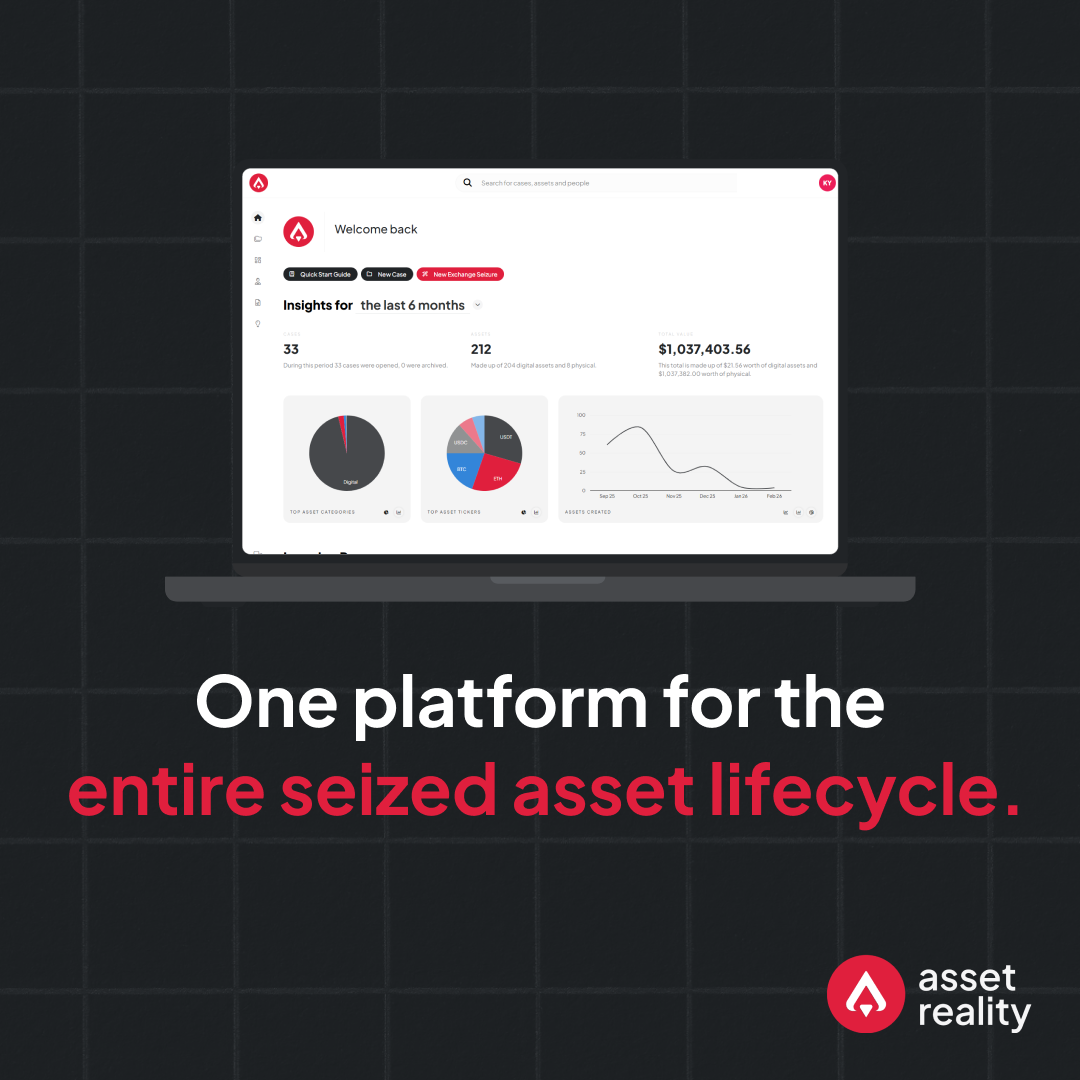
Part of that problem is now solved. Anyone using the Asset Reality Platform can generate a fully segregated deposit address for 100% of assets at the point of seizure, straight into centrally controlled, conflict-free custody (to be clear, no one else does this).
What we keep hearing is that it’s great having somewhere to send the asset, but knowing how to send it is still a challenge.
Exchange, wallet, seed
Crypto seizures come from one of three places: an exchange, a wallet, or a seed phrase (if we’re being pedantic, seizures also come from individual private key pairings but those are usually derived from a seed so I think of them in the same way - alphanumerical characters that need work to extract value from). What those really tell you is who controls the asset, and each one needs a different level of technical knowledge.
Seizing from an exchange is relatively easy. It’s very similar to seizing pounds, dollars or euros held at a bank: you instruct the exchange, tell them where to send the assets and make sure that address, asset, and network combination is right. Seizing from a wallet the suspect controls means the officer has to manually construct transactions and send those directly from the wallet; this is only a little more technical than seizing from an exchange. With a seed, the wallet has to be completely rebuilt, usually from 12/24 words, before anyone can see what’s on it, let alone move it.
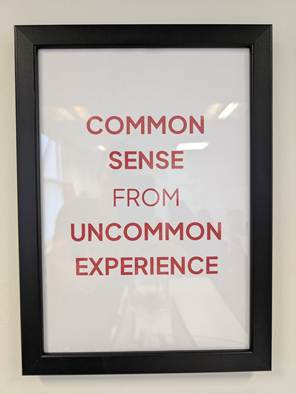
Experienced officers get caught out at that end too. One investigator with plenty of seizures behind him messaged me last week because the seed he’d recovered was showing him an empty address while the wallet on the suspect’s phone showed a balance. The phone was on airplane mode as it should be, so our first guess was that the wallet had been emptied after airplane mode had been turned on and the wallet simply hadn’t sync’d yet, but what we actually found was that the funds had never moved, they were simply on addresses much further down the derivation path. The funds were seized shortly after. That kind of lesson is what our Platform is built to capture. We’re crowdsourcing everything our team and the seizing agents we’ve worked with for years have learned into guided workflows and tools, so every officer using our Platform benefits from the collective experience of everyone who has seized before them (as we like to put it: Common Sense from Uncommon Experience - which proudly hangs in our office).
How programmes grow
Working with over 50 agencies in 20 countries, we’ve noticed a pattern in how crypto seizure programmes mature.
They usually start with one person doing everything. Seizing from an exchange, a wallet or a seed is all treated as advanced, so the whole agency depends on that one individual. As the programme grows, a team forms around them and does almost everything together. Then, as the programme gets more exposure to complex assets, the specialists split off from the generalists. The specialists take the advanced work, and everyone else is trained in the fundamentals: they learn that seizing from an exchange is a lot like seizing from a bank, with a standard operating procedure and a guided workflow to follow.
This is where programmes start to scale, and where you see a really big impact on seizures and asset recovery.
In 2024, I wrote that I couldn’t bring myself to call anyone a “crypto expert”. A programme that depends on one person has the same weakness: nobody can know everything, and that person can’t be on every case.
Leaving no asset behind
Seizure is a programme, with people, processes and technology that each need to be thought through. Framing it that way helps unlock the budget for training (see the certifications we've developed to upskill forces), and it gives staff in agencies and units a professional development path and a career they can see ahead of them.
It also forces those of us who work with you to keep building purpose-built technology. For crypto, that means guided workflows in the Platform that take each user through a seizure from whichever means of control they’ve found. The same thinking applies to physical assets, where some seizures are routine and others need a specialist, but crypto shows it most clearly.
Seizing from an exchange has been live in the Platform for months, with strong feedback from users. Seizing from a wallet and from a seed are in beta and launch in 2027. Every seizure our users carry out feeds into how those workflows develop, which is how we keep moving towards a world where no asset is left behind.